Get Full Government Meeting Transcripts, Videos, & Alerts Forever!
Get email alerts on the Early Learning Ttk topic
No spam. Unsubscribe anytime.
Bill caps statewide TTK enrollment and directs phased expansion planning
Summary
Engrossed SB 5769 would cap Transition to Kindergarten (TTK) statewide enrollment at the 2024‑25 level and require OSPI and DCYF to develop a phased plan for expanding slots (not to exceed 5% statewide average annual growth), prioritizing highest‑need communities; supporters urged retaining and phasing expansion while critics warned
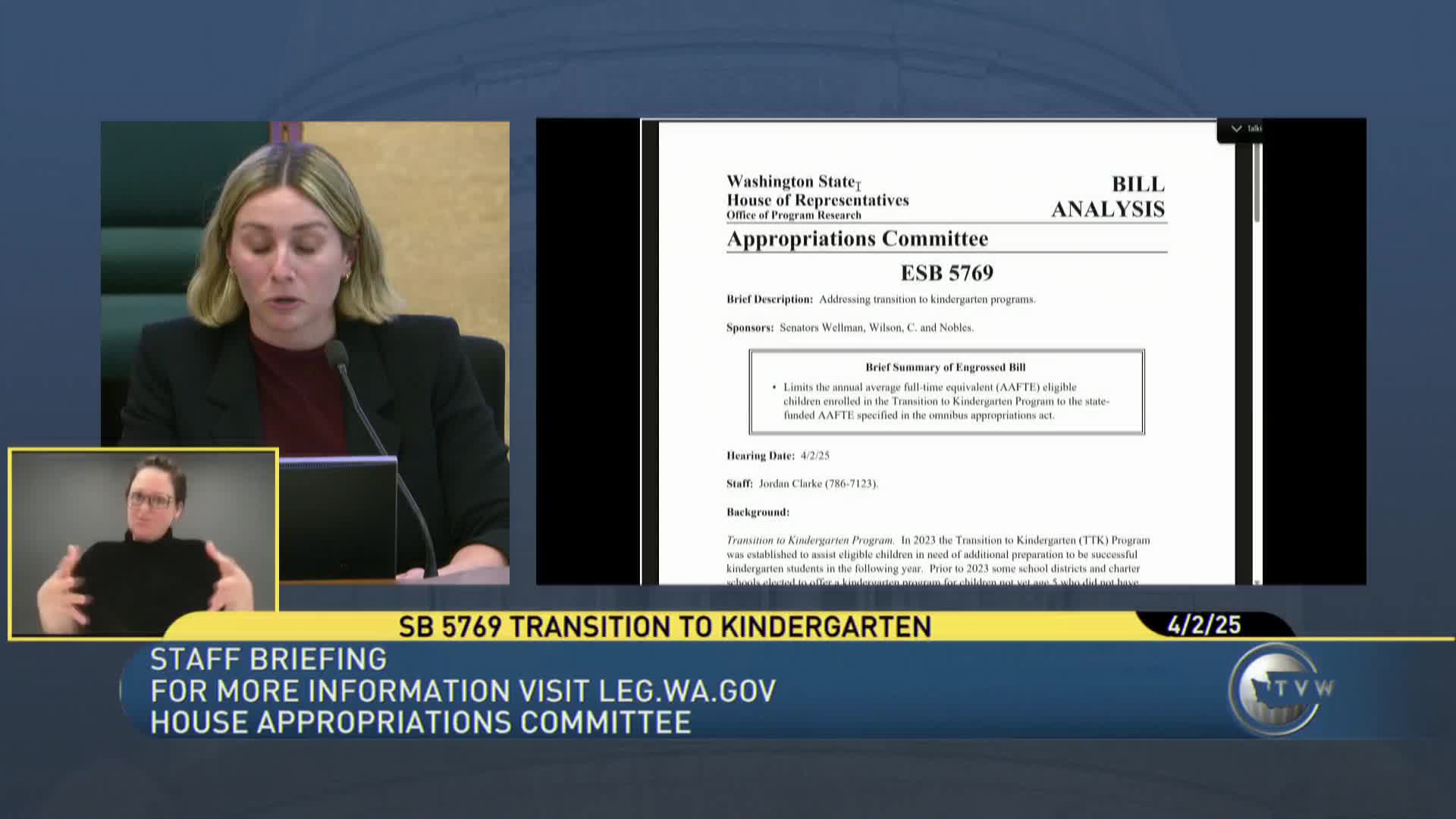
The Appropriations Committee heard a briefing and public testimony on Engrossed Senate Bill 5769, which sets an enrollment cap for the Transition to Kindergarten (TTK) program beginning in the 2025‑26 school year and directs OSPI and the Department of Children, Youth and Families (DCYF) to develop a plan to phase in expansion.
Jordan Clark (committee staff) and other staff provided background: TTK was established in 2023 to serve eligible four‑year‑olds who need additional preparation before kindergarten and is funded through a formula based on actual annual average FTE (AA FTE) eligible children enrolled. The caseload forecast council projected about 7,266 AA FTE enrolled in TTK during 2024‑25. The engrossed bill would prevent statewide AA FTE eligible children enrolled in TTK from exceeding the enrollment level specified in the operating budget beginning in 2025‑26 and direct OSPI and DCYF to recommend a phased plan that would allow up to 5% statewide AA FTE growth per year, consider ECAP and other early learning programs, and prioritize communities with the highest need. The plan is due to the legislature by Dec. 1, 2027.
Fiscal and stakeholder testimony reflected budget tensions. Staff said the engrossed bill’s cap produces an estimated general‑fund savings of roughly $194 million over the four‑year outlook if the budget keeps enrollment at current levels; that assumption matched similar savings in House and Senate budgets. OSPI and early‑learning advocates urged maximizing access but acknowledged current budget constraints; several superintendents, parents, and early‑learning organizations testified in support of maintaining slots and prioritizing expansion for high‑need communities. Testimony from rural and small‑district superintendents stressed local needs and waitlists; advocates highlighted TTK outcomes on WA Kids assessments and longer‑term benefits.
The committee did not take a formal vote; staff reminded members of planning timelines and the budgetary assumptions embedded in the engrossed bill.