Get Full Government Meeting Transcripts, Videos, & Alerts Forever!
Get email alerts on the Charter Amendments topic
No spam. Unsubscribe anytime.
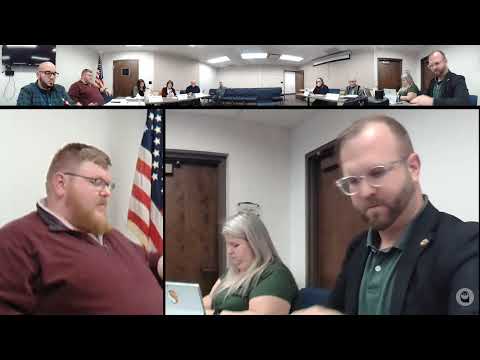
Charter Review Commission votes to send three charter amendments to city council
Summary
The Stow Charter Review Commission voted to forward three proposed charter changes — on commission composition, acting-mayor succession and public notice — to the city council for committee review and potential placement on the ballot.
The Stow Charter Review Commission voted at its meeting to forward three proposed amendments to the city charter to the city council for committee review and possible placement on the ballot. The three proposals concern the timing and composition of the Charter Review Commission (section 20.01), clarification of acting-mayor procedures (section 3.06) and a change to public notice language (section 4.12).
The recommendations are aimed at clarifying appointment timing for the charter review panel, spelling out who serves as acting mayor when the mayor is unavailable, and updating how the city may deliver public notices electronically. Commission members said the changes are intended to reduce ambiguity in interpretation and to modernize notice practices while preserving legal notice requirements.
On section 20.01, the commission endorsed "version 2," which would require the mayor, with council confirmation, to appoint a seven-member Charter Review Commission by the last council meeting in January of the review year so the commission can begin work in February; it also adjusts the panel start date from Aug. 1 to July 1 in another provision. A commission member said, "I like version 2 better," and a motion to forward that version to council passed (motion moved and seconded during the meeting).
The commission also approved clearer language for section 3.06 about who serves as acting mayor if the mayor is temporarily unavailable and what happens if the president of council serving as acting mayor is also unavailable. The amended text instructs council to choose, by majority vote, a designee from among its membership to serve as acting mayor in those circumstances and specifies that a member performing acting-mayor duties shall relinquish his or her council voting power on motions or legislation while acting in that capacity.
On public notice, the commission approved a redraft of section 4.12 that keeps the existing requirement for posting in no fewer than three physical public places while adding an explicit mention that a public posting on the city's website and "any other social media platforms utilized by the city for notice purposes" satisfies the electronic-posting option so long as the practice is not precluded by law. The Law Director cautioned that an email subscription or blast that includes full legislation would send users the entire packet and not just a short agenda, saying, "If you sign up for the email blast, you're going to get the entire legislation packet with every piece of legislation when we buy a car, when we vote to pay the gas bill..." The commission discussed whether the charter should mandate electronic distribution or treat it as a best practice; members suggested a weekly digest or a single link to the agenda and packet rather than blasting full documents for every notice.
Commissioners agreed to forward the three items to the council committee process so the council can hold its committee discussion and then place items on the council docket for first reading. Commission members discussed scheduling and said they would try to have representatives present when council discusses the items.
Votes at a glance: The commission recorded formal motions to forward the three items to council; all three motions were made, seconded and approved in the meeting record (roll-call tallies and individual member votes were not recorded in the transcript).