Get Full Government Meeting Transcripts, Videos, & Alerts Forever!
Get email alerts on the Housing Affordability topic
No spam. Unsubscribe anytime.
Orange County launches bipartisan housing task force; community development outlines HUD-funded projects and limits
Summary
County leaders opened the inaugural Orange County Housing Task Force and heard a detailed presentation from the Office of Community Development about HUD-funded programs, recent and pipeline projects, funding constraints and municipal roles in enabling more housing.
Orange County held its first Housing Task Force meeting where members pledged to examine local housing affordability and heard a presentation from the county Office of Community Development detailing federal funding streams, recent projects and barriers to scaling affordable housing.
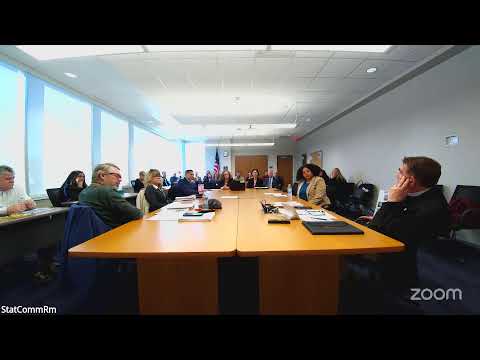
The task force convened May 20, 2025; Rob Sassy opened the meeting as chair of the newly formed Housing Task Force and framed the effort as bipartisan. "Home affordability is a serious problem, not just here in Orange County, but across our nation. And it's not a Democrat or Republican problem, it's our problem," Sassy said, calling the initiative "a marathon, not a sprint."
The meeting’s nut graf: the Office of Community Development told the panel it already administers multiple HUD programs that have produced housing and infrastructure projects in Orange County, but those programs have regulatory limits, long timelines and require coordinated municipal infrastructure and additional subsidy to move larger projects forward.
Nicole Anderson and Aaron Cousins of the Orange County Office of Community Development described the department’s mission and portfolio. "The mission of our office is to effectively and efficiently obtain and utilize federal, state, and local funds to improve the quality of life and living conditions for Orange County residents, principally for those with low to moderate incomes," Anderson said. She told the task force the office administers over $23,000,000 in HUD grants and summarized current program balances and project uses, including Community Development Block Grant (CDBG), HOME Investment Partnerships (HOME), CDBG-Disaster Recovery (CDBG-DR) and neighborhood stabilization funds.
Anderson listed recent and active projects the office supports: infrastructure work intended to enable housing development (New Windsor wastewater treatment upgrades), a community project fund for the Newburgh Landing Pier, neighborhood stabilization and renovation projects in Newburgh (59 and 63 Landers Street), several new-construction homebuyer projects, senior and mixed-income rental developments (including a 66-unit Colton Street project), and pipeline applications for larger downtown infill projects such as Liberty Street Apartments and other state-funded Momentum Fund proposals.
Anderson also described program rules and compliance requirements that shape what the county can fund and how long projects take. She explained HOME-funded units require income restrictions (typical set-asides at 50–60% of area median income, with homeownership limits up to 80% AMI) and rent formulas that target 30% of household income. She reviewed cross-cutting federal compliance regimes the county follows for HUD funds, including Davis-Bacon prevailing wage monitoring, the Build America Buy America requirements, Section 3 hiring preferences, 2 CFR Part 200 financial rules, and NEPA Part 58 environmental reviews. She warned that NEPA and other reviews can add months to project timelines.
Multiple legislators and community members underscored demand and local impacts. Legislator Luhan said, "In the last 5 years, we've seen rents go from $1,300 to now $2,300 2 thousand 5 hundred dollars that is a substantial, substantial increase for families who are already struggling." A school staff member identified only as Jenna described student homelessness: "I have students that are currently living in hotels right now motels because they can't afford the rent in their little tiny apartment," she said, urging attention to rental affordability as well as ownership.
Speakers noted both successes and gaps. Anderson said the department has used HUD CDBG and HOME funds to support 55 projects over the past decade (producing homeownership and rental units and many infrastructure improvements) and that HUD has recognized the county as a model community. At the same time, she said HUD funding alone cannot meet all needs and that staff capacity, federal cross-cutting rules, the need for municipal infrastructure upgrades, and the difficulty of assembling full project capital stacks are persistent constraints. "Our funding is never enough to actually achieve any of these things," she said.
Panelists and members discussed strategies municipalities can use to support housing production — from zoning and master plans to tax incentives and participating in New York State’s Pro-Housing Community certification program, which county staff said has become important for obtaining some state funding (for example, Mid-Hudson Momentum grants). Anderson recommended technical assistance to smaller villages that lack planning capacity and described the county’s role in administering grants, underwriting HOME projects as gap funding, and annually reviewing CDBG/HOME applications under a HUD-approved citizen participation plan.
Task force members also discussed specific pipeline projects: Fresh Start Apartments (11 affordable units with services); large downtown infill projects on Washington and Liberty Streets that are securing state momentum and tax credit funding; Safe Harbors’ William Street project serving people exiting homelessness; Port Jervis infrastructure grants intended to unlock housing; and longer-term proposals such as Tuxedo Reserve. Anderson explained that the county often contributes relatively small HOME or CDBG amounts to projects but that local commitment is frequently important for state tax credit and other funding decisions.
Several speakers urged attention to housing conditions and equity. Legislator Genesis Ramos noted the county cannot direct municipal land-use decisions but can play a convening and technical assistance role. Legislator Luhan and others urged the county to scrutinize the cost-effectiveness of current emergency shelter spending and to prioritize durable housing solutions.
The task force set follow-up actions: staff from the Office of Community Development will return with additional briefings and the group will hold subsequent meetings to examine planning, funding, and municipal roles. The meeting closed with a motion to adjourn, which was seconded and approved.
Ending: The session emphasized the county’s existing HUD-funded work while noting regulatory, staffing and infrastructure gaps that limit scale. Task force members said future meetings will focus on data-driven needs assessments, municipal coordination and possible county-led infrastructure investments to unlock housing projects.