Get Full Government Meeting Transcripts, Videos, & Alerts Forever!
Get email alerts on the Student Technology Policy topic
No spam. Unsubscribe anytime.
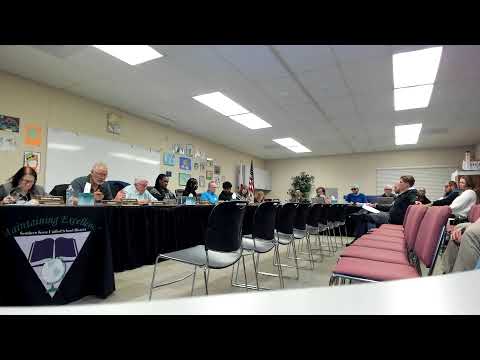
Southern Kern Unified trustees adopt strict personal‑device rule, approve five‑year safety platform after debate
Summary
The Southern Kern Unified School District Board voted to adopt a districtwide student personal‑device policy requiring phones to be turned off and kept in backpacks during the school day (advisory), and approved a five‑year safety platform contract after questions about cost and pilot testing.
Southern Kern Unified School District trustees voted to adopt Option 1 of a proposed student personal‑device policy — requiring personal devices to be turned off and kept in student backpacks throughout the school day — and approved a five‑year contract for a staff safety platform (Strategix) after extended discussion and public comment.
The device policy decision came after public comment and a written submission from Rare Earth High School teacher April Coy urging the board to gather broader teacher and parent input and to consider a Yondr pouch pilot districtwide. Coy wrote that after Yondr pouches were implemented at her school — with an implementation date of 10/07/2024 — “referrals for cell phone violations declined drastically, and I no longer had to spend my planning period managing these issues.” She urged the board to consult other districts with Yondr experience before finalizing the policy.
The board heard competing rationales. District staff summarized two options: Option 1 (devices off/in backpacks all day) and Option 2 (devices off/in backpacks in class but allowed outside of class). Advocates for Option 1, including multiple trustees and site administrators, said devices cause classroom disruptions, recording and coordination of fights, and persistent discipline referrals; one administrator said phones were “the biggest problem throughout the school.” Supporters argued a uniform rule would simplify enforcement and reduce lost instructional time. Several trustees and student speakers argued for balancing enforcement with students’ need to contact family in emergencies and noted accommodations for students with medical needs would remain in place.
District staff and school leaders also discussed implementation details. Questions raised during the meeting included whether the policy would apply to staff and support personnel, how watch notifications and laptops would be handled, and how the district would support teachers enforcing the rule. The board clarified that the policy allows teacher‑authorized, limited device use for instructional purposes and that students with medically required monitoring devices would be accommodated.
After discussion, a trustee moved to adopt Option 1 as the district’s policy for the coming school year. The board passed the motion; the board described the adopted policy as an advisory district‑level policy to be communicated to sites and parents. The board directed district staff to prepare implementation guidance, signage and parent communication, and to return with clarifications if enforcement or exceptions proved problematic.
Trustees also debated and then approved a five‑year safety‑platform contract for Strategix (item E). Board members asked whether the district had run on‑site trials and pressed for demonstrations before committing to a five‑year purchase. Staff said they had researched multiple vendors and recommended Strategix and clarified the contract total would be $287,400 over five years. Site administrators described parts of some campuses as cell‑service “dead zones,” and said the wearable badge would give staff a direct alert function where cellular coverage is poor. Concerns raised by trustees and some staff included cost, the need for pilot testing, privacy and comfort with wearing a badge under name badges, and whether the platform duplicated other systems.
The motion to approve the Strategix contract passed with a majority vote (recorded in the meeting as 4–1). The board directed staff to pursue implementation steps including staff training and further information for trustees about device ergonomics and any available pilot data.
The meeting also included approval of a revised discipline matrix (the discipline committee reported multiple meetings and recommended adding alternatives to suspension such as restorative practices and PBIS strategies for lower‑level offenses). The board approved the revised matrix by motion.
Other actions taken in the meeting included acceptance of the Williams uniform complaint quarterly report under Education Code 35186 (staff reported nine resolved complaints for the quarter), approval of several facilities change orders (including a $34,005.32 change order for the cafeteria at the Rosemond High Early College campus and a $73,004.83 change order for an after‑school program project), and routine personnel approvals (with one name spelling correction noted). Several of those consent and construction items were approved by unanimous voice vote or general consent.
Why it matters: The device policy changes classroom expectations across the district and aim to reduce instructional disruptions and referrals; the Strategix purchase commits district funds over a multi‑year period to a staff alert platform and will change how staff call for help in areas with limited cell service. Both items will require site‑level rollout work, communications with families, and follow‑up reporting to the board.
The board asked staff to prepare implementation guidance on both items and to return with further details and timelines in a subsequent meeting. The board also recorded teacher and community requests for broader stakeholder consultation, particularly around the device policy and any districtwide rollout of Yondr pouches.