Get Full Government Meeting Transcripts, Videos, & Alerts Forever!
Get email alerts on the Property Tax topic
No spam. Unsubscribe anytime.
Iowa County hearing: officials point to insurance and valuation shifts as drivers of proposed property-tax rise
Summary
At a public hearing on the proposed county budget, officials said rising property and liability insurance and higher employee health premiums were the main drivers of a draft increase in property-tax revenue; supervisors described steps taken to limit the increase and to direct some new valuations into road projects via TIF.
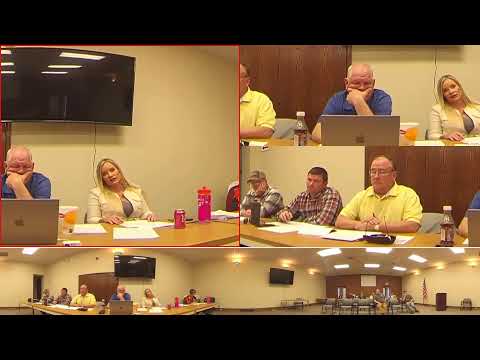
Iowa County officials and residents met at a public hearing to discuss the county’s proposed budget and the factors driving a projected increase in property-tax revenue, with officials citing higher property and liability insurance and rising employee health premiums as primary causes.
County officials told residents the budget process begins before final taxable valuations are known; supervisors said they estimate costs, then compare those estimates with the state-certified taxable valuations when the state returns them. Officials said the assessor’s office sets valuation increases based on comparable sales, and the state applies a uniform rollback that can limit how much of valuation growth counties may capture for taxes.
The hearing focused on several budget choices intended to reduce pressure on taxpayers. Officials said they reduced an initial, higher projection of a property-tax increase to “right around 6%” by cutting planned raises for nonunion staff, eliminating roughly $40,000 in building maintenance and $50,000 in ambulance spending, and asking departments to tighten their budgets. Officials also said the county used some of its ending fund balance to smooth timing gaps between the fiscal-year start and property-tax collections.
Insurance costs were repeatedly cited as a major driver. Officials said county property and liability insurance has risen substantially in recent years and that the county also faced a near 15% increase in employee health-insurance premiums; those increases, officials said, consumed revenue that otherwise could have gone to raises or reduced tax increases.
The public hearing also covered how some new valuation from utility-scale wind turbines will be handled. Officials said turbine sites were placed in urban-renewal/TIF (tax increment financing) areas; the taxes produced on those parcels are being routed to a separate TIF fund to pay for roads and bridges. County staff estimated about $6 million in road and bridge projects tied to current TIF revenues.
County staff described internal controls and checks: weekly claim approvals, private external auditors who periodically review county accounts, and the auditor’s role in processing claims under supervisors’ approval. Several speakers noted that the assessor’s work is overseen by the local conference board (which includes school and city representatives), not directly by the board of supervisors.
Residents raised questions about perceived increases in code enforcement and building notifications (for example, reporting new construction or improvements over $2,000), and about whether COVID-era federal funds or new county programs had expanded services. Officials said ARPA and other one-time COVID funds were not used to permanently expand county services and that the county did not hire staff beyond temporary public-health vaccine-related work.
Vice Chair Abby Moss, identified at the hearing as a county supervisor, told attendees she would be available for follow-up questions and said, “My phone number’s on the website. If anybody has direct questions for me, feel free to call.”
The public hearing concluded with a motion to end the hearing and a motion to adjourn the meeting; the board voted verbally in the affirmative and the meeting was adjourned.
Background: Officials explained two separate levy structures used to calculate taxes for residents in incorporated city limits (urban) and residents in unincorporated areas (rural). They also confirmed local-option sales tax (a 1% local option levy) is earmarked in the county for secondary roads and is separate from state sales-tax components. The hearing included an offer from a supervisor to meet with constituents and lawmakers at the Capitol regarding the state property-tax bill referenced during discussion.