Get Full Government Meeting Transcripts, Videos, & Alerts Forever!
Get email alerts on the Audit Procurement Timekeeping topic
No spam. Unsubscribe anytime.
Audit finds procurement and timekeeping lapses at Albany County Airport Authority; $1.5M in airline incentives not documented to board
Summary
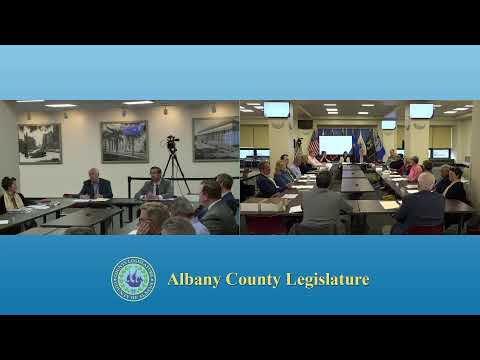
Tom Smith of accounting firm EFPR told the joint committee that a compliance review of the Albany County Airport Authority identified purchases approved without board sign-off, split invoices that avoided a $50,000 approval threshold, roughly $1.5 million in airline incentive credits without documented board approval and timekeeping irregularities tied to manual logins and parking-record mismatches.
Tom Smith, a partner at EFPR (the accounting firm engaged by the Albany County Airport Authority), presented the results of a compliance review covering procurement and time-and-attendance records from Jan. 1, 2022, through Dec. 31, 2024.
Smith summarized four principal findings: the former CEO approved purchases without board approval; several payments were broken into smaller disbursements to avoid a $50,000 board-approval threshold; airline incentive credits totaling approximately $1,500,000 across the review period lacked documented board approval; and a sample of time-and-attendance records showed irregularities tied to manual logins and logouts.
Procurement: Smith said the authority’s procurement policy (required by New York public-authority law) sets a $50,000 threshold for CEO-plus-board approval. Smith’s review of samples and the highest-dollar vendors found some vendors had valid contracts, but the auditors identified multiple payments over $50,000 that lacked board approval and several instances where payments to the same vendor were split into smaller transactions that individually fell under the threshold. Examples cited in the presentation included payments to Dustbusters Cleaning, CRISO Demolition, Flooring Environmental Corporation and change orders to AJ Sprinkler that pushed totals over the $50,000 threshold without recorded subsequent board approval.
Smith also flagged a series of payments to a landscaping vendor, M and K Greenhouses, where three consecutive payments in one year aggregated to above $50,000; the auditor characterized those as split payments that should have been approved in aggregate. The review further noted roughly $78,000 in payments to the Millionaire jet center for client amenities where competitive quotes were not documented, and about $13,000 to a vendor for fir trees planted near the terminal where the auditors could not find required competitive quotes.
Incentives: The auditors said airline incentive programs operating across 2021–24 were not documented as having board approval in the material they reviewed. Smith said the credits paid to airlines across the period totaled about $1,500,000. At the meeting, CEO Peter Studo told committee members that the board had recently ("either a month or 2 ago," he said) voted on a comprehensive incentive program and that Breeze Airlines had submitted an application that would be forwarded to the board for approval before implementation. Smith told the committee the incentives appear as credits that reduce money owed to the authority rather than as outward cash payments, meaning they did not strictly fall under procurement payments; nevertheless, he recommended clearer board review and documentation.
Time and attendance: Smith reported that during the review period the authority allowed employees to record up to three hours per day as off-site (coded as COVID or work off-site), leaving five hours as on-site time (about 37.5% off-site). The audit selected five employees with the highest proportion of off-site time for detailed testing. Using parking-garage exit records compared with time logs, the auditors found discrepancies in on-site presence: in 2022 the mismatch rate ranged widely (Smith reported 31% to 74% on the bottom and top of the sample range), improving in later years. The audit also documented frequent use of a manual login/log‑out option in the timekeeping system (a supervisor or administrative user could enter or correct entries), and Smith said manual logouts were particularly common — in the high end of the sample as much as 56% of days examined. In one case the auditors identified 19 instances where a manual log-out was recorded at 2:00 p.m. while garage records showed the employee left at or before noon.
Recommendations and response: Smith recommended steps to tighten procurement and attendance controls: require board approval for change orders, maintain a vendor register marking which vendors have required competitive quotes and approvals, log and monitor manual logins and logouts, and download and archive timekeeping system reports monthly to preserve historical records. Smith said management is already implementing several of the recommendations. The authority also noted one emergency purchase over $50,000 during the period that had subsequent board approval.
When asked whether the auditors had interviewed former executives, Smith said EFPR did not contact former employees as part of the engagement; the firm confined its procedures to documentation and factual records such as invoices, purchase requisitions, parking logs and time entries. He emphasized that the engagement reported facts from the sampled records rather than assigning motive or alleging criminal conduct.
Committee members described the findings as governance problems that warrant follow-up. The auditor and the authority said they would provide additional report details to the Legislature on request and the authority said it will bring future incentive applications to the board for approval.