Get Full Government Meeting Transcripts, Videos, & Alerts Forever!
Get email alerts on the Public Works Streets topic
No spam. Unsubscribe anytime.
City attorney says Robinson cannot use public funds to insure private Huntley Estates streets; council weighs options
Summary
An attorney advised the council that using public funds to pay for major repairs on private subdivision streets would violate the Texas Constitution, and the council discussed options including accepting streets into the city system after testing and right-of-way issues.
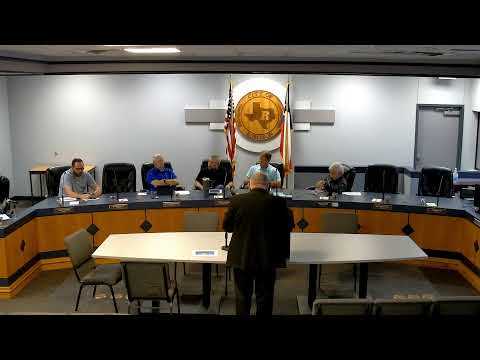
Counsel advised the Robinson City Council on April 8 that the city cannot use public funds to act as an insurer for major repairs on private subdivision streets, and councilmembers discussed testing and other options for a petition from residents of Huntley Estates.
An attorney representing the city told the council that the proposed plan — under which the homeowners association would continue minor maintenance but the city would pay for major repairs — would likely violate Article 3, Section 52 of the Texas Constitution, which bars gifts of public funds for private benefit. The attorney said the lawful alternative is for the streets to be dedicated and accepted as municipal streets, but noted several practical hurdles: the subdivision’s streets may not meet city right-of-way widths or construction standards because they were built privately and not inspected during construction.
The attorney said: “We cannot use public funds for, to for private purposes,” and added that accepting the streets would likely require verification of right-of-way and construction standards and might require waivers or acquisition of additional right-of-way.
Council discussion focused on options and risks. Members raised concerns about setting a precedent that would encourage developers to build private streets and later seek city maintenance, and asked whether physical testing (core samples) could determine whether the streets meet municipal construction standards. Staff advised that core testing in multiple locations would reveal pavement structure and compaction and help the council decide whether to accept specific road segments into the city’s maintenance inventory. Councilmembers noted Robinson already maintains some rural or older roads that were not built to current standards and discussed how Huntley Estates compares.
Why it matters: If the council accepts private streets into the municipal street system, the city assumes long-term maintenance obligations and potential cost for reconstructing streets that do not meet current standards; if it declines, residents will remain responsible for private maintenance. Council members repeatedly warned against creating a policy that would invite more private-street construction if the city were seen as a guaranteed backstop.
Outcome: The matter was discussed; no formal vote or action was taken. Councilmembers said they will gather more data — including the possibility of paying for core testing or asking residents to fund testing — and continue the conversation in a future meeting.