Get Full Government Meeting Transcripts, Videos, & Alerts Forever!
Get email alerts on the Volunteer Service Tax Credit topic
No spam. Unsubscribe anytime.
Council considers expanding volunteer tax credit to include training, meetings and fundraising
Summary
Columbia Borough officials and volunteer fire department members discussed proposed edits to the borough's volunteer service tax credit that would add training, meeting and fundraising hours to eligibility. Council directed staff to add an appeal route and clarifying language before the ordinance is advanced.
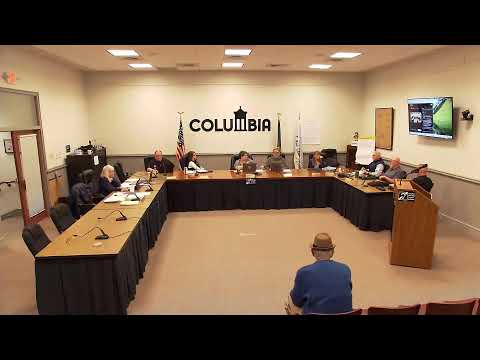
Columbia Borough Council on April 1 heard a detailed presentation and public comment on proposed changes to the borough's volunteer service tax credit that would broaden which volunteer activities qualify for a credit against borough taxes.
The most substantive discussion came from Matt Phillips, representing the Columbia Volunteer Fire Department, who outlined the practical reasons for the change and what it would mean for the department's roster. "We're trying to get everyone having a chance to to get a tax credit," Phillips said, describing recent growth in training and meetings tied to equipment procurement and higher certification levels.
The proposed revision would add meeting hours, fundraising and advanced training to the existing eligibility categories, which previously focused on emergency calls and basic administrative duties. Staff said the change would likely add only a small number of additional recipients; Phillips estimated roughly 15 people would newly qualify under the revised standard. Council members and fire department speakers also said the borough now lists roughly 44 firefighters on the department roster, although not all make frequent emergency calls.
Why it matters: The tax-credit program is intended to encourage volunteerism and local homeownership among emergency responders. Expanding eligible activities shifts the program's emphasis and has budget implications because credits come from a line item in the borough budget. Supporters said the change better reflects contemporary volunteer work; some council members urged caution to preserve the program's original aim of encouraging in-town homeownership.
Council discussion focused on three practical issues: how to verify and document new categories of volunteer activity; who can reject or approve applications (staff recommended keeping administrative review but adding an appeal path); and whether broader state-level action would be preferable.
Councilmember Heather (first reference by role) raised a procedural question about whether program managers should have unilateral authority to deny an applicant's claim; other council members said final spending decisions rest with council. Kelly (staff member) said program documentation will include fire-chief certification of training and attendance. Phillips noted the department already tracks more hours than before, citing recent exercises, mutual-aid standby duties and training for higher firefighter certifications.
Several council members advocated adding an explicit appeal step to the ordinance. Staff reported a proposed edit that would give applicants 30 days to appeal a manager's decision to borough council or a designated bureau counsel; council asked staff to draft that language and return with a revised draft.
No final vote on the ordinance was taken at the April 1 workshop; council members directed staff to refine the draft and return it for advertisement and subsequent public hearing. If the borough or state later adopts a tax-credit on income tax forms, council members said, that change would capture volunteers regardless of where they live.
Where the discussion started and what comes next: Kelly introduced the item as agenda item 8b; public commenters and fire department members elaborated on operational details. Council asked staff to insert an appeal process and to work with legal counsel on precise language before placing the ordinance on an advertising schedule for a formal vote.
Ending note: Council did not adopt the ordinance at the workshop. Staff will return with edited text spelling out appeals and documentation requirements before the matter proceeds to advertisement for a public hearing.