Get Full Government Meeting Transcripts, Videos, & Alerts Forever!
Get email alerts on the Agricultural Protection Areas topic
No spam. Unsubscribe anytime.
Committee sends trailer bill to floor to align procedures for agricultural protection areas
Summary
Senate Bill 1187, a technical 'trailer' bill to align county processes for establishing and expanding agricultural protection areas, was advanced to the Senate floor with a due-pass recommendation after sponsorship by Senator Ben Adams and supportive remarks from the Idaho Association of Counties.
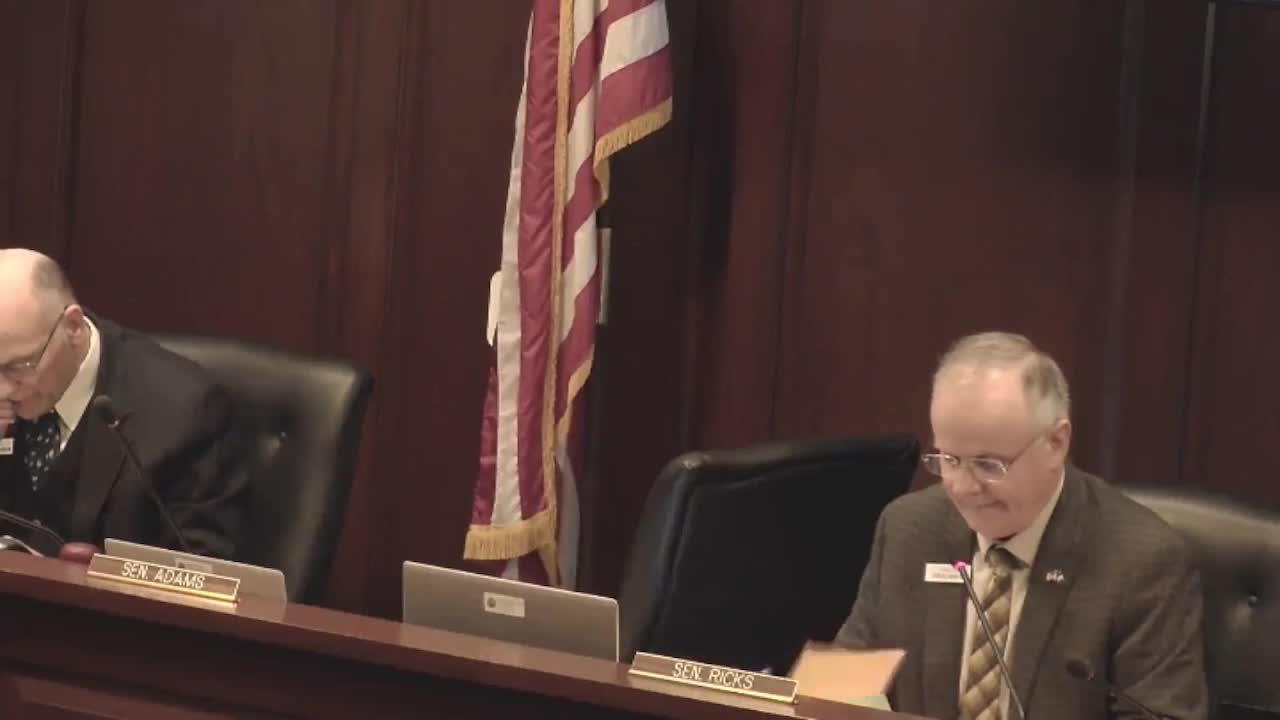
The Senate Local Government and Taxation Committee voted to send Senate Bill 1187 to the floor with a “do pass” recommendation. Senator Ben Adams (District 12) described the bill as a trailer measure to clean up procedural differences created by recent legislation concerning agricultural protection areas.
Seth Grigg, executive director of the Idaho Association of Counties, told the committee SB 1187 aligns the county approval process used when a jurisdiction initially designates an agricultural protection area with the process for approving individual parcel additions to an existing area. Grigg said the change resolves an “unintended oversight” created when the earlier bill (Senate Bill 1133) advanced through the Legislature.
Senator Berndt moved to send the bill to the floor with a due-pass recommendation; Senator Taylor seconded the motion and the committee approved it on a voice vote. Senator Adams said he expected counties and the Farm Bureau to be interested in the cleanup language.
Why it matters: the change standardizes approval steps for counties and property owners seeking either initial designation or later additions to agricultural protection areas. Committee testimony framed the change as technical and intended to avoid inconsistent application of the approval process.
The record shows no roll-call tally for the voice vote and no amendments were taken in the committee.