Get Full Government Meeting Transcripts, Videos, & Alerts Forever!
Get email alerts on the Property Tax Deferral topic
No spam. Unsubscribe anytime.
Committee advances bill clarifying which property-tax years qualify for homestead deferral
Summary
The Senate Local Government and Taxation Committee voted to send House Bill 355 to the floor with a “do pass” recommendation after Representative Tony Wisniewski described changes intended to clarify that the state’s homestead tax-deferral program may cover prior years of unpaid property tax up to the limits in statute.
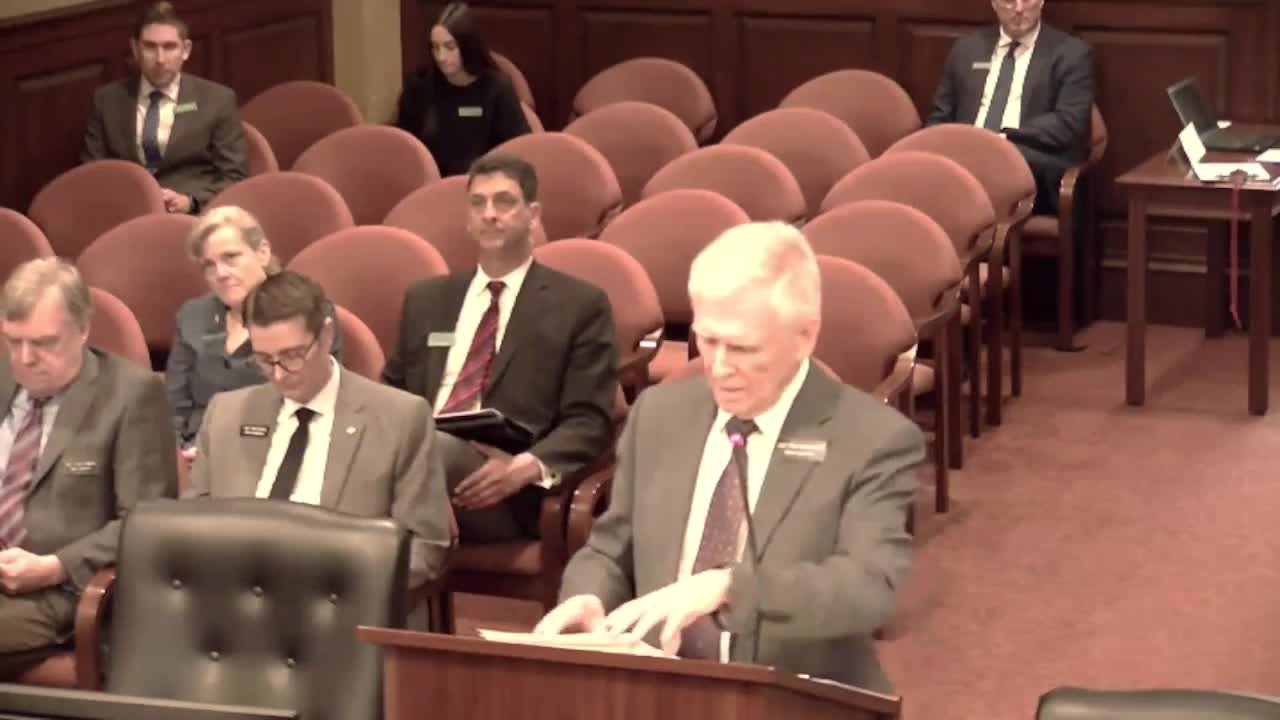
The Senate Local Government and Taxation Committee on March 20 voted to send House Bill 355 to the Senate floor with a “do pass” recommendation. The bill, sponsored in the House by Representative Tony Wisniewski (District 5), clarifies how the state’s existing property-tax deferral for qualifying homeowners applies to prior tax years.
Representative Tony Wisniewski told the committee the program is intended to help homeowners who are “property equity rich, but cash flow poor,” often seniors on fixed incomes who have lived in their homes for decades. “Any means any,” Wisniewski said, arguing the statute’s phrase “defer payment of any property tax due” should be read to include previous years’ unpaid taxes up to the statutory limit rather than only the current-year bill.
The bill would preserve the program’s current eligibility limits, Wisniewski said: it applies only to the homestead (the residence plus up to one acre), requires age and income qualifications for claimants, and prohibits properties with reverse mortgages or home-equity lines from participating because those encumbrances would block the State Tax Commission’s ability to attach a lien. Wisniewski said interest on the deferred amount is typically about 6 percent and that penalties can be steep — he cited a statutory 1 percent per month penalty (about 12 percent per year) and a 2 percent late fee in a hypothetical example.
Wisniewski said the program is not a grant: the state places a lien and the taxes are paid, with interest. He described situations in which people who qualify for the program could nevertheless face a forced tax-deed sale if older years remain unpaid and the deferral is applied only to the most recent year under some local interpretations.
Committee discussion was limited. Senator Ben Adams moved to send the bill to the floor with a due-pass recommendation; the motion was seconded by Senator Grohl and carried on a voice vote. Senator Byrd said he intended to vote yes but reserved the right to change his vote on the floor. Senator Toews identified Senator Bierke as the Senate floor sponsor.
Why it matters: supporters said the bill resolves confusion about which years qualify for deferral and helps long-time homeowners remain in their homes without eliminating tax liability. The committee record includes a handout and a hypothetical calculation illustrating how unpaid prior-year charges, penalties and interest can compound into an amount that forces a tax deed sale.
Details left unspecified in committee: the transcript records that a representative of the Idaho Association of County Treasurers (Rebecca Missy McLaughlin) had signed up to testify but did not appear on the screen; no county treasurer testimony was taken in person. The bill summary before the committee referenced a line in state tax code quoted in testimony as “code 60 three-seven 14” but the committee did not provide an alternative statutory citation during the hearing.
The committee recorded no roll-call tally for the voice vote.
The bill now moves to the full Senate for further consideration.