Get Full Government Meeting Transcripts, Videos, & Alerts Forever!
Get email alerts on the Urban Renewal topic
No spam. Unsubscribe anytime.
Committee advances bill to create process for dissolving urban renewal districts; lets fire, ambulance districts opt out of new projects
Summary
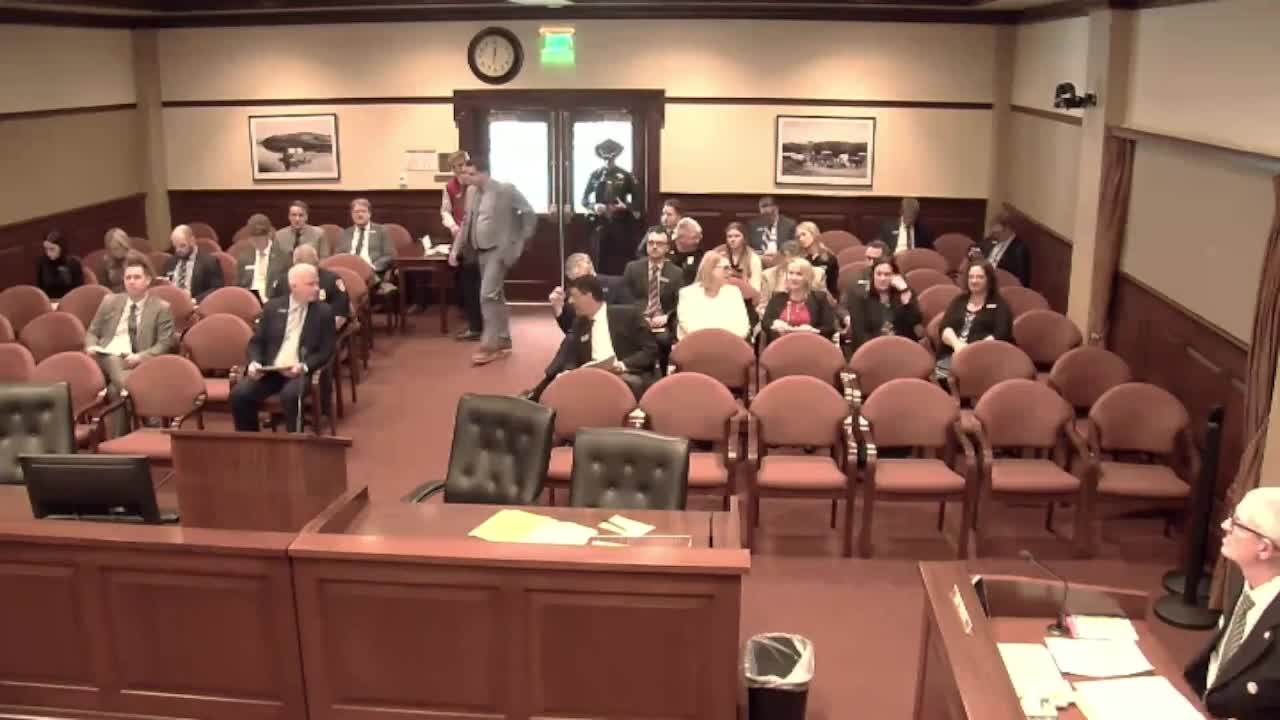
The Idaho Senate Local Government and Taxation Committee voted April 2 to send House Bill 436 to the floor with a do-pass recommendation, advancing legislation that would create a formal process for cities to dissolve urban renewal agencies and give fire and ambulance districts the option to opt out of future revenue allocation areas.
The Idaho Senate Local Government and Taxation Committee voted April 2 to send House Bill 436 to the floor with a do-pass recommendation, advancing legislation that would create a formal process for cities to dissolve urban renewal agencies and give fire and ambulance districts the option to opt out of future revenue allocation areas.
Representative Monks, sponsor: "We are supposed to have a process for dissolving an urban renewal district ... This gets a process by which a city could go ahead and dissolve an urban renewal district. They have to adopt a resolution indicating their intent to do so," he told the committee, adding the measure is optional for cities.
Why it matters: urban renewal plans and their associated revenue allocation areas (sometimes called TIF or tax increment financing) can divert incremental property-tax revenue from local taxing districts for a defined period. Advocates for the bill said the proposal will add local flexibility and allow manufacturing projects to expand by extending revenue allocation for single-owner industrial sites. Opponents said it could create legal and financial risk for existing bonded obligations and undermine taxing districts that rely on property-tax growth.
What the bill would do: Representative Monks described three core elements. First, the bill establishes a two-step municipal process for dissolution: a city council would adopt an initial resolution of intent, meet with the urban renewal agency to develop a plan to scale back obligations, and then adopt a second resolution to finalize dissolution. Second, the bill allows fire and ambulance districts to opt out of new revenue allocation areas going forward (it does not change treatment of existing indebtedness). Third, the bill permits a limited 20-year extension of a revenue-allocation area for a single-owner industrial property in limited circumstances so public-owned infrastructure can be funded for an expansion.
Public testimony and concerns: Megan Conrad, an attorney representing the Redevelopment Association of Idaho, urged the committee to hold the bill or send it to amendment, saying the change is "a fairly significant change" and "deserves much more stakeholder input." She said the draft does not adequately protect existing indebtedness and had not, to her knowledge, been reviewed by bond counsel.
Robin Sellers of the Nampa Development Corporation also asked that the dissolution provisions be revised, warning on the record that the current draft "does not provide clarity and direction on how a URA will meet its existing indebtedness and contractual obligations" and that dissolution could create litigation risk.
Fire and EMS leaders who testified supported the bill. Greg Tominski, representing the Middleton and Star fire districts and the Idaho Fire Chiefs Association, said fire districts are "98% reliant on property tax," that 34 fire districts are tied to 106 urban renewal districts in Idaho, and gave an example in which a single store's taxable value limited the district's revenue; Tominski said his district had "lost over $200,000 just from that one building that's in the urban renewal area." Kirk Carpenter of the Nampa Fire Protection District said Nampa's increment directed to its urban renewal district is "almost a million dollars," money the district otherwise would use for staffing and apparatus.
Business and development groups took varied positions. Alex Labo, president of the Idaho Association of Commerce and Industry, said the bill gives local communities flexibility to support expansions for companies "already invested here," which he argued can create jobs. David Leeman of Meridian Development Corporation asked for amendments focused on the planned 60-day freeze on entering new financial obligations after a termination resolution is adopted, saying the freeze could harm ongoing negotiations and asked that the dissolution language be clarified.
Committee action: Senator Dan Hartog moved to send HB 436 to the floor with a do-pass recommendation; the motion was seconded by Senator Groh. The committee adopted the motion by voice vote; no roll-call tally was recorded in the transcript. The chair indicated the motion carried.
What it does not change: Multiple witnesses and the sponsor emphasized that the bill is optional in effect—cities would have to initiate the dissolution process and existing indebtedness or contractual obligations would continue to be carried out rather than erased by the new procedure, according to Representative Monks and language cited from the draft. Testimony disagreed over whether existing bond obligations are sufficiently protected in the current draft.
Ending: Committee members acknowledged the bill is complicated and that certain sections—especially the dissolution provisions—may require further amendment. The measure will next proceed to the Senate floor for further consideration.