Get Full Government Meeting Transcripts, Videos, & Alerts Forever!
Get email alerts on the Elections Local Government topic
No spam. Unsubscribe anytime.
House committee advances bill to make Ada County Highway District elections countywide, partisan
Summary
The Idaho House State Affairs Committee voted to advance House Bill 471, a measure to change Ada County Highway District commissioner elections from nonpartisan subdistrict contests to countywide, partisan elections; the committee approved the motion to send the bill to the House floor by a 12–1 roll-call vote.
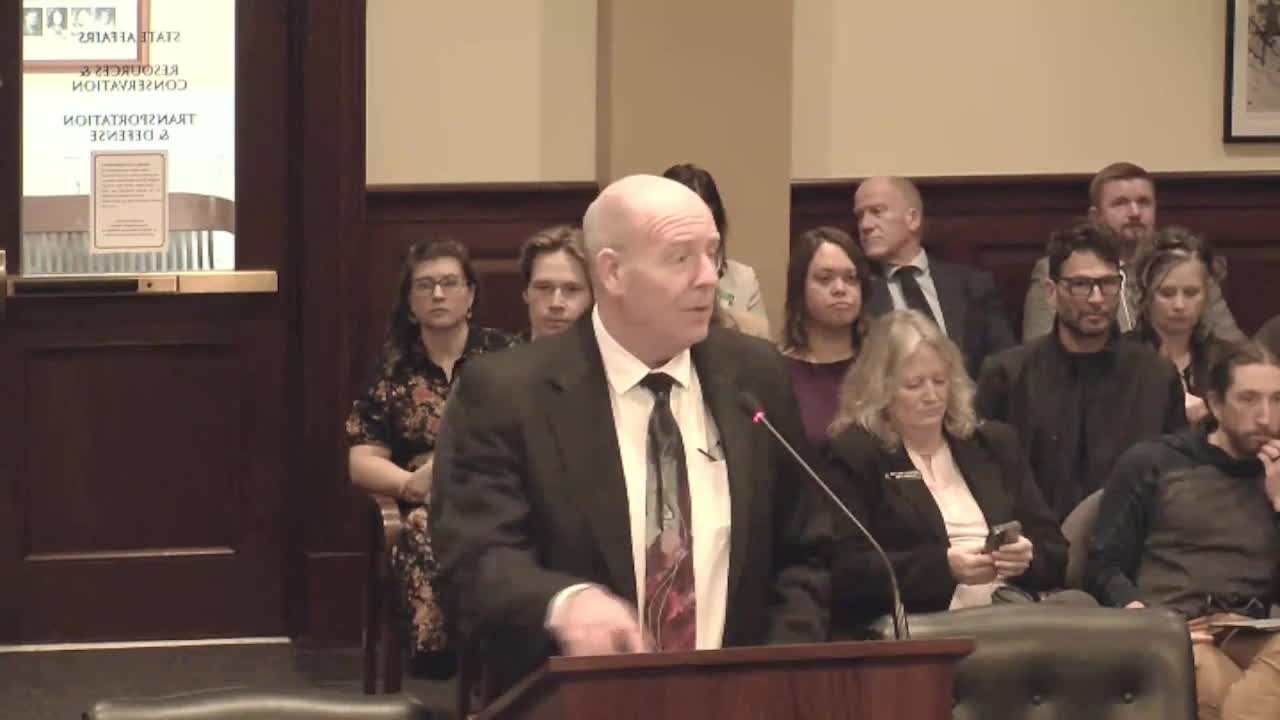
The Idaho House State Affairs Committee voted to advance House Bill 471, a measure that would change Ada County Highway District (ACHD) commissioner elections from nonpartisan subdistrict contests to countywide, partisan elections. Representative Brady Boyle introduced the bill and the committee approved a motion to send it to the full House on a 12–1 roll-call vote.
Supporters, including the bill’s sponsor, argued the change would increase accountability and transparency and align ACHD commissioner elections with other county-level offices. Representative Brady Boyle said the proposal “creates better accountability” and would “put the locals back in control,” arguing countywide partisan elections would open the process to more public input.
Opponents told the committee the change would weaken local representation, politicize everyday infrastructure decisions and invite out-of-state money into local contests. Miranda Gold, president of the Ada County Highway District Commission, said ACHD is “its own entity separate from city and county government” and described the current system as five geographic districts of about 100,000 people each, where “voters from each of those districts elect a nonpartisan commissioner to represent them.” Gold said, “Making Ada County roads partisan while all other highway districts in the state remain nonpartisan is confusing and unnecessary.”
The bill prompted lengthy public testimony. Ryan Head, director of the Ada County Highway District, told the committee, “roads, bridges, drainage and sidewalks are not Republican or Democrat,” and warned partisanship could distract commissioners from projects and public safety. Head also said ACHD oversees significant spending and economic activity, telling the committee the agency’s work “generates half a billion dollars of economic activity into Idaho each year and saves approximately $25,000,000 on annual maintenance.”
Several transportation and safety advocates, including representatives of the Boise Bicycle Project and Idaho Walk Bike Alliance, urged the committee to oppose the bill. Devin McComas, executive director of the Boise Bicycle Project, called transportation “a hyper local issue” and said the current subdistrict structure holds commissioners accountable to neighbors who can raise concerns about potholes, crosswalks and signal timing. Nina Penar, advocacy director for the Boise Bicycle Project, said countywide election would make it harder for local voters to hold commissioners accountable: “This means the commissioner could be chosen without strong support from the very people they are supposed to represent,” she said.
Several residents and local officials also testified. Garden City Mayor John Evans, a longtime elected official in Garden City, said he has seen many ACHD governance structures and warned that “making this bill partisan is gonna be an attractive target potentially for out of state money to come in to influence the management of a local highway.” By contrast, Doug Taylor, a member of the Meridian City Council, testified in support, saying partisan labels give voters clearer information about candidates’ governing philosophies and that ACHD’s large budget ($233,000,000 in the 2025 budget, cited by Taylor) warrants more transparency.
Committee members debated whether countywide partisan elections would dilute local voices in less-populated parts of Ada County and whether the change would invite outside spending. Representative Achilles said he would vote no, arguing the public testimony was overwhelmingly opposed and that district-based elections—used by many city councils—have worked well. Representative Skog, by contrast, said the change would make existing partisanship more transparent and supported the bill.
On the motion to send HB 471 to the House floor with a due-pass recommendation, the committee voted 12 in favor and 1 opposed. The committee’s roll call included multiple members voting yes and a single recorded no vote. With the committee’s recommendation, the bill moves to the full Idaho House for further consideration.
Votes at a glance
- Motion: Send House Bill 471 to the House floor with a due-pass recommendation (motion by Representative Palmer). - Committee vote: Passed 12–1 (one recorded no vote).