Get Full Government Meeting Transcripts, Videos, & Alerts Forever!
Get email alerts on the Higher Education Dei Restrictions topic
No spam. Unsubscribe anytime.
Idaho committee advances bill limiting DEI programs in public higher education; sends SB 1198 to general orders after 10-4 vote
Summary
The committee voted 10-4 to send Senate Bill 1198 — which would restrict diversity, equity and inclusion (DEI) offices, training and bias reporting systems at public colleges and universities — to general orders after hours of sponsor explanation and public testimony for and against the measure.
Senate Bill 1198, a measure that would restrict DEI offices, required DEI trainings and bias-reporting systems at Idaho public institutions of higher education, moved out of committee to general orders after a roll-call vote of 10-4.
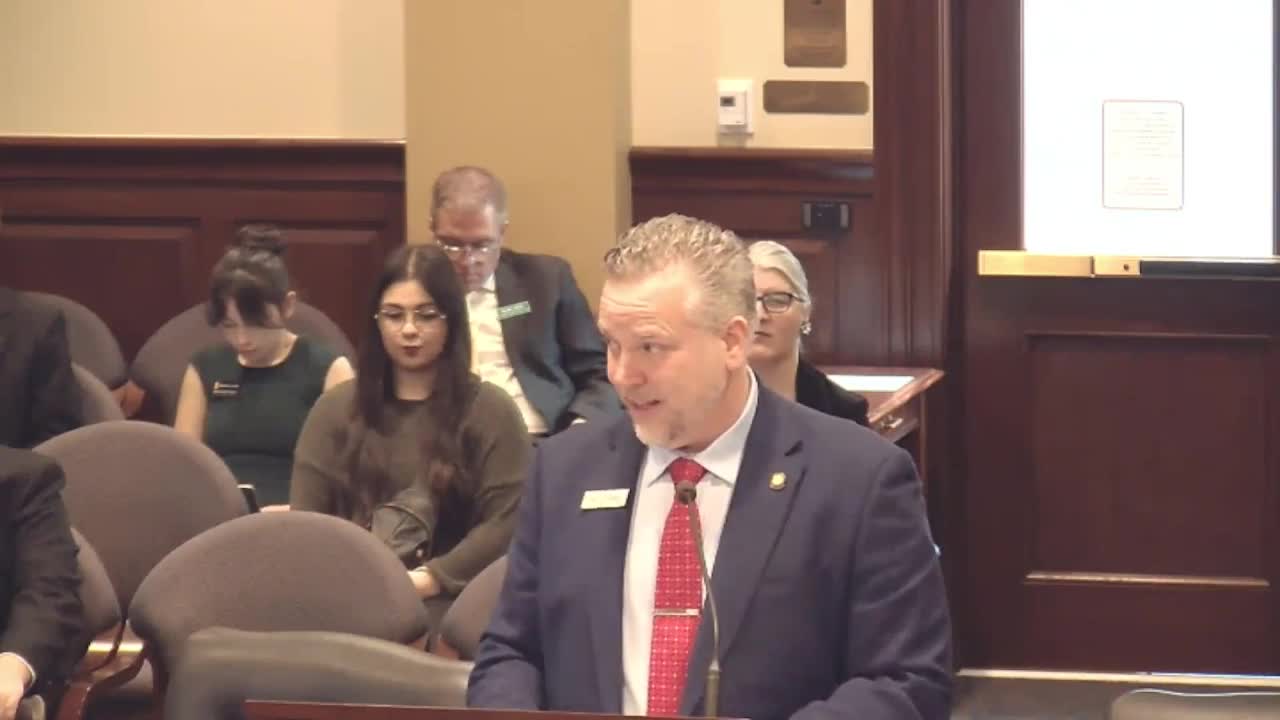
The bill’s sponsor, Senator Ben Toews, presented the measure and described it as a compilation of “best practices” drawn from model language and statutes in other states. “The definition of bias reporting system means any office, department, position or system whose function it is to investigate, threaten disciplinary action, or otherwise punish enrolled students for expressions of speech protected by state or federal law,” Toews said, arguing the provision is intended to prevent what he called chilling of speech on campuses.
Supporters and opponents lined up for two-minute public testimonies. Samuel Lair of the Idaho Freedom Foundation said DEI has “transformed the mission” of universities and cited a foundation estimate that colleges spent $5.8 million on DEI salaries in 2023. “I believe we need to restore the credibility and refocus our institutions on their core mission,” Lair said. By contrast, Ashley Toman, a master of social work student, testified the bill “directly interferes with the mission” of social work education and warned that restricting DEI-related instruction could jeopardize accreditation and workforce pipelines in health and social services.
The bill text, as described in the hearing, would: prohibit DEI offices and certain DEI trainings at public institutions; bar bias-reporting systems the sponsor defined as potentially chilling protected speech; forbid requiring students to take DEI-related courses to satisfy degree requirements (with exemptions for programs whose subject matter is primarily focused on racial, ethnic or gender studies); require annual reporting by institutions to the attorney general and the legislature; provide a 30-day cure period for alleged violations; and authorize the attorney general to file suit and to seek civil penalties up to 2% of the budget of the offending division, office, center or unit.
The sponsor emphasized exemptions and limits in the bill, saying it would not ‘‘limit research by students, faculty, or other research personnel’’ or ‘‘limit creative works’’ and that it would not prohibit institutions from regulating student speech that is unlawful. Toews also said Americans should have freedom “from a demand to think or speak a specific way,” and that the measure aims to protect open debate.
Opponents — including Cathy Dawes of Moscow, Dr. Mary Mosley of the American Association of University Women of Idaho, Bonnie Pfaff of Boise, and others — warned the bill’s definitions are vague, that it could chill academic freedom, and that it invites private and governmental enforcement actions against campus programs. Dr. Mosley told the committee the bill “would usurp educators’ prerogative of choosing curriculum” and could cause faculty to “think twice about what they’re teaching.” Supporters such as Grace Howitt of the Idaho Family Policy Center said DEI programs have diverted resources and advocated returning institutions to “equality” under the law rather than group-based programming.
Committee debate included procedural motions. Representative Sauter moved to hold the bill in committee; that substitute motion failed by roll call, 4-10. Representative Hawkins moved to send SB 1198 to general orders; that motion passed on a roll-call vote, 10-4. During closing, the sponsor requested the bill be sent to amending order and noted the committee might revisit the 2% civil-penalty cap after looking at budget figures for small units.
Votes at a glance
- Substitute motion to hold SB 1198 in committee — moved by Representative Sauter: FAILED (Yes: Nelson, Sauter, Mathias, Church; No: Pickett, Hawkins, Clow, Mendyff, Poe, Ehart, Fishniewski, Garner, Harris, Marmon, Tanner) — recorded as 4 yes, 10 no in the hearing.
- Motion to send SB 1198 to general orders — moved by Representative Hawkins: PASSED by roll call, 10 yes, 4 no. The committee’s roll-call sequence in the hearing listed votes; the clerk recorded the overall outcome as 10-4.
Context and next steps
The bill would create a new reporting and enforcement regime centered on the attorney general and allow private injunctive relief by students and staff. The sponsor asked that the measure go to amending orders so the committee can consider adjustments — for example, revisiting the maximum-civil-penalty approach and related numeric caps — before floor consideration. The committee transcript records substantial disagreement about the definitions used in the bill, how broadly terms such as “derived from” or “promotes the tenets of critical theory” would be applied in classroom settings, and whether the legislation could unintentionally affect accreditation-dependent programs.
The committee hearing included numerous members and public witnesses on both sides; the record shows the bill will proceed to the next legislative step with clear public and legislative debate ahead.