Get Full Government Meeting Transcripts, Videos, & Alerts Forever!
Get email alerts on the Property Taxes Mill Levies topic
No spam. Unsubscribe anytime.
Montana Taxpayers Association briefs Senate Tax Committee on mill-levy trends
Summary
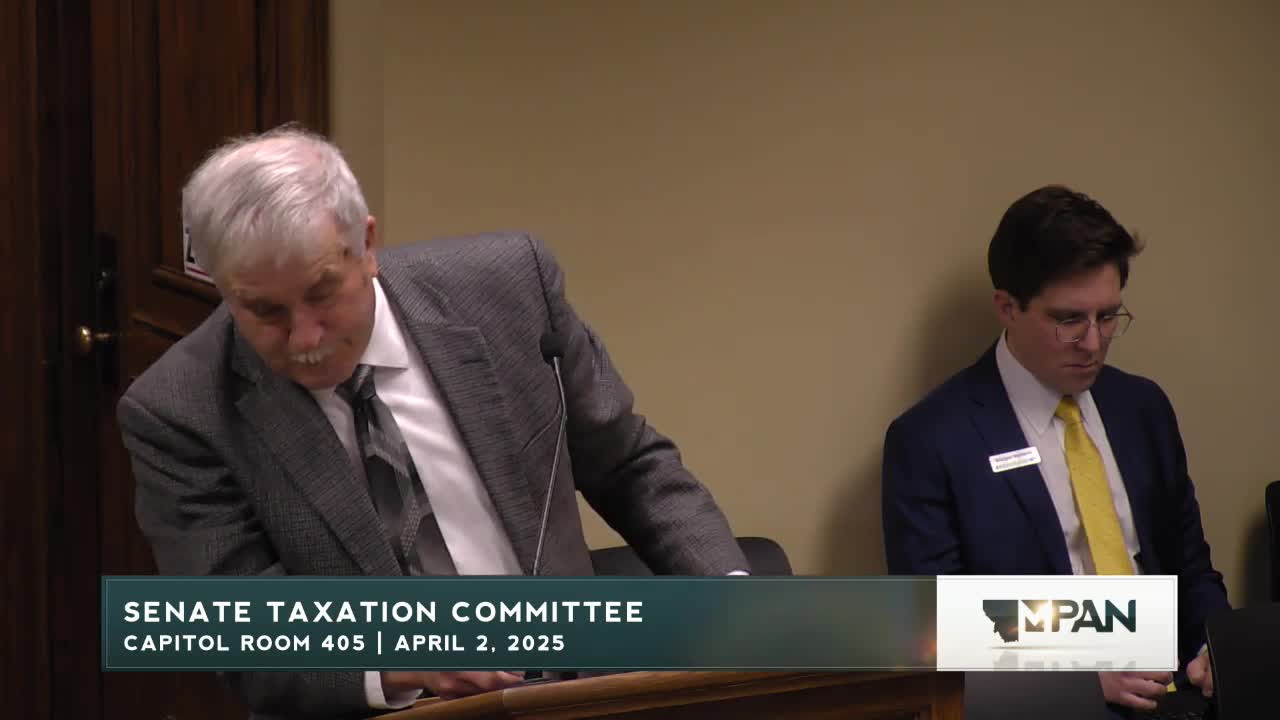
Bob Storey of the Montana Taxpayers Association presented the group’s annual mill-levy book to the Senate Tax Committee, describing county, city and school-district mill-levy changes and a new back-of-book table showing four‑year county trends; he also distributed a brief primer on Montana’s property-classification system.
Bob Storey, representing the Montana Taxpayers Association, presented the association’s annual mill-levy book and a short primer on property‑tax classification to the Senate Tax Committee during its session. The book breaks down mill levies by county, city and school district and includes new back‑of‑book tables showing four years of county mill‑levy changes, taxable value trends and property‑tax revenue by county.
Storey said the tables pull data from the Office of Public Instruction for schools and from the Department of Administration and the Department of Revenue for cities and counties; where official numbers were unavailable, his organization contacted the local jurisdictions directly. He also distributed a one‑page pamphlet that explains Montana’s property‑classification system and the share of taxable value borne by each class.
The materials are intended as a reference for legislators handling tax bills this session; Storey suggested members keep a copy for use when reviewing proposed tax changes. During questions, Senator Fern said the pie chart showing the state share of tax levy by jurisdiction listed the state at “about 20.5 percent” and asked whether that number was accurate. Storey said that share came from the Department of Revenue’s report and that the association relied on the department’s figures.
Vice Chair Beard thanked Storey for assembling and distributing the materials, and Chair Hertz invited members to consult the book when considering property‑tax and mill‑levy proposals.
The distributed materials include county‑level four‑year trend tables and the ten largest cities’ mill‑levy details; Storey described the book as “probably about as accurate of a depiction of what’s going on with mill levies that you can find,” given the agency sources and direct follow‑up with local governments.