Get Full Government Meeting Transcripts, Videos, & Alerts Forever!
Get email alerts on the Property Housing topic
No spam. Unsubscribe anytime.
Bill would clarify when homeowners associations may be barred from enforcing covenants after long non‑enforcement
Summary
Representative Jedidiah Hinkle told the committee House Bill 147 would define "enforcement action" so homeowners can assert a defense that a covenant was abandoned after prolonged periods without enforcement; the bill would require enforcement to be 'equally and consistently' applied over at least two years for enforcement to be valid.
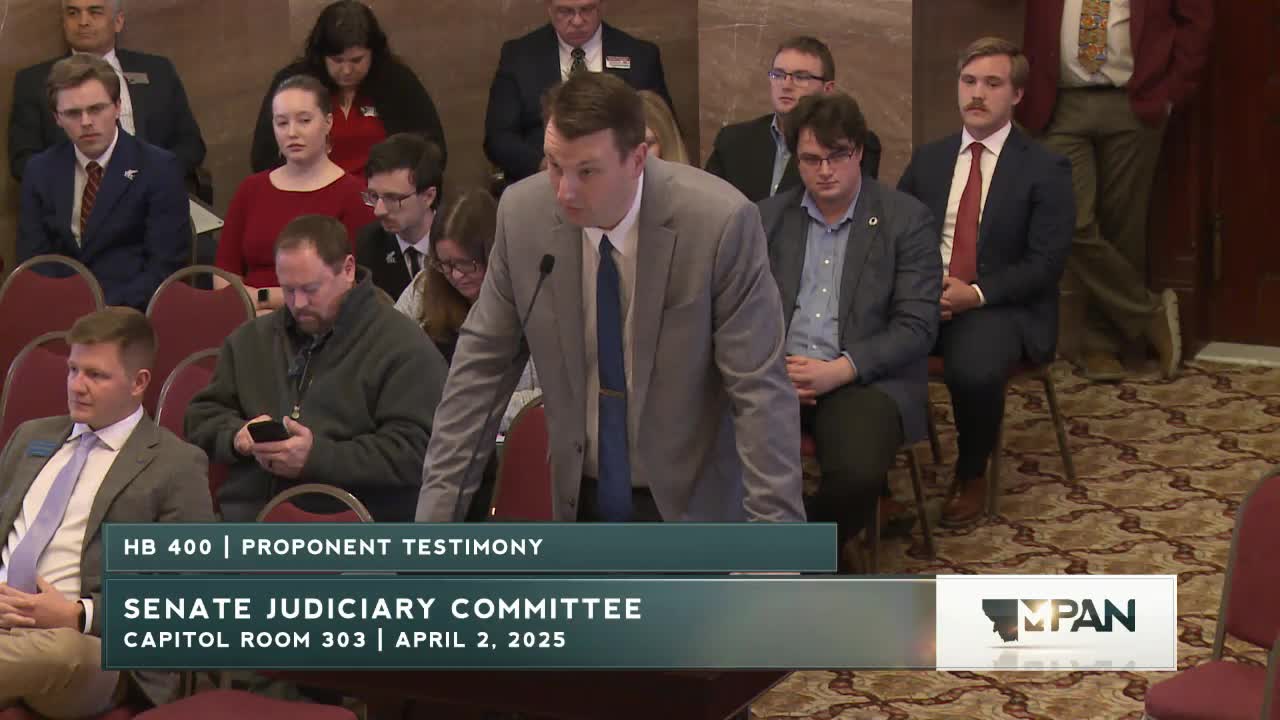
Representative Jedidiah Hinkle, sponsor of House Bill 147, told the Senate Judiciary Committee the bill clarifies a defense available to homeowners under current law. Existing law allows a parcel owner to assert that a homeowners association (HOA) covenant, condition or restriction has been abandoned if no enforcement action has been undertaken for a statutory period (8 years). HB 147 would define what counts as an "enforcement action" for purposes of that defense.
Hinkle explained that many constituents report uneven, "schizophrenic" enforcement where boards enforce covenants for a period, then stop, then restart enforcement. The bill would add that an enforcement action means "the covenant was equally and consistently enforced under whatever method the association uses to enforce covenants on all properties subject to the covenant over at least a two‑year period."
Supporters included a Billings attorney with experience in property and HOA law who told the committee HB 147 would bring clarity and a workable, shorter evidentiary window than other equitable doctrines a court might use.
No opponents appeared in the hearing and committee members asked clarifying questions about hypothetical situations — for example, handicap‑access temporary structures and the interaction between differing covenant texts across associations. The sponsor and an attorney witness said the bill would not override covenants themselves and is intended to supply predictable guidance for both homeowners and association boards.
Ending: The sponsor urged a do‑pass recommendation, saying the change had bipartisan House support and that HOA members had asked for clearer statutory guidance.