Get Full Government Meeting Transcripts, Videos, & Alerts Forever!
Get email alerts on the Campus Free Speech topic
No spam. Unsubscribe anytime.
Students, alumni press for interim committee to investigate 'censorship' and civil‑rights complaints at Montana universities
Summary
House Bill 284 would create a short interim committee to investigate alleged civil‑rights and free‑speech violations within the Montana University System; students described grading and classroom experiences they said amounted to ideological pressure and censorship, while supporters said an accessible oversight avenue is needed.
Representative Caleb Hinkle opened a hearing for House Bill 284, which would create a temporary interim committee to investigate civil‑rights and alleged censorship violations across the Montana University System. The committee would meet up to three times and produce a report to the legislature.
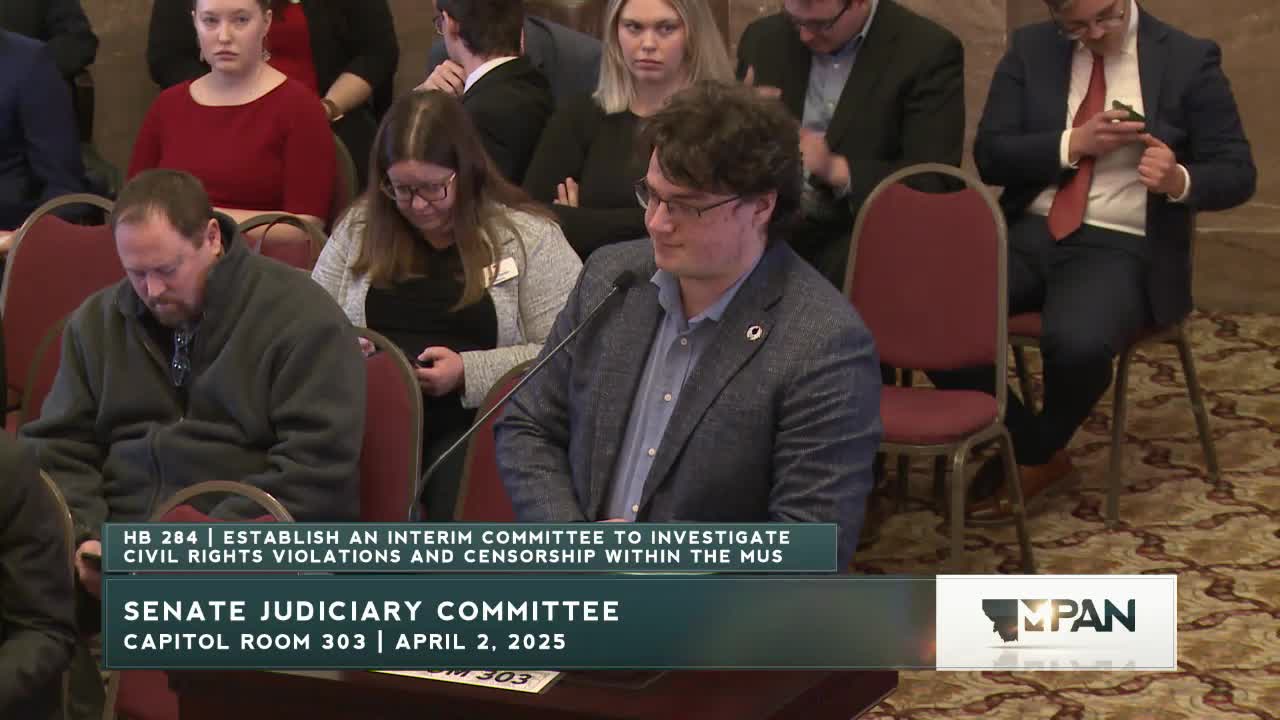
Dozens of students and recent alumni testified in favor of the bill, offering personal accounts of grading that they said penalized political viewpoints, classroom environments where students feared speaking up, and claims that internal university complaint processes were opaque or ineffective. Katarina Jones, a former MSU student, said a WRIT 101 paper received an "F" with a sticky note that read only "I do not agree," and her efforts to get redress from the university appeals process were unsuccessful. Dylan Stokes, another student proponent, said he left Washington state for college in Montana "to get away from Washington's horrific treatment of students," then described classroom experiences he said were similarly ideologically driven.
Supporters argued the legislature needs a bipartisan, structured way to gather complaints from current and former students and to evaluate whether universities are protecting free expression. Patrick Webb of the Montana Family Foundation said the measure "creates a fair bipartisan structured way for the legislature to gather information, evaluate the climate for free expression and equal treatment, and make recommendations." Several proponents emphasized difficulty navigating university complaint processes and the financial and emotional costs of bringing litigation.
The committee heard no opponents in the room. Representative Hinkle said the appropriation for the interim committee was modest and based on legislative staff estimates; members asked follow‑up questions about whether universities would cooperate and how students would be informed of complaint avenues.
Ending: The committee closed the hearing after taking testimony and asking staff and proponents for additional details about the proposed committee’s operations and budget.