Get Full Government Meeting Transcripts, Videos, & Alerts Forever!
Get email alerts on the Education topic
No spam. Unsubscribe anytime.
Bill would let licensed cosmetologists train apprentices in areas more than 50 miles from schools; supporters cite rural access, opponents cite safety and pre‑x
Summary
Senate Bill 207 would let the Board of Cosmetology adopt rules permitting supervised classroom/apprenticeship training by licensed cosmetologists (5+ years experience) for applicants who live more than 50 miles from an accredited cosmetology school; witnesses debated access, safety, and regulatory oversight.
Senate Bill 207 would authorize the Oregon Board of Cosmetology to adopt rules allowing individuals who live more than 50 miles from a licensed cosmetology school to receive their required education from a licensed cosmetologist who has practiced for five or more years. Students would still be required to pass the standard licensing exams, and the measure was presented to the committee with a dash-4 amendment developed with the Oregon Health Authority.
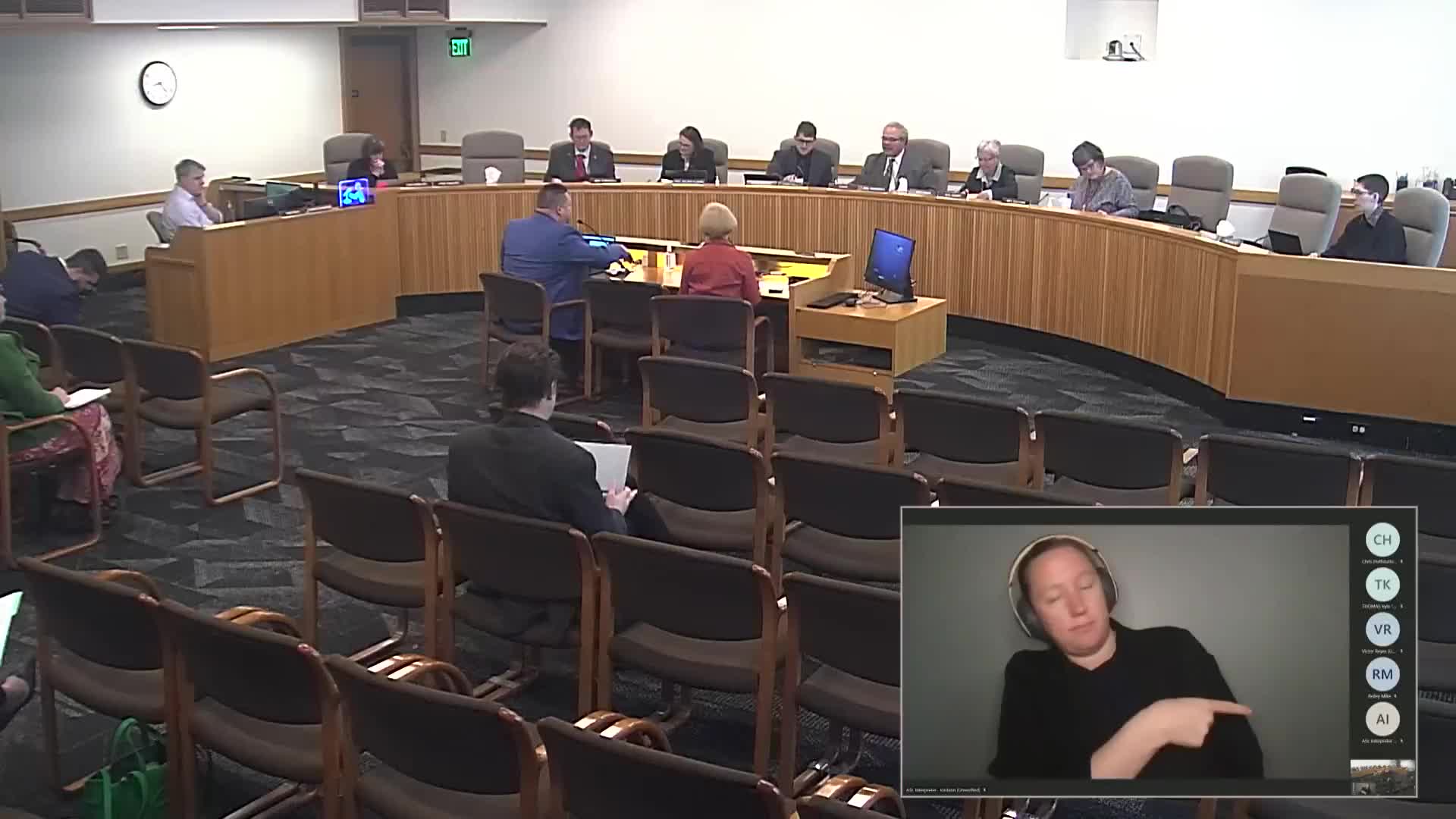
Senator David Brock Smith, sponsor of SB 207, said the bill is primarily an access measure for rural Oregon. “There’s a desperate need for our rural communities, and the jobs associated with them for cosmetology education,” Senator Brock Smith told the committee, describing examples in Coos Bay and Brookings where the nearest school is a two-plus hour drive and prospective students face a year of training away from home and work.
Representative Bobby Levy, a co-chief sponsor, said the bill responds to closures that left Eastern Oregon without nearby cosmetology schools and that her district has repeatedly asked for a fix. Both sponsors said the proposal preserves professional examination and licensing requirements while allowing training in local salons so students can work while they learn.
Opponents included Chris Hofstetter, owner of Summit Salon Academy and president of the Association of Oregon Cosmetology Colleges. He said competency-based private career schools already permit local registration and flexible, non-hour-based training paths; he raised questions about background checks, instructor registration, sanitation and safety standards, and civil-liability exposures for minors trained under the proposed model. “What happens when a minor in an aesthetics program is exposed to ********? What happens as there's a lawsuit based by 1 of these young people trying to enter our industry?” Hofstetter asked.
Committee members probed several issues: whether a short licensing quiz could suffice (some members favored additional simplification but sponsors said the bill still requires existing exams), whether the law would impose new responsibilities on salon owners or the cosmetologist supervisors, and whether the Oregon Health Authority’s suggested amendments addressed safety and background-check concerns. Sponsors said they had worked with OHA on dash‑4 and that OHA indicated satisfaction with the amendment’s language.
No committee vote was recorded on SB 207 during the April 2 hearing; the chair closed the public hearing and the committee carried the bill over for additional consideration and possible amendment.
Public testimony reflected a split between rural-access advocates and existing cosmetology schools and trade educators who urged that current competency-based pathways or regulatory protections be preserved.