Get Full Government Meeting Transcripts, Videos, & Alerts Forever!
Get email alerts on the Treasury Budget topic
No spam. Unsubscribe anytime.
Treasury officials outline SB 5542 budget and say agency is 'entirely other funds'
Summary
Treasury leaders told the General Government Subcommittee that Senate Bill 5542 is the primary appropriations bill for the State Treasurer, that the agency is funded entirely from other funds (investment fees and program revenues), and that its work manages billions in assets and transactions. Officials highlighted requests for limited position
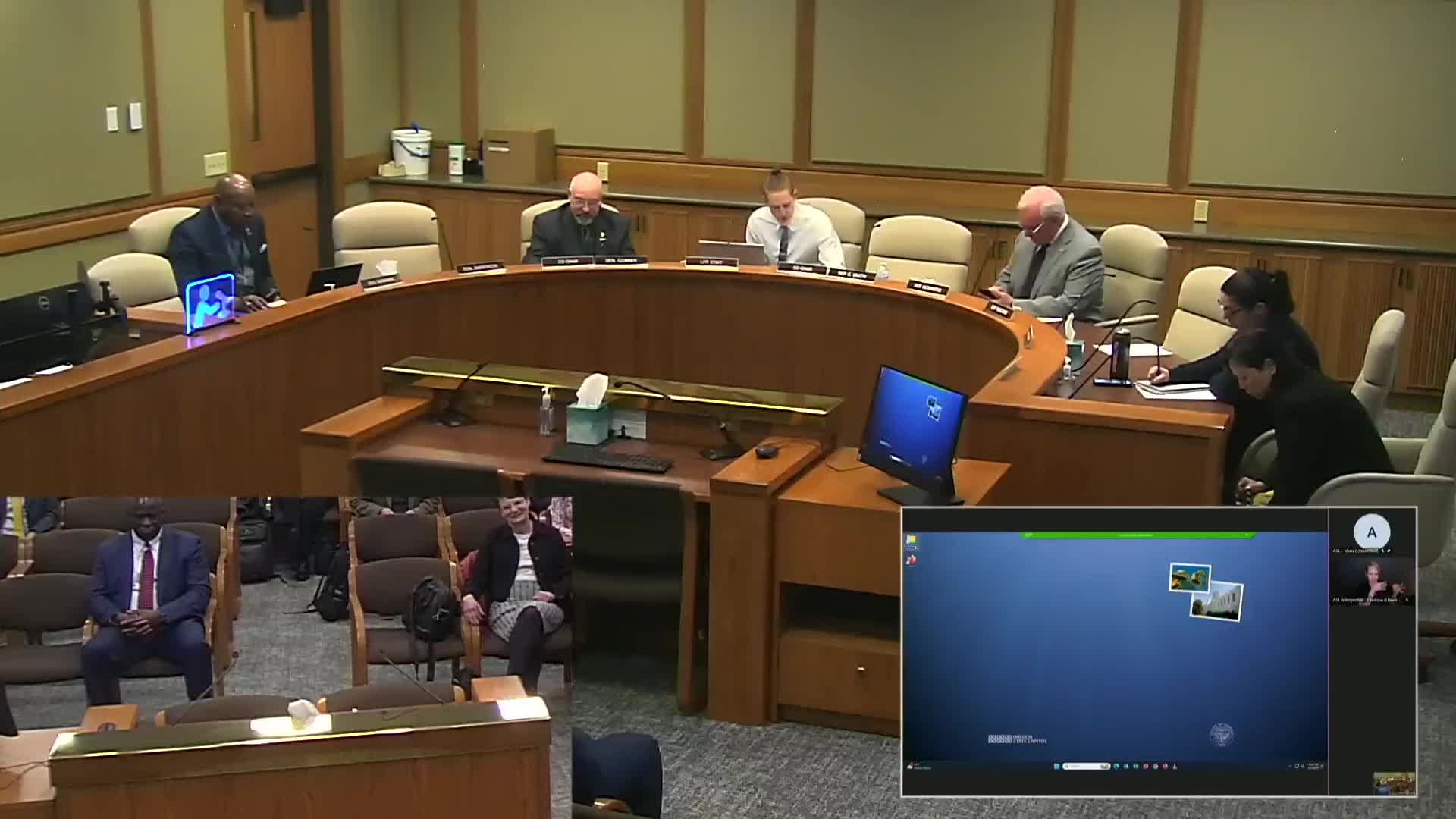
The General Government Subcommittee opened an informational review of Senate Bill 5542 — the primary appropriations bill for the State Treasurer — on April 2, hearing an overview from Treasurer Elizabeth Steiner and Deputy Treasurer George Naughton on the agency’s structure, funding and the scale of assets it manages.
"Oregon Treasury is in excellent shape," Treasurer Elizabeth Steiner said, and emphasized she and Deputy Treasurer Naughton chose to have division directors present details because "they know their work better and their teams better than we ever could." The treasurer noted the agency is funded entirely from other funds—fees and earnings tied to the assets it manages—so the governor does not submit a general-fund recommendation for Treasury’s budget.
Deputy Treasurer George Naughton summarized scale: Treasury manages roughly $141 billion in investments, acts as the state’s banker for tens of millions of transactions, and supports numerous programs including college savings (Section 529 plans), the ABLE program for people with disabilities and the Oregon Saves retirement program.
Why it matters: SB 5542 sets the administrative and operations budget for the Treasury for the 2025–27 biennium. Because the agency administers and invests large pools of public funds (pension, savings and operational cash), its operational decisions affect how quickly funds are invested and the resources available for anti-fraud, cybersecurity and customer service.
Key details from the presentation
- Funding model and request: Treasury officials said the agency is funded from fees and investment earnings rather than the state general fund. Investment services fees are unusually low compared with private-sector managers (agency noted roughly 3 basis points annually for pension investment services), and some staffing requests are framed as necessary to meet increasing volume and complexity.
- Scale of operations: Finance and banking operations processed 18.4 million transactions in 2024 totaling about $419 billion. Investment services oversee approximately $141 billion in market investments. The Oregon Short Term Fund alone was described as tens of billions (agency cited a $36 billion figure for short-term investments during the hearing).
- Staffing and packages: Naughton framed four major packages the agency will present to the subcommittee (investment services, trust property, administrative services, and information technology) and said the requests are primarily intended to address volume, market complexity and modernization needs.
- Budget classification: Treasury staff repeated that Treasury’s budget contains no general fund appropriation and that requested position authority would use money the agency earns on the assets it manages.
Representative and senator questions focused on whether performance targets should be adjusted given consistently strong results in many areas, on how the agency’s fees compare with the private sector, and on whether agency systems and staffing are adequate to protect funds and maximize short-term returns.
Quotes from the hearing
"We are asking you for position authority to use money that we already have and are not spending in order to do our jobs even better to serve the people of the state of Oregon," Treasurer Elizabeth Steiner said.
"Everything we do is someone else's money that we're actually managing," Deputy Treasurer George Naughton said.
Next steps
This was an informational hearing on SB 5542; agency division presentations will continue on a second day and include more detail on investment services, debt management, the Oregon Savings Network and IT/cybersecurity. The committee did not take a formal vote during the session.