Get Full Government Meeting Transcripts, Videos, & Alerts Forever!
Get email alerts on the Racing Regulation topic
No spam. Unsubscribe anytime.
Senate committee advances bill letting Oregon Racing Commission raise licensing and wagering fees
Summary
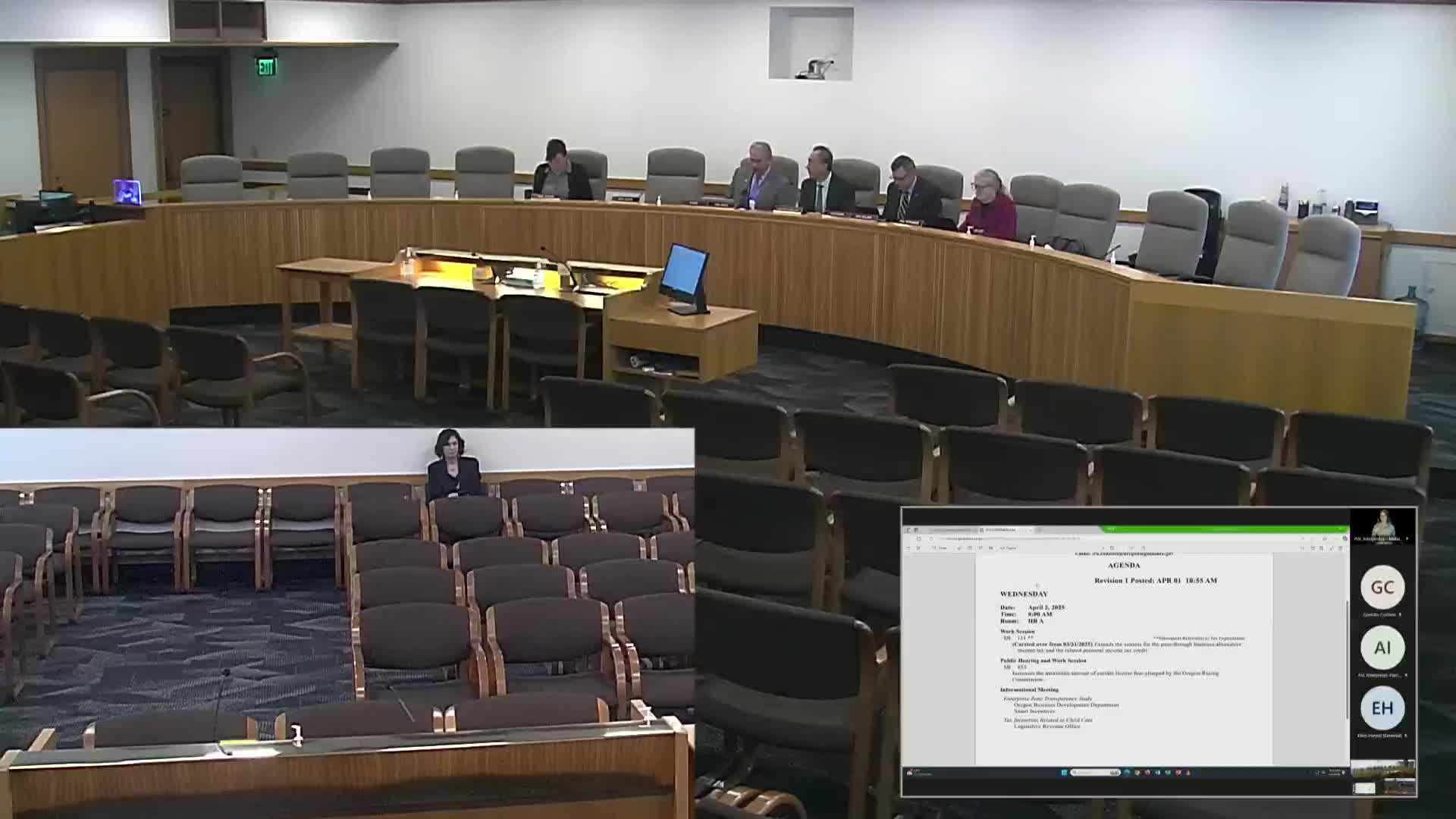
The Senate Committee on Finance and Revenue voted to send Senate Bill 853 to the floor with a "do pass" recommendation and referral to the Joint Committee on Ways and Means after hearing from the Oregon Racing Commission about rising costs and proposed tiered license and online-wagering fee increases.
The Senate Committee on Finance and Revenue advanced Senate Bill 853 on a 4-0 roll-call vote, sending the bill to the Senate floor with a "do pass" recommendation and a subsequent referral to the Joint Committee on Ways and Means.
The bill would raise statutory caps on several fees charged by the Oregon Racing Commission, including individual license fees and online-wagering fees. The committee opened a public hearing and a work session on the bill after the commission requested more time to prepare paperwork on a separate measure.
The racing commission's executive director, Connie Wynne, told the committee the agency is losing money on most individual licenses and is facing reduced revenue after the exit of online wagering operators and local off-track betting locations. Wynne said current individual license fees are $20 per year, while processing and background checks alone can cost about $53 per license, not including staffing and database costs.
Wynne described a proposed, tiered individual-license schedule with six levels ranging from $25 to $125 and authority to set a statutory maximum of $150 per license; she also proposed moving to two-year licenses for many categories so lower-paid workers could pay $50 for a two-year term rather than the existing three-year cycle. For online-wagering operators, Wynne said the commission proposes raising a daily fee that is currently $200 to $225. During the hearing senators corrected an initial percentage stated in the presentation and noted the change from $200 to $225 represents a 12.5% increase, not 25% as the presenter initially misstated.
Committee members repeatedly emphasized that the legislature had recently expanded the commission's enforcement authority. Vice Chair McLean reminded the committee that in a prior Judiciary Committee action the legislature authorized the commission to assess fines up to $25,000, and told Wynne the new fee and fine discretion would be closely monitored. Wynne said the fine authority was intended to provide the commission with "teeth" to require out-of-state operators to stop taking wagers in Oregon rather than to collect large fines.
After questions from committee members about equity across license classes — for example, charging a CEO the same as a stable worker — Wynne said the tiered schedule is intended to be progressive and to align Oregon more closely with license fees in other states, noting examples with substantially higher fees and fingerprinting costs.
Vice Chair McLean moved SB 853 to the floor with a due-pass recommendation and referral to the Joint Committee on Ways and Means. The clerk called the roll: Senator Patterson, Aye; Senator Star, Excused; Senator Taylor, Aye; Vice Chair McClain, Aye; "Jeremy," Aye. The motion passed and SB 853 will be sent to the Joint Committee on Ways and Means.
The committee did not adopt further amendments during the work session. Several senators — including McLean and Chair Meeks — said they would monitor how the commission exercises the new discretion to set fees and assess fines if the bill becomes law.
Votes at a glance
- Senate Bill 853 — Move to Senate floor with "do pass" and referral to Joint Committee on Ways and Means. Moved by Vice Chair McLean. Vote recorded on the record: Patterson (Aye), Star (Excused), Taylor (Aye), Vice Chair McClain (Aye), Jeremy (Aye). Outcome: approved and referred.
Additional context
Wynne listed several revenue pressures: the departure of three online-wagering companies to other states, the closure of several off-track betting locations since COVID, loss of year-round racing at Portland Meadows (now seasonal), reduced simulcasting and historical horse-racing revenue, and an expected phased end to greyhound racing. Wynne said the commission wants to preserve services related to equine and human-athlete safety while placing license fees on a more sustainable footing.