Get Full Government Meeting Transcripts, Videos, & Alerts Forever!
Get email alerts on the Public Defense Non Unanimous Jury topic
No spam. Unsubscribe anytime.
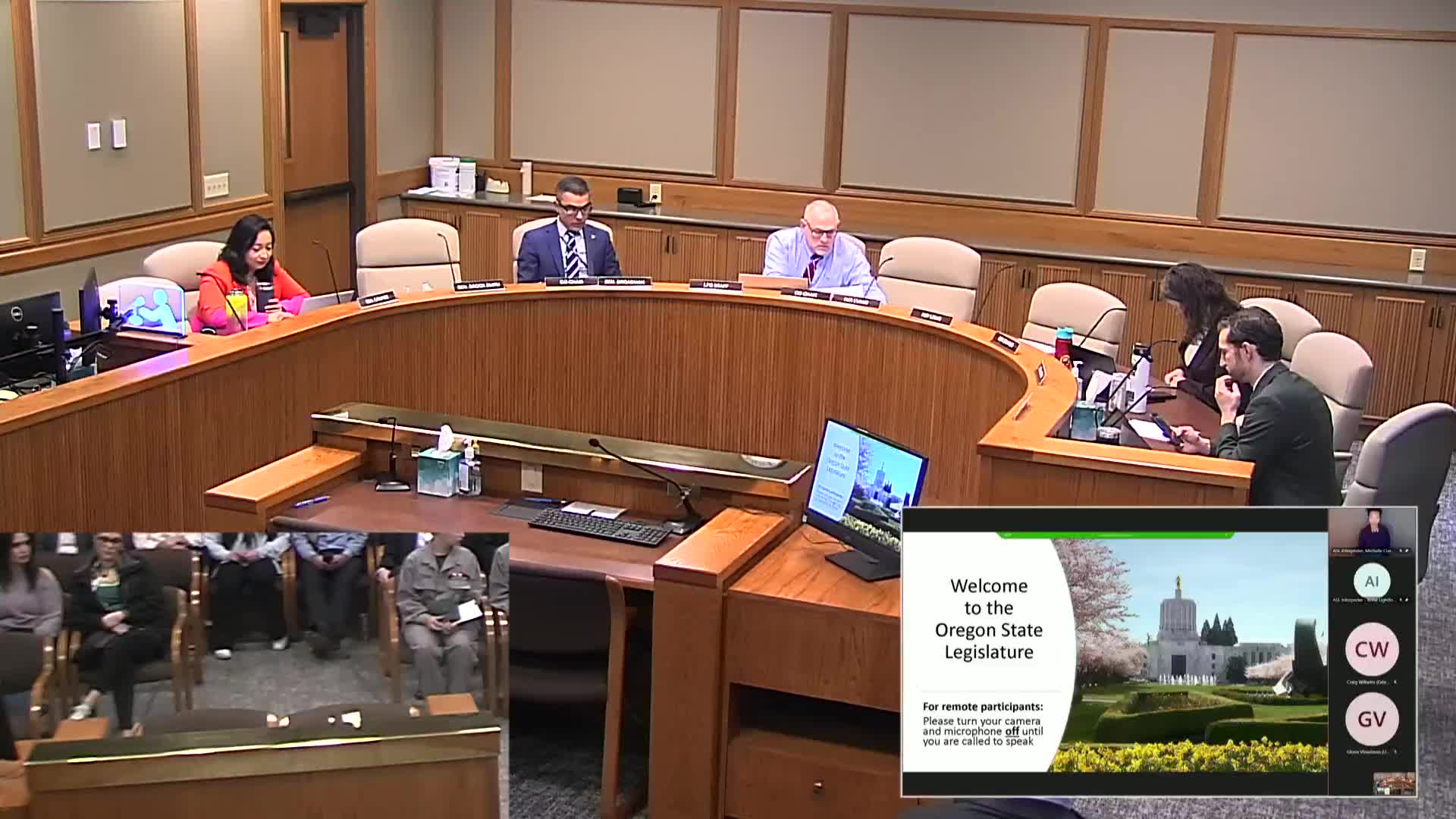
Panel forwards Public Defense Commission report on non‑unanimous jury convictions to full committee
Summary
The Senate Public Safety Subcommittee acknowledged receipt of a Public Defense Commission report on non‑unanimous jury convictions and voted to send the agency’s request to the full committee after hearing cost and caseload figures tied to Ramos and an Oregon Supreme Court decision.
The Senate Public Safety Subcommittee on Wednesday acknowledged receipt of the Oregon Public Defense Commission’s report on non‑unanimous jury convictions and voted to send the agency’s request to the full committee.
The report, produced under Senate Bill 5532 (2023), summarized caseload and cost estimates related to the U.S. Supreme Court decision in Ramos v. Louisiana and the Oregon Supreme Court decision in Watkins v. Ackley. Jessica Campe, executive director of the Oregon Public Defense Commission, told the subcommittee the agency received 649 petitions for post‑conviction relief tied to Ramos and assessed about $2,500,000 in associated costs.
Jonathan Bennett of the Department of Administrative Services Chief Financial Office recommended acknowledging the commission’s report. "The DAS CFO office acknowledges receipt of the report," Bennett said. The Legislative Fiscal Office also recommended the committee acknowledge receipt, and Representative Lewis moved to advance the request to the full committee "with the LFO recommendation." The motion passed with no recorded objection.
Committee members and staff framed the item as a work session rather than a vote on funding; the report documents costs the agency has tracked and projects no additional costs into the next biennium because the legislature set a two‑year statute of limitations for the relevant petitions. Cochair Broadman closed the work session after the motion passed and Senator Campos agreed to carry the item to the full committee.
The subcommittee’s action was procedural: acknowledging the report and referring the agency request to the full committee for further consideration. The report cites Ramos v. Louisiana and the Oregon Supreme Court decision in Watkins v. Ackley as the legal background for the petitions and the agency’s caseload.