Get Full Government Meeting Transcripts, Videos, & Alerts Forever!
Get email alerts on the Open Meetings Executive Sessions topic
No spam. Unsubscribe anytime.
Oregon bill would extend deadline to file grievances over executive sessions from 30 days to one year
Summary
A public hearing in the House Committee on Rules examined House Bill 3638, which would allow people to file written grievances about alleged violations of executive-session rules up to one year after the alleged violation, expanding the current 30‑day grievance window for such matters.
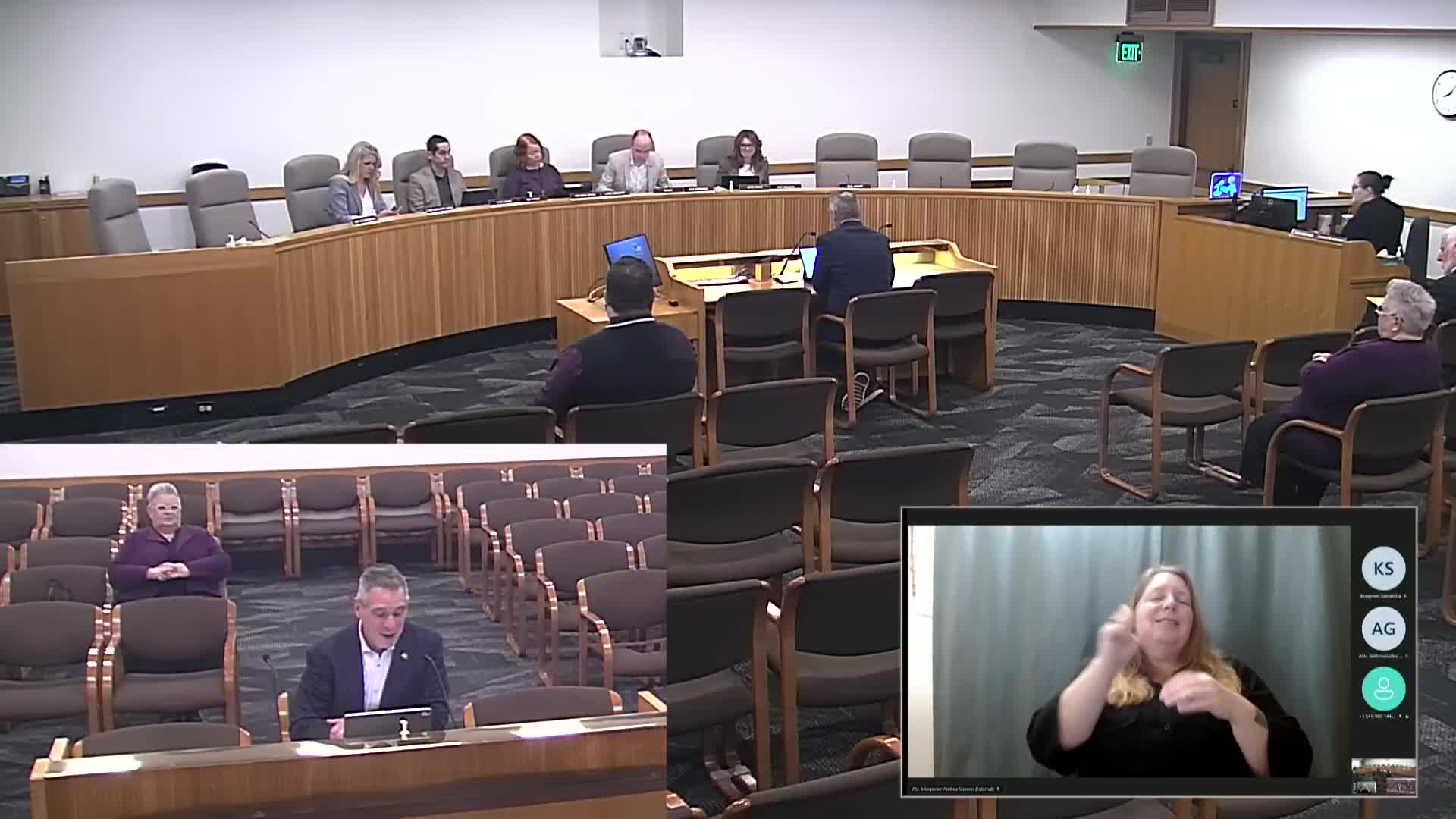
House lawmakers heard public testimony Wednesday on House Bill 3638, which would let a person file a written grievance with a public body within one year instead of 30 days if they believe the governing body violated executive‑session rules.
The bill’s sponsor, state Rep. Jeff Helfrich, said the shorter 30‑day deadline adopted by the Legislature in 2023 unintentionally prevented the public from challenging alleged violations that only become apparent when minutes are released or when decisions surface months later. "This measure would extend the time someone can file a grievance related to an executive session from 30 days to a year," Helfrich said.
The measure responds to changes in 2023 that tightened the timeline for filing grievances under the public meetings framework. Susan Myers, executive director of the Oregon Government Ethics Commission, told the committee the 30‑day requirement currently applies to executive sessions and that the commission has seen examples where members of the public could not meet the deadline because they learned of the alleged violation only after minutes or subsequent actions became public. "Currently now anyone who believes an executive session provision was violated must file a grievance with their public body within 30 days of when that violation occurred," Myers said, explaining how the grievance-and-response period fits into the complaint process.
Myers provided context from the commission’s caseload: 88 executive‑session complaints in 2022, 92 in 2023 and 98 in 2024, representing complaints about roughly 17, 17 and 21 groups of governing bodies respectively; she said nine of the 21 groups in 2024 failed to meet the 30‑day grievance requirement and were dismissed. Myers also described the commission’s remedies, noting the ethics commission cannot undo government actions but can pursue civil penalties and education, including letters and mandatory training, for violations it finds.
Public commenters supported the extension. Al Wen, a longtime radio broadcaster, said the current 30‑day window is too short for the public to digest events that happened behind closed doors and urged lawmakers to move the bill forward.
Committee members asked procedural questions about the bill and about parties who had submitted written testimony; Helfrich said he had not personally discussed the measure with some local governments that submitted technical comments but noted the ethics commission had engaged on the issue. Chair Bowman closed the public hearing and moved on to the committee’s next item.
The bill remains in committee; no committee vote on the measure was recorded during the hearing.
The record shows testimony from the bill sponsor, a public commenter and the Oregon Government Ethics Commission; committee members asked clarifying questions but did not take formal action at this meeting.