Get Full Government Meeting Transcripts, Videos, & Alerts Forever!
Get email alerts on the Affordable Housing 4300 San Pablo topic
No spam. Unsubscribe anytime.
Emeryville approves up to $12.7 million loan to keep 4300 San Pablo affordable housing project alive, narrows deepest-income set‑aside
Summary
The City Council authorized the city manager to commit up to $12.7 million in permanent loan financing and amend the lease/disposition agreement for the 4300 San Pablo Avenue intergenerational affordable housing project after developers reported a roughly $12 million funding gap tied to lost state and federal subsidies.
Emeryville on Tuesday authorized a loan commitment of up to $12,700,000 and a second amendment to the lease‑disposition‑development agreement (LDDA) to advance the 4300 San Pablo Avenue intergenerational affordable housing project, after project sponsors reported a roughly $12 million shortfall that threatened the project’s financing.
Valerie Bernardo, Economic Development and Housing Manager, told the council the gap resulted from several developments since the project was first approved: the project recently lost eligibility for a key tax credit boost, construction costs have risen since financing assumptions were made, the state’s Multifamily Housing Program (MHP) has changed rules and near‑term funding is uncertain, and the Housing Authority of Alameda County (HACA) has delayed or paused a project‑based voucher Notice of Funding Availability that the project needs to support units targeting the lowest incomes.
Why it matters: the 68‑unit project was structured as an intergenerational building with a mix of senior units and transitional‑age‑youth units and had relied on multiple public funding sources. Without the City’s loan commitment, staff said the developer would be unable to complete financing this spring and the project would be delayed until an alternative funding package can be secured.
City staff proposed revising the project’s income targeting and capital plan: rents would be set at 30–60% of Area Median Income (AMI) rather than the earlier 20–60% structure, with no fewer than 14 units held at the 30% AMI level (extremely low income). The city will still require the developer, EAH, to increase the number of extremely low‑income units back toward the originally intended share if project‑based vouchers become available before construction begins.
Bernardo said the city can provide the loan from uncommitted Measure C housing bond funds and Low/Mod Income Housing Asset funds; those funds currently total about $14 million. She asked the council to authorize the manager to commit up to $12,700,000 and to approve the LDDA amendment so the developer can pursue the state MHP application with an April 15 deadline.
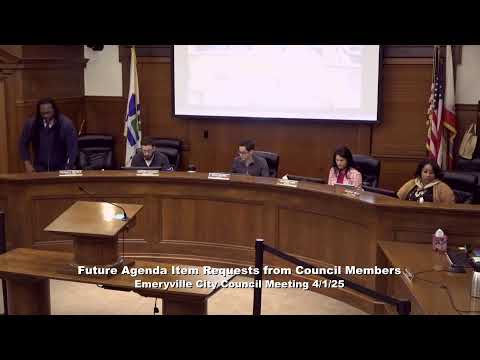
Council discussion focused on preserving the project for seniors and transitional‑age youth, the tradeoff of fewer units at the deepest income targets if vouchers are not available, and safeguards so the project will increase its very‑low‑income set‑aside if HACA awards project‑based vouchers before construction closes. Vice Mayor Carr made the motion to approve; Council Member Welch seconded. The council voted 5–0 (Council Member Pfeiffer, Council Member Solomon, Council Member Welch, Vice Mayor Carr, Mayor Mora). The motion carried.
Council members and staff noted that HACA has repeatedly delayed issuing a NOFA for project‑based vouchers since 2022, that the county is currently reporting a funding shortfall, and that timing issues and program rule changes at the state level (MHP) have reduced expected revenue sources since the project’s original financing plan.
The LDDA amendment approved by the council revises the income targeting and adds a contractual requirement that, if project‑based vouchers are secured before construction commencement, the developer must restore the higher share of extremely low‑income (20% AMI) units. The loan commitment is structured as permanent financing to fill the gap if voucher funding does not materialize.
Timing and next steps: staff recommended, and the council approved, that the developer submit the MHP application by April 15 so the project does not forfeit that final round of state funding. If MHP or voucher funding is not secured, the city’s commitment provides a path to move the project into construction; if vouchers are secured later, the council directed that the unit mix and subsidy structure be adjusted to increase deeply‑affordable units.
"We want this project to move forward," Bernardo said during the presentation, summarizing the twin constraints of rising costs and uncertain subsidy streams. "If vouchers become available, the developer will increase the number of units at the deepest income levels."