Get Full Government Meeting Transcripts, Videos, & Alerts Forever!
Get email alerts on the Tax Elimination Intangible topic
No spam. Unsubscribe anytime.
House passes bill to eliminate intangible personal property tax
Summary
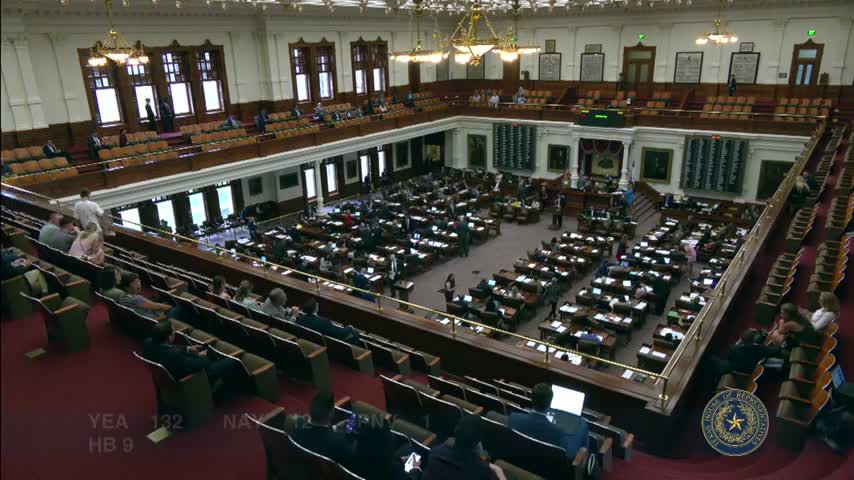
On April 2 the House passed HB22 to remove a remaining intangible personal property tax that applies to certain assets such as insurance-company stock; supporters said compliance costs outweigh revenue, and the bill passed to engrossment 133–11.
The Texas House voted April 2 to pass House Bill 22 to engrossment, a bill that would eliminate a limited form of intangible personal property tax that currently applies in some cases to assets such as stock held by insurance companies and savings-and-loan associations.
Representative Noble, the bill’s author, told colleagues the tax affects a small portion of intangible assets but imposes outsized compliance costs on businesses and contributes to state tax complexity. She said, referencing 2023 data, “In 2023, it was, hang on, $3,323,879,” when describing the assessed total she had available during debate.
Supporters said the revenue impact is small while the compliance burden is meaningful. Representative Vasud urged elimination, saying, “Every dollar of tax in this state is taken at the point of a gun,” and argued lawmakers should remove any unnecessary tax. Noble said the tax is “unnecessary and unproductive” and that companies spend significant time and resources determining whether the tax applies.
Questioners sought magnitude and scope information. Noble acknowledged the figures are limited and said the categories most clearly affected include insurance companies and savings-and-loan associations; she said she was not advised of an exact statewide count of affected taxpayers. Noble and other supporters said the bill would reduce administrative burden and improve clarity.
The House passed HB22 to engrossment by a recorded vote of 133 ayes and 11 nays. The bill’s proponents described it as a small revenue reduction with a benefit in reduced compliance and improved tax competitiveness.