Get Full Government Meeting Transcripts, Videos, & Alerts Forever!
Get email alerts on the Securities Regulation topic
No spam. Unsubscribe anytime.
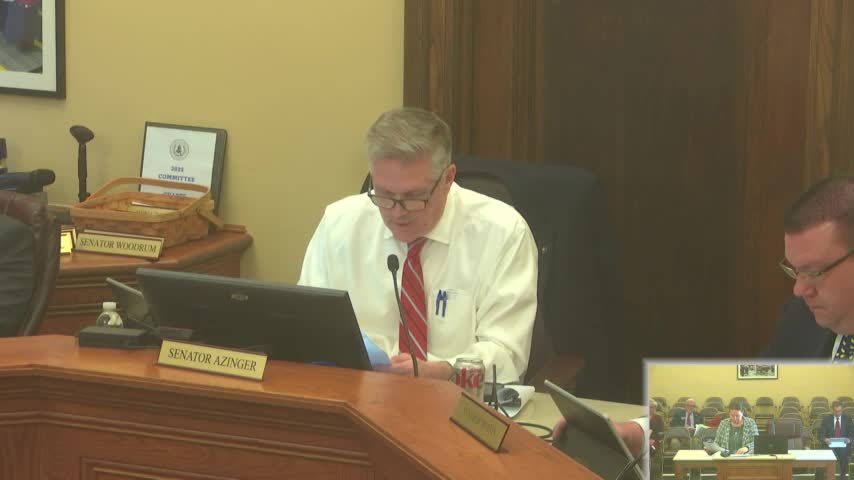
Committee OKs bill to let state auditor hold 'fairness hearings' to lower costs for small-bank transactions
Summary
The Senate Banking and Insurance Committee voted to report Engrossed Committee Substitute for House Bill 2889 as amended to the full Senate, creating a state-administered fairness-hearing process under the West Virginia Uniform Securities Act.
The Senate Banking and Insurance Committee voted to report Engrossed Committee Substitute for House Bill 2889 as amended to the full Senate with the recommendation that it do pass.
Committee counsel said the bill amends West Virginia's Uniform Securities Act to create a process by which the state auditor, in the auditor’s role as Commissioner of Securities, may hold a fairness hearing and issue a statement of findings when a plan of reorganization, recapitalization or refinancing proposes to issue securities in exchange for outstanding securities, claims or property interests. The bill sets application requirements, allows a filing fee of up to $500 and requires the commissioner to issue a statement of findings within 10 business days after a hearing and to invoice the applicant for costs. Counsel also said the engrossed bill removed a previous $5,000 cap on recoverable commissioner costs so the auditor could seek reimbursement for all reasonable expenses incurred in conducting hearings and preparing the findings.
Banking-sector representatives told the committee the bill is intended to provide an option that is less costly than obtaining a private fairness opinion. "It can cost several hundred thousand dollars," Mark Adkins of the Community Bankers of West Virginia said of private fairness opinions, describing that cost as significant for some in-state transactions. Adkins said some states provide a statutory fairness-hearing process that removes the need for a private fairness opinion and that HB 2889 follows that model.
A deputy commissioner from the state auditor's office, Michael Nussbaum, testified the office has registration expertise and could administer hearings but that it would be a new process for the agency. "It would be a learning experience," Nussbaum said, and he said the office could charge applicants for costs incurred in conducting a hearing.
The committee adopted a strike-and-insert committee amendment as explained by counsel and later adopted a title amendment by voice vote. Senator Randolph moved that the engrossed committee substitute for committee substitute for House Bill 2889 as amended be reported to the full Senate with the recommendation that it do pass; the committee approved the motion by voice vote with the chair declaring, "In the opinion of the chair, the ayes have it." The transcript does not show a roll-call tally.
Why it matters: supporters told the committee the change gives West Virginia-based entities an option to satisfy federal filing expectations for fairness determinations without always paying for external fairness opinions, a cost that can be prohibitive for smaller banks or in-state transactions.
The bill now moves to the full Senate for further consideration.