Get Full Government Meeting Transcripts, Videos, & Alerts Forever!
Get email alerts on the Workforce Jobservice topic
No spam. Unsubscribe anytime.
Committee advances Job Service bill that requests staff and IT support for H-2A inspections
Summary
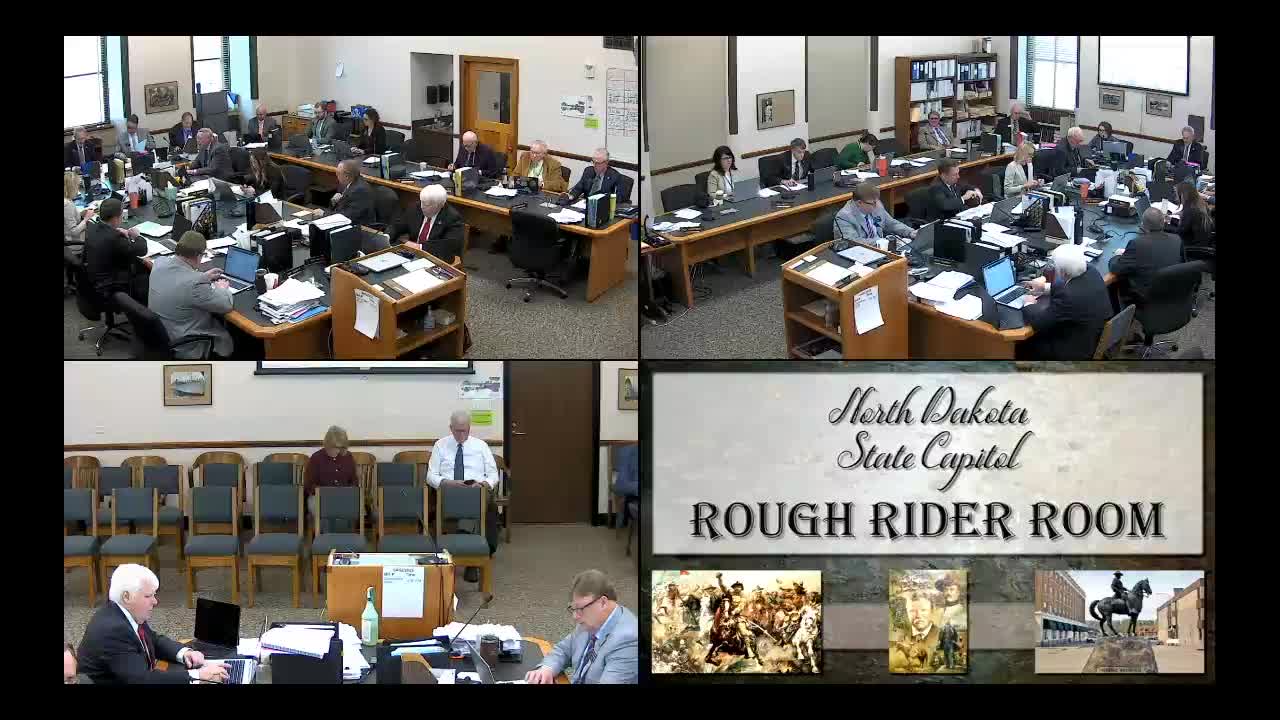
The Appropriations Committee gave Senate Bill 2016 a do-pass recommendation after Representative Swantek outlined requests including one FTE for H-2A housing inspections, IT funding and continued support for workforce programs.
The Appropriations Committee advanced Senate Bill 2016, the Job Service budget bill, with a do-pass recommendation after Representative Swantek summarized staffing, federal funding constraints and IT needs.
Representative Swantek, sponsor, told the committee the bill requests one full-time equivalent position for the H-2A program and funding to support information-technology work the agency needs to complete. "The main features of the bill are the requesting 1 FTE for the H2A program," Swantek said. He described the agency's three primary divisions: workforce outreach and events, unemployment insurance covering more than 26,000 employers, and labor market information.
The bill matters because Job Service relies heavily on federal funding that is program-specific and has not kept pace with inflation, Swantek said. He told the committee the agency has reduced staff from 387 FTEs in 2011 to about 159, and its operating budget fell from roughly $51.3 million to about $44.5 million, a decrease of about $7 million. Swantek said the agency previously received $45 million in ARPA funds to modernize an antiquated system and that remaining IT and hosting costs will largely end after the migration is finished.
Swantek described specific requests that appear in the bill: one FTE to handle federally required H-2A housing inspections for seasonal agricultural workers; roughly $950,000 in general-fund IT support plus a proposed $950,000 transfer of federal funds for IT; an IT project cost of about $1.4 million and mainframe hosting/maintenance estimated at $475,000; and a one-time salary-related amount of about $2.1 million tied to a funding transition. He also updated the committee on a placement pilot for justice-involved individuals: 277 referrals and a 73 percent success rate for those placed, with participants' average pay rising to about $50,000 a year compared with about $20,000 for those not placed.
After Swantek moved a do-pass recommendation and Representative Brandenburg seconded, the clerk conducted a roll call. The motion carried with a tally the clerk announced as 20 yes, 0 no and 3 absent. Representative Swantek will carry the bill.
Committee members asked no substantive follow-up questions during the discussion on the floor of the committee. The sponsor said some of the bill's requests address a backlog in H-2A housing inspections—he said about 4,400 such workers come into North Dakota each year and growers are concerned about inspection delays.
The committee record shows the agency's reliance on federal grants constrains its ability to reallocate funds between programs and that the state has used one-time general funds and ARPA dollars to bridge gaps while federal funding remains program-bound.
The bill now moves to the next step with Representative Swantek as carrier; the committee indicated the motion passed by roll call and that three members were absent.