Get Full Government Meeting Transcripts, Videos, & Alerts Forever!
Get email alerts on the Ethics Commission Budget topic
No spam. Unsubscribe anytime.
Lawmakers, Ethics Commission Weigh Bigger staff, new case-management system amid rising complaints
Summary
Legislators and the North Dakota Ethics Commission discussed staffing expansions, a case management system and ongoing costs as complaints to the commission have risen markedly in 2025.
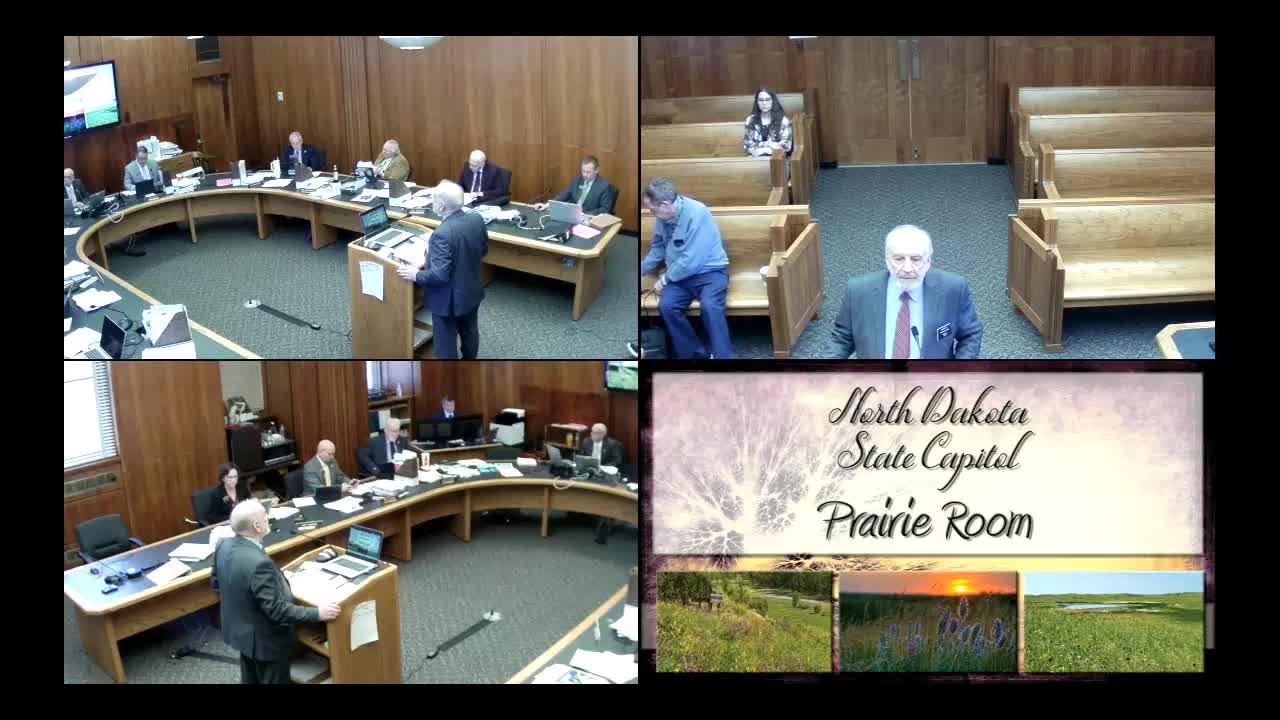
Senators and representatives on the Appropriations - Education and Environment Division reviewed budget requests for the North Dakota Ethics Commission on March 18, focusing on proposed new positions, a case management system and professional-fee funding as complaint volume has increased.
The discussion centered on a package of staffing and technology changes proposed by Senator Tim Mathern, who presented amendments that would expand the commission’s legal, compliance and education functions and add administrative support. "Let's make it a full ethics commission," Senator Tim Mathern, who represents Senate District 11 in Fargo, told the committee, outlining an organizational chart and estimated additional costs.
Why it matters: committee members said the commission is receiving substantially more complaints than in prior years and that staffing and automation could speed handling of filings. Representative Hansen noted the commission reported 59 complaints so far in 2025 compared with 14 in 2022, a change lawmakers cited as a driver for the proposals.
Commission requests and proposals
Senator Mathern said the amendments would add a legal section (general counsel plus enforcement and compliance counsel and a paralegal) and an operations/education section (an education/communications FTE and an administrative assistant). Mathern told the committee that the additional staff would cost "another million and a half dollars" to reach the staffing level he described as comparable to operating ethics commissions in other states.
Rebecca Binstock, executive director of the North Dakota Ethics Commission, described how the commission currently manages filings and the rationale for technology and staffing requests. "Creating a case management system for an ethics commission is a unique feat," Binstock said, adding that the commission has been benchmarking systems used by comparable states and that New Mexico’s system informed the estimate.
Case management system: costs and scope
The commission originally sought $195,000 for a case management system — described as $135,000 one-time plus $60,000 ongoing — to automate receipt and tracking of complaints, disclosures, meeting notices and other filings. Binstock said subsequent discussions with state IT staff and vendors reduced the initial build estimate to $50,000, with a $50,000 annual maintenance estimate. "What we would propose at this time is including that $50,000, but then also including a $50,000 per year maintenance," Binstock said; she characterized both figures as estimates drawn from other states’ experience and vendor conversations.
Binstock told the committee the commission currently stores records on SharePoint and conducts much of its work manually. She said an off-the-shelf vendor solution would be preferred but that a custom build might be necessary, and that the commission plans to explore the vendor New Mexico uses.
Professional fees, outside counsel and conflicts
Lawmakers questioned a $50,000 professional-fees line in the commission’s budget. Binstock explained that professional fees have covered outside counsel, acting executive-director coverage, private investigators and potential litigation costs. The commission has at times hired outside counsel because of conflicts that precluded use of the attorney general’s office.
"We've had an inherent conflict or there's been a conflict of interest with the AG's office," Binstock said, explaining why outside counsel has been retained for some complaints.
Education, informal guidance and staffing priorities
Lawmakers pressed on the commission’s request for an education and communications FTE and how that position would change turnaround on complaints and public guidance. Binstock said the new education position would both expand stakeholder outreach (legislators, regulated entities, media and the public) and free commission staff time so attorneys could work through complaint backlogs. She said the commission is considering a formal informal-guidance rule that would allow the commission to provide quicker, written "yes/no/maybe" responses to callers who want to know whether a given situation qualifies as a complaint.
Binstock described priorities if additional positions are approved: education first, then paralegal support to assist attorneys, followed by administrative support to manage filings.
Other budget items and clarifications
Committee members asked about a one-time new-position cost listed in the long sheet. Operations Administrator Alicia Meyer said the one-time amounts were primarily office furniture, initial IT setup and peripheral equipment for the new FTEs. Binstock said the commission had roughly $2,000 remaining in current funds that revert to the general fund and does not carry forward.
Next steps
The committee said it would continue reviewing the long sheet numbers line by line and take no final action that morning. Committee members indicated the House and Senate positions could differ and that any expanded staffing or funding could prompt further negotiation in a conference committee.
Ending: The committee paused the ethics budget discussion to continue its line-item review later in the day; members said they would return to deliberations after floor activity.