Get Full Government Meeting Transcripts, Videos, & Alerts Forever!
Get email alerts on the Food Security topic
No spam. Unsubscribe anytime.
Food banks, tribes and growers warn of shrinking domestic processing capacity and urge supply‑chain review
Summary
Second Harvest and tribal representatives, together with farmers, told lawmakers that several processors have closed or paused contracts recently, reducing local market outlets; they urged the committee to review the hub‑and‑spoke distribution model and senior‑feeding programs during the interim.
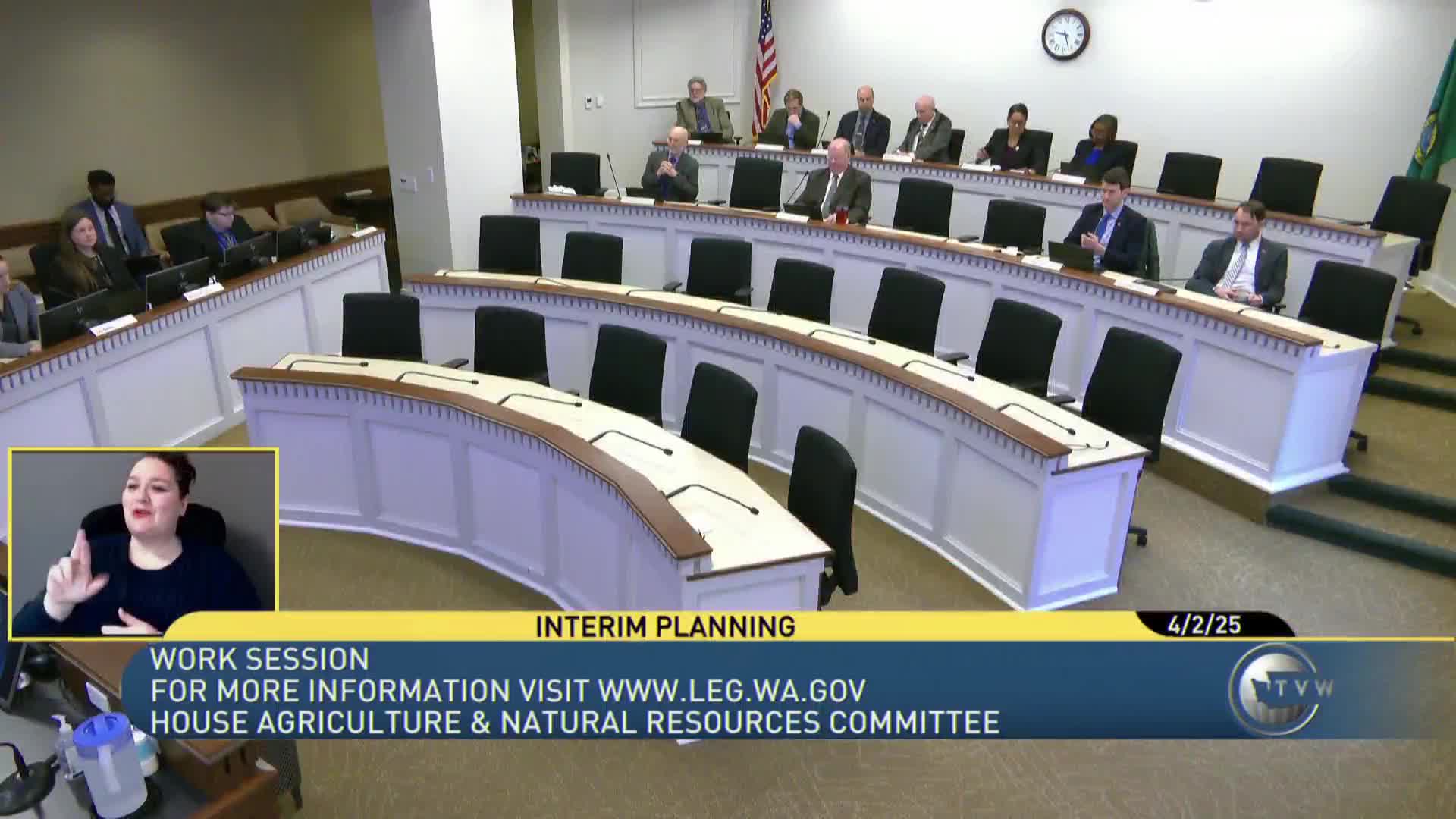
Representatives of Second Harvest, the Chehalis and Colville Tribes and farmers told the committee April 2 that changes in federal funding and recent plant closures are straining local food delivery systems and reducing market outlets for growers.
Lede: Michael Moran, representing the Chehalis and Colville Tribes and Second Harvest on parts of his testimony, said a “dynamic change in federal funding” and staff reductions at agencies are straining programs and that the senior feeding program for the Chehalis Tribe and partners merits continued attention.
Nut graf: Jay Gordon and other agricultural witnesses described a recent trend of quietly shuttered processors and mills — including malting, potato and poultry processing facilities — and said those losses reduce demand for crops and create market instability for growers and rural communities.
Details cited by witnesses: Jay Gordon said Great Western Malting had stopped taking contracts in a closure that removes about 60,000 acres of malting‑barley demand. He also listed closures or contractions including a processing facility in Connell, Del Monte in Toppenish, and Cargill in Ferndale; Skagit Malting has also closed and is trying to reopen. Gordon and other witnesses asked the committee to review market channels and the hub‑and‑spoke approaches developed during the pandemic, citing opportunities to better link farmers and food banks.
Second Harvest scope: Moran said Second Harvest serves 20 eastern Washington counties and six North Idaho counties. He and other witnesses stressed that food needs vary by community and that planning should reflect cultural and logistical differences.
Why it matters: Witnesses urged the committee to use the interim to evaluate how state policy and program design can strengthen food hubs, processing capacity, and distribution networks so local growers can find stable markets and families receive culturally appropriate, fresh food.
Ending: Witnesses asked for follow‑up: technical reviews of the hub‑and‑spoke system, targeted tours, and specific planning for senior and tribal feeding programs in the coming months.