Get Full Government Meeting Transcripts, Videos, & Alerts Forever!
Get email alerts on the Agriculture Processing topic
No spam. Unsubscribe anytime.
Central Washington ranchers press for local meat processing capacity, invite committee to tour
Summary
Kittitas Custom Cuts founders and local ranchers told the committee they face long waits for USDA‑approved processing and invested $1.2 million to reach permit hearings; they invited legislators to visit their retail marketplace and a planned 19,000‑square‑foot USDA processing plant projected for late 2026.
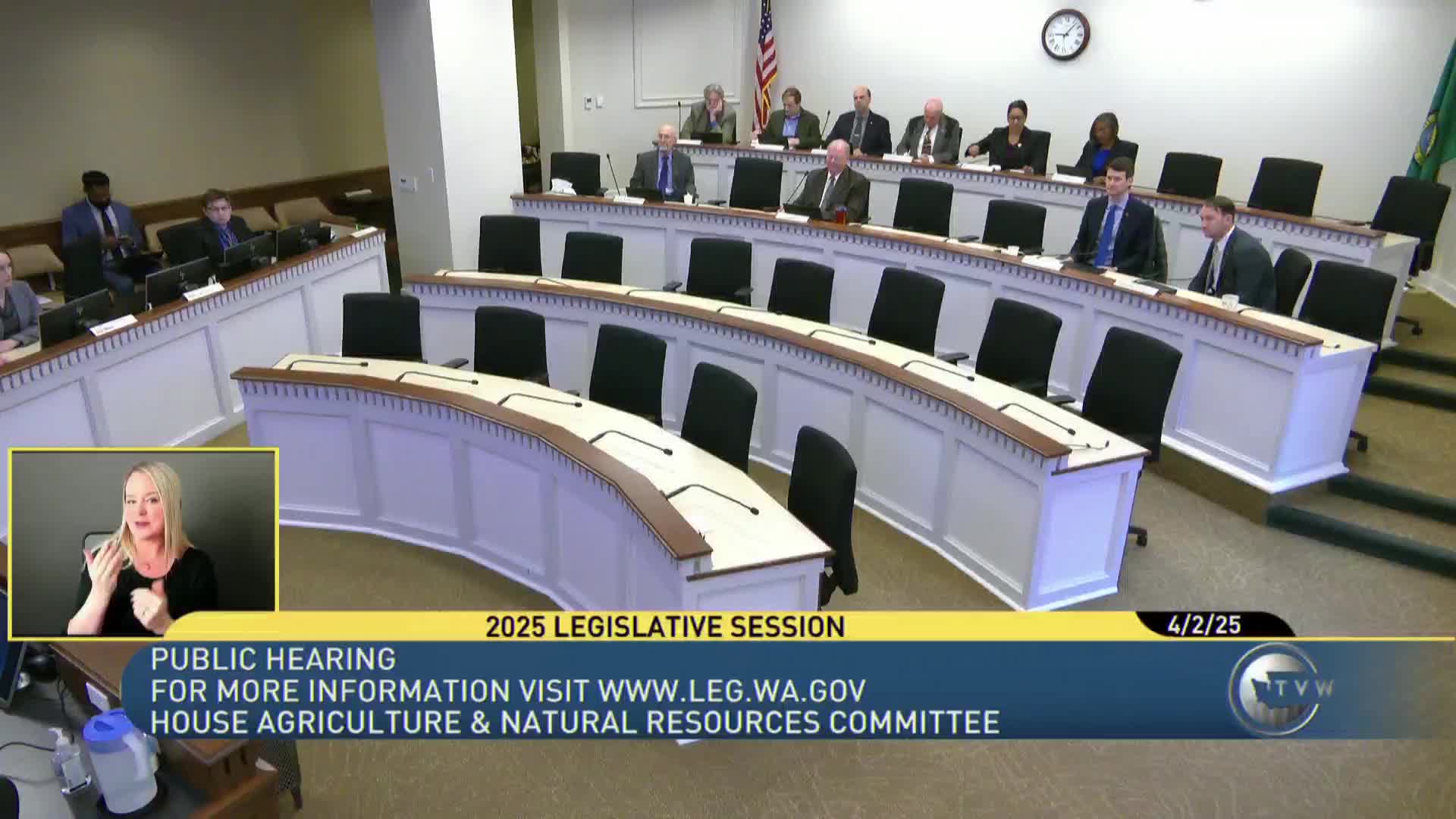
Scott Toland and Bonnie Toland, operators behind Kittitas Custom Cuts and local ranchers, told the committee April 2 that Central Washington lacks adequate USDA‑approved slaughter and processing capacity and described long waits and high upfront costs for new facilities.
Lede: Scott Toland said producers “have to put a reservation in 11 months in advance” to process animals today and described a state market dominated by a few large processors. He said Kittitas Custom Cuts has invested about $1,200,000 over 2½ years to reach the hearing‑examiner stage and has not yet broken ground.
Nut graf: The Tolands asked the committee to use the interim to visit the facility and learn how state permitting timelines, costs and labeling rules for imported products affect local producers’ ability to build processing infrastructure. They said a local processing plant would serve Central Washington and markets beyond.
Details and timeline: Scott Toland said the proposed processing plant is a 19,000‑square‑foot, USDA‑approved facility to be sited on Main Street in Kittitas alongside a retail outlet called the Kittitas Marketplace. He told members the marketplace is expected to break ground within roughly 60 days and the processing plant is projected for completion in the third to fourth quarter of 2026.
The Tolands emphasized local food traceability and resilience: “We feel it’s very important to be a part of that process to make sure that local people, certainly in Central Washington, but in the entire state,” can know where meat comes from, Scott Toland said. He also noted that U.S. labeling rules allow some foreign‑produced meat to be labeled “Product of USA” until 2026, which the Tolands described as a concern for local producers.
Committee response and invites: Chair Reeves and multiple members encouraged interim tours; Mark Strueley of the Washington Cattlemen’s Association also invited the committee and staff to visit the ranch for a demonstration and barbecue. Representative Birnbaum and others asked operational questions about mobile processors and USDA approval; Scott Toland said the Kittitas facility will be a fixed, USDA‑inspected plant rather than a mobile unit.
Why it matters: Committee members and ranchers linked processing capacity to food security and to farm viability. Testimony highlighted long lead times and high capital costs for new facilities and asked the committee to consider permitting, labeling and market development during the interim.
Ending: The Tolands asked the committee to visit in the interim; members accepted the invitation and staff said they would add the site to the committee’s tour list.