Get Full Government Meeting Transcripts, Videos, & Alerts Forever!
Get email alerts on the Assisted Housing Rule Review topic
No spam. Unsubscribe anytime.
Contentious Hearing on Assisted‑Housing Licensing Rule Highlights Staffing, Cost and Implementation Concerns
Summary
DHHS proposed a major substantive rewrite of assisted‑housing licensing rules (Chapter 113) that consolidates multiple parts and phases in higher staffing minimums; providers warned of large unfunded costs and possible closures while advocates and ombudsmen said updated rules are overdue.
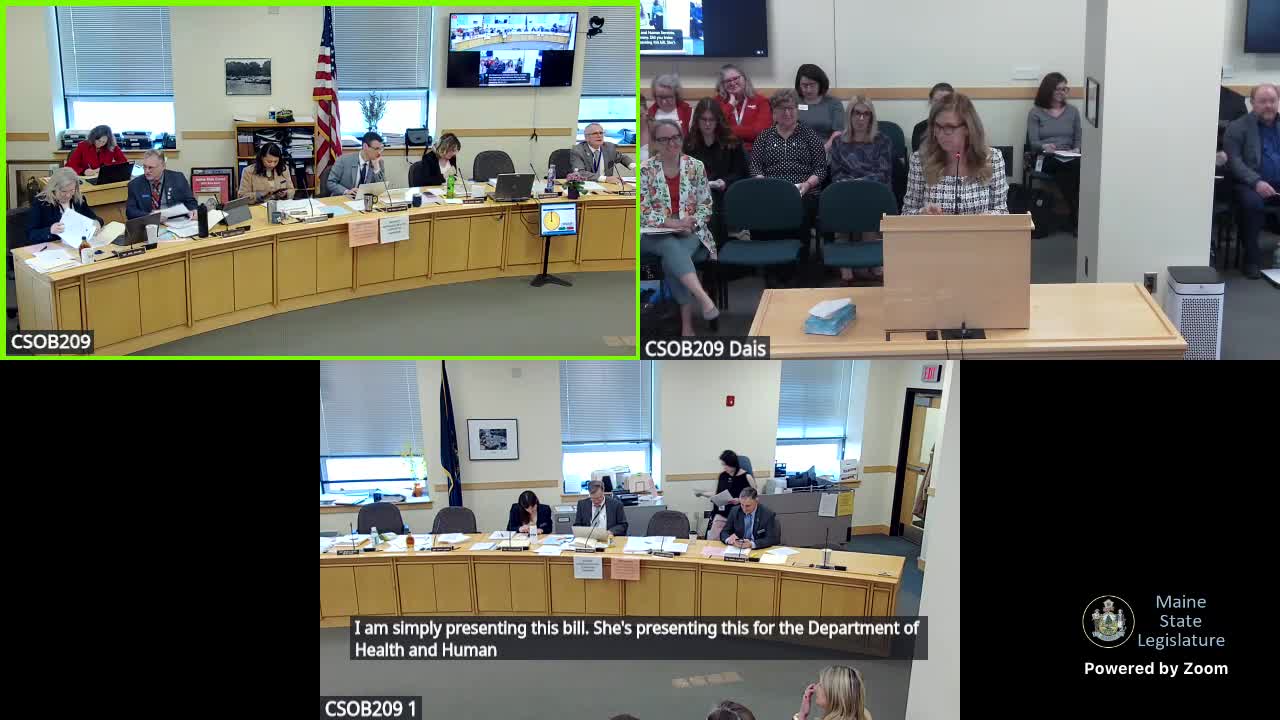
The Department of Health and Human Services presented a provisional rewrite of Chapter 113 — assisted housing programs licensing rules — and asked the committee to approve the major substantive rule under LD 979.
What the rules change: DHHS said the rewrite consolidates ten current rule parts into two sections (assisted living and residential care), updates licensing standards, and in the initially proposed draft included higher minimum staffing ratios with a phased implementation schedule. The department told the committee it revised ratios after public comments and offered a phased approach; the overall goal is to establish reasonable minimum standards for health and safety while not imposing excessive administrative burdens.
Support for updating 17‑year‑old rules: Legal Services for the Elderly, the Long Term Care Ombudsman Program, the Alzheimer's Association, AARP Maine, and other advocates testified in support and said the current rules — unchanged for roughly 17 years — do not reflect the higher average acuity and dementia prevalence in many assisted‑housing residents. Advocates and ombudsmen cited studies showing increases in residents needing ADL support and urged updated staffing and safety standards.
Providers’ objections and cost concerns: Numerous assisted‑housing and residential care providers, including large operators and nonprofit providers, opposed the rules as drafted. Common themes: the rules would substantially increase staffing costs, are an unfunded mandate given current MaineCare reimbursement shortfalls, and would be difficult to staff in today’s tight labor market. Several providers presented facility‑level estimates: one 64‑bed memory care example showed an $860,000 annual cost increase and nine additional FTEs; other operators estimated statewide implementation costs in the tens of millions (witnesses cited ranges of $30–$48 million). Providers warned that without funding the rules could force closures, reduce bed availability and push care back into hospitals.
Federal and regulatory constraints: Licensing director Bill Monteo repeated that many facilities face higher acuity and that survey findings have driven some rule changes. Licensing staff also noted federal CMS issues for some elements (for example, when rails or other interventions may trigger federal requirements). Providers pressed on the process: several said they had not been invited to sit in a collaborative drafting table and that the “listening sessions” were not adequate for the scope of change; others asked for a comparative table showing current versus proposed minimum staffing per shift.
Committee requests and next steps: Committee members repeatedly asked the department for a detailed fiscal note, a crosswalk comparing current staffing requirements with the proposed phased minimums, historical survey/deficiency data and an explanation of MHDO/case‑mix trends. DHHS said it would provide the requested materials. The committee did not approve the rule at the hearing.
Ending: The hearing underscored a policy tension: advocates and ombudsmen urged modernized rules to ensure safety as resident acuity rises; providers said the state must pair any staffing mandate with sustainable reimbursement and workforce supports to avoid unintended closures. The committee asked for additional fiscal and operational detail before any further action.