Get Full Government Meeting Transcripts, Videos, & Alerts Forever!
Get email alerts on the Care Gap Measurement topic
No spam. Unsubscribe anytime.
Bill Directing MHDO to Measure Home‑and‑Community Care Gap Draws Broad Support
Summary
Rep. Sally Clucci’s LD 977 would direct the Maine Health Data Organization to develop an annual plan to measure unmet home‑and‑community based services; advocates said the state lacks a reliable care‑gap baseline and recommended a modest cost to stand up reporting.
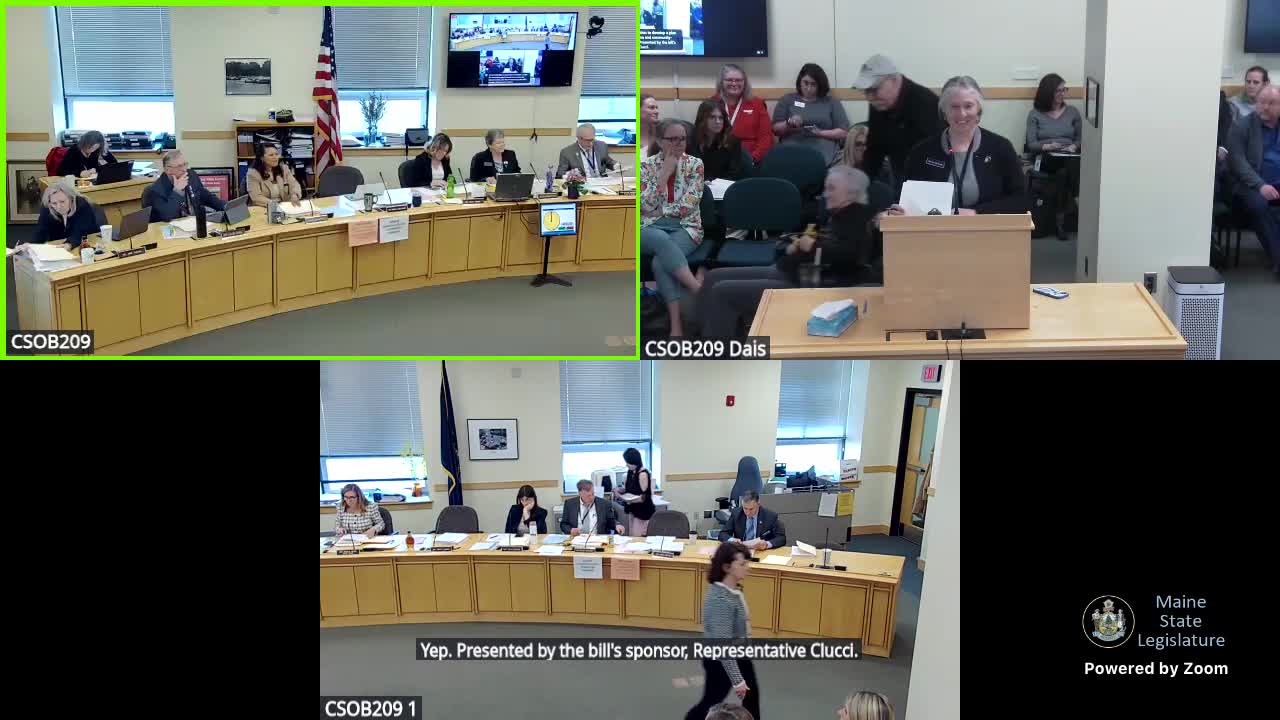
Representative Sally Clucci presented LD 977, a resolve asking the Maine Health Data Organization (MHDO) to develop a plan to measure Maine’s home‑and‑community based care gap — the difference between authorized hours of care and services actually delivered.
Why sponsors raised the bill: Clucci and advocacy groups argued the state lacks reliable data about how many hours of in‑home or community services go undelivered, where gaps are greatest geographically, and which programs (aged, disabled, behavioral health, IDD) are most affected. Clucci cited a Maine Center for Economic Policy estimate that suggested more than 23,500 hours of authorized home care go undelivered each week and said that without a baseline the state cannot target resources effectively.
Who testified: The Maine Health Data Organization worked with the sponsor on language and MHDO staff were identified as the right entity to assemble claims and authorization data and produce routine reporting. Supporters included the Maine Council on Aging, the Essential Support Workforce Advisory Committee (ESSWAC), AARP Maine, Home Care and Hospice Alliance representatives and others who argued the plan would cost modestly but produce data for better policy choices.
What the resolve would require: Clucci said the plan should define an annual measurement approach, track authorized versus delivered services, meet federal reporting standards, and use existing claims and authorization data where possible to avoid unnecessary bureaucracy. MHDO and supporters said the effort could likely be done within an existing analytic contract and estimated modest startup costs (sponsor and witnesses cited a figure in the ~$50,000 range during Q&A) for the first year to assemble and validate data sources.
Committee requests and next steps: Committee members asked whether MHDO had been consulted; the sponsor and MHDO staff confirmed collaboration. Members asked for a fiscal estimate for the work session and for MHDO to clarify data sources, security and reporting cadence. No vote was taken at the hearing; the committee requested MHDO input and a potential fiscal note for the work session.
Ending: Supporters framed LD 977 as foundational: without an annual care‑gap metric the state is making decisions “in the dark,” the sponsor said. The committee closed the hearing and asked MHDO and staff to prepare a plan and fiscal estimate for a work session.