Get Full Government Meeting Transcripts, Videos, & Alerts Forever!
Get email alerts on the Personal Finance Graduation Requirement topic
No spam. Unsubscribe anytime.
Lawmakers debate mandating standalone personal finance course for Maine high school diploma (LD 1069)
Summary
Senate President Maddie Daughtry and a coalition of legislators, industry groups and nonprofits urged the Education and Cultural Affairs Committee to require personal finance as a standalone high school course; educators and administrators warned the mandate would be an unfunded requirement that risks reducing local flexibility and CTE options.
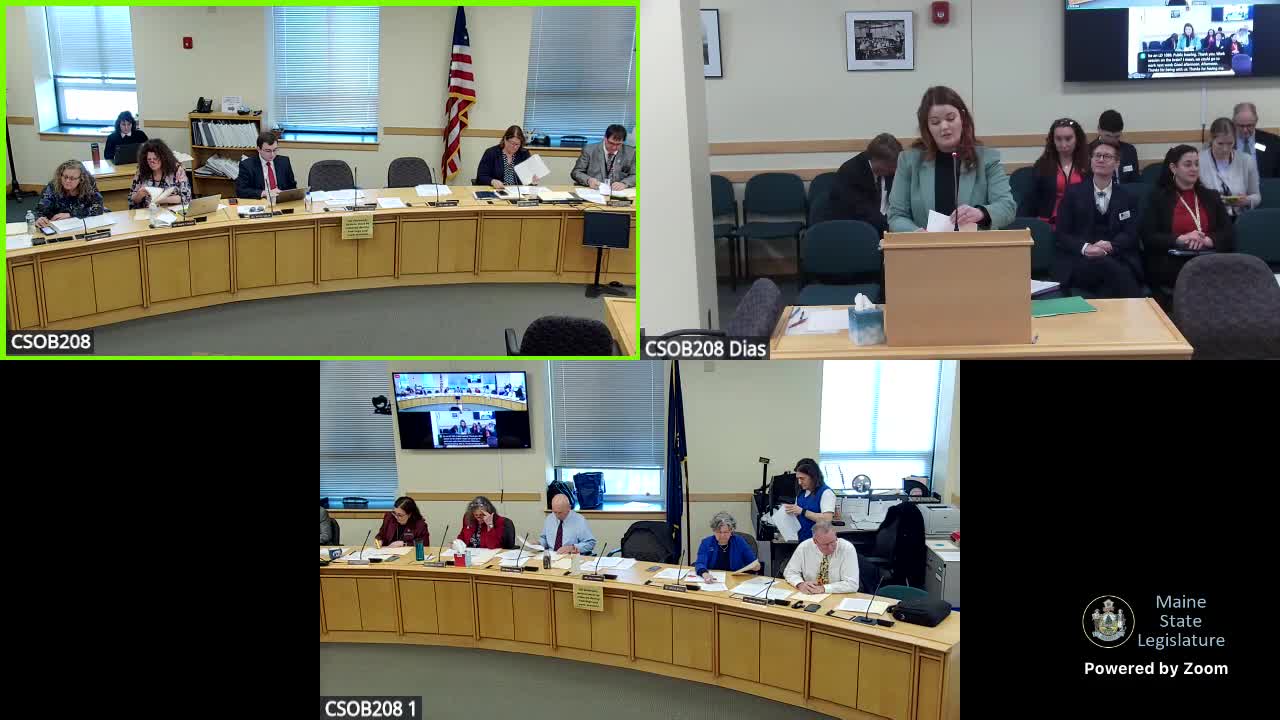
Senate President Maddie Daughtry opened the LD 1069 public hearing by urging the Joint Standing Committee on Education and Cultural Affairs to require a standalone personal finance course for high school graduation. "It requires that personal finance be taught as a stand alone course, a clear intentional commitment to equipping our students with crucial knowledge about how to manage money, plan for the future, and avoid costly mistakes," Daughtry said, framing the bill as a bid to give students practical, consistent instruction rather than a unit embedded unevenly across districts.
Supporters emphasized student preparedness and workforce benefits. Representative Ed Crockett, who cosponsored the bill, and representatives of the financial sector and nonprofits testified in favor. Dan Berney of the Maine Insurance Agents Association, Robert Caverly of the Maine Credit Union League and Josh Spearman of the Maine Bankers Association described curricula and programs that can be leveraged, including regional "financial fitness fairs" that have reached tens of thousands of students. Mary Dyer (Maine Jumpstart Coalition), Leslie Finnan (Council for Economic Education) and other advocates provided data and national comparators: speakers said roughly two dozen states now require a standalone personal finance course and cited studies that associate mandated instruction with improved credit outcomes. Testimony cited figures such as "27 states" adopting standalone requirements and that only a minority of Maine students currently have access to a required standalone course (figures cited by witnesses varied; for example, one witness quoted 15.2% of Maine students in schools requiring a standalone personal finance course).
Opponents — including the Maine Education Association (Jesse Hargrove), the Maine Curriculum Leaders Association (Deborah McIntyre), and the Maine School Management Association (Stephen Bailey) — supported the goal of financial literacy but raised concerns. They warned LD 1069 would create an unfunded mandate requiring districts to hire additional certified staff, could reduce flexibility and elective choices for students (including Career and Technical Education), and risk imposing a rigid statewide course requirement where local delivery and interdisciplinary approaches currently exist. Several speakers asked how the requirement would be certified and whether courses with different names or blended content would qualify.
The Department of Education (Beth Lambert) testified "neither for nor against" the bill. The Department said financial literacy is already embedded as a strand in the Maine Learning Results and Title 20-A, Section 4722 requires personal finance be included in two years of social studies and history; the department recommended investment in teacher training, curriculum materials and flexible implementation paths rather than an immediate unfunded standalone-course mandate. The DOE also noted that requiring a course does not, by itself, ensure learning: quality instruction, prepared educators and resources are necessary to achieve outcomes.
Committee members asked about logistics, certification and whether CTE pathways could count toward the requirement. Witnesses suggested multiple implementation options: standalone semester courses, embedded curricula across grades, career-technical crosswalks, or phased implementation (Representative Crockett suggested a 2028–29 effective date to phase in the requirement). Members said they would seek more information in work sessions, including data on current district offerings and staffing capacity.
No committee vote was taken during the hearing; the committee closed the public hearing and scheduled LD 1069 for further work-session consideration.