Get Full Government Meeting Transcripts, Videos, & Alerts Forever!
Get email alerts on the Labor Policy topic
No spam. Unsubscribe anytime.
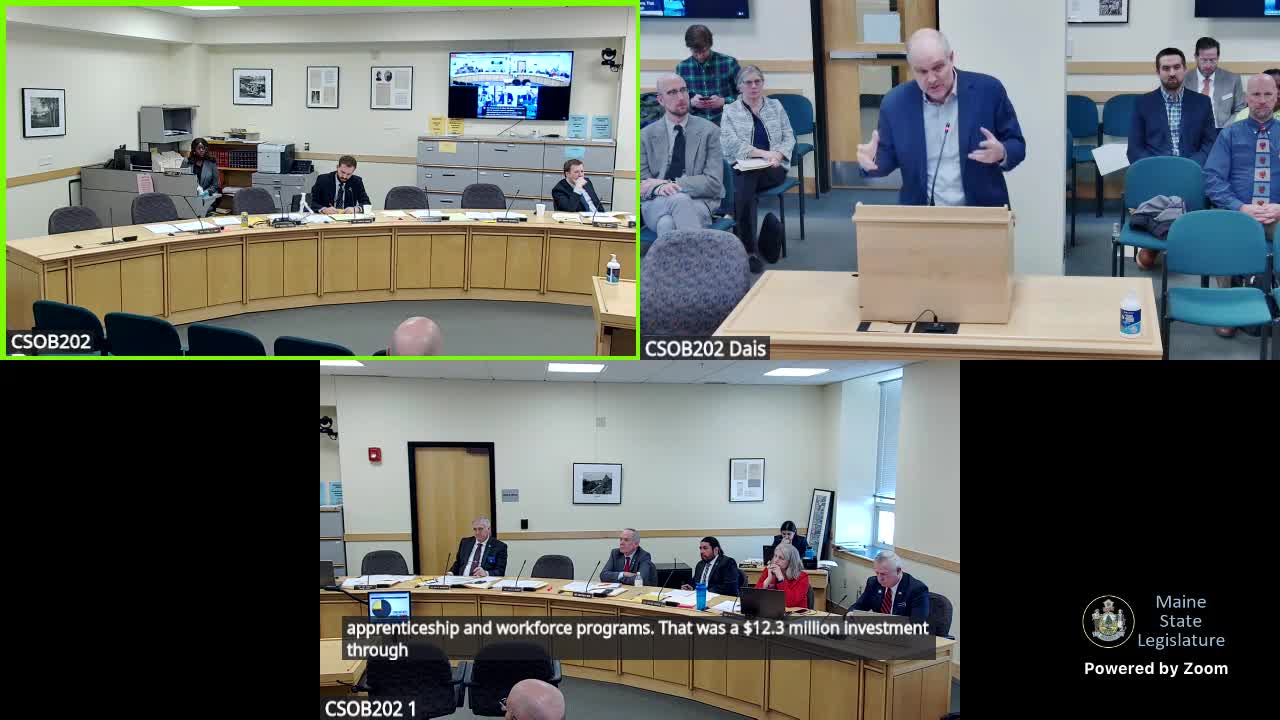
Committee hears competing views on 'reporting pay' bill that would guarantee minimum pay if employers cancel shifts
Summary
Senator Mike Tipping told the Joint Standing Committee on Labor LD 598 would ensure an employee who reports to work and is sent home receives a minimum payment; witnesses for and against the bill described worker hardship and business costs respectively.
Senator Mike Tipping presented LD 598 to the Joint Standing Committee on Labor as a narrow measure to require employers to pay a minimum amount to employees who report for a scheduled shift but are sent home or have hours reduced. The sponsor said the bill responds to “just‑in‑time” scheduling practices that use algorithmic staffing to cut shifts with little notice, shifting costs to low‑wage workers.
Supporters said the bill would protect workers who arrange childcare, pay travel costs and forgo other work to be available for a shift that is later canceled. Opponents — including small business groups, retailers, restaurant associations and hospitality trade groups — warned the bill would increase costs, create administrative burdens for small employers and reduce managerial flexibility for openings and seasonal businesses.
Why this matters: Testimony showed clear fault lines between lower‑wage worker advocates and employer groups. The Department of Labor told the committee it understands the problem the sponsor raised but that implementation would require resources: the department said it would likely need at least one additional full‑time position to implement and enforce the new law.
Department of Labor testimony: Dylan Murray, legislative liaison for the Maine Department of Labor, testified neither for nor against the bill. He summarized the bill’s key provisions as written: it would apply to employers with 10 or more employees who operate more than 120 calendar days per year; it would not apply to seasonal industries or public employers; and it would require the employer to pay the lesser of two hours at the employee’s regular hourly rate or the amount the employee would have earned on the originally scheduled shift. Murray described a “good faith notification” exception if the employer made a documented attempt to notify the employee in advance. He emphasized that several other jurisdictions in the region, including Massachusetts, have reporting‑time pay laws and that Maine would need staff capacity to implement and enforce the statute.
Supporters: Labor and policy groups argued the bill would reduce instability for workers on variable schedules. Adam Good, legislative and political director of the Maine AFL‑CIO, said unpredictable schedules cause health, family and financial harms and urged the committee to adopt stronger protections (MSNA — Maine State Nurses Association — recommended amendments with a higher minimum in written testimony). James Mile of the Maine Center for Economic Policy offered research showing irregular scheduling harms food and housing stability for workers and recommended the committee adopt reporting pay to reduce last‑minute cancellations.
Opponents: Jake Lechants of the Maine State Chamber of Commerce and representatives of the Retail Association of Maine, Maine Grocers and Hospitality Maine urged the committee to reject LD 598. They said the bill’s 10‑employee threshold would capture many small businesses, impose recurring costs for already thin margins, and fail to account for the seasonality and operational unpredictability typical of retail, lodging and food service industries. Industry witnesses requested clearer definitions for terms such as “adverse weather” and “documented good‑faith notification.” Several business witnesses suggested the issue is better negotiated in collective bargaining or addressed by business‑side scheduling improvements.
What the committee heard about enforcement and fiscal effect: Murray said the department would be ready to implement but that the agency expected to need at least one new full‑time position for enforcement and rulemaking; he offered to provide data on complaints and additional fiscal details for the work session.
What the committee did: LD 598 received extensive public testimony (pro and con); no final committee vote on the bill is recorded in the transcript. The Department of Labor offered to provide enforcement cost estimates and complaint data for the work session.
Ending: Committee members asked for more empirical data on how frequently workers are sent home without pay and requested draft language clarifying exceptions and documentation standards for employers.