Get Full Government Meeting Transcripts, Videos, & Alerts Forever!
Get email alerts on the Workforce Development topic
No spam. Unsubscribe anytime.
Lawmakers hear broad support for state funding to expand certified pre‑apprenticeships
Summary
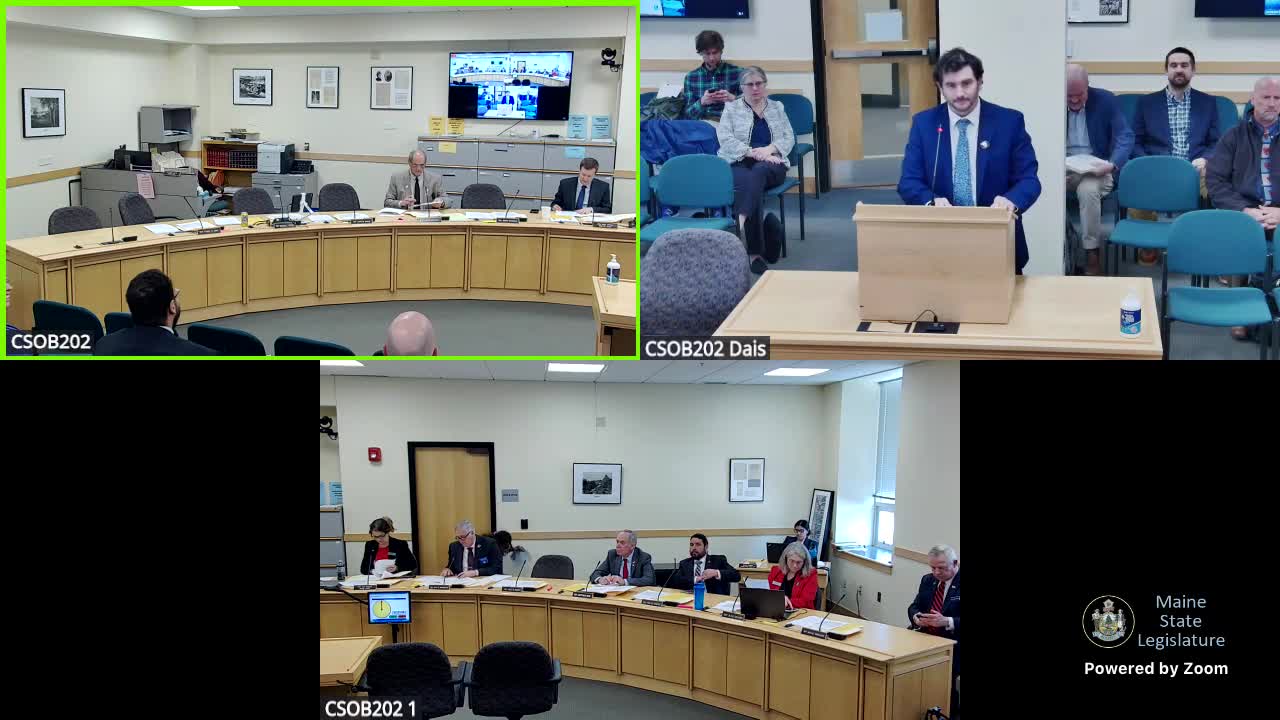
Representative Kilton Webb presented LD 1117 to the Joint Standing Committee on Labor, seeking state funding to expand certified pre‑apprenticeship programs that funnel participants into registered apprenticeships.
Representative Kilton Webb, sponsor of LD 1117, told the Joint Standing Committee on Labor that the bill would strengthen Maine’s workforce by expanding certified pre‑apprenticeship programs and asked the committee to advance the measure.
The bill attracted broad support from labor groups, training providers and people who completed pre‑apprenticeship courses. Testimony highlighted that certified pre‑apprenticeship programs offer hands‑on training, safety credentials and a direct pipeline into registered apprenticeship programs — often leading to well‑paid, career‑track jobs without the student debt associated with four‑year college paths.
Why this matters: Testimony and department data presented to the committee showed rapid recent growth in pre‑apprenticeship offerings in Maine and measurable conversion into registered apprenticeship slots. The sponsor and supporting witnesses said state investment would expand capacity in construction, manufacturing, health care and other in‑demand sectors and help employers fill positions as existing journey‑level workers retire.
Representative Kilton Webb, who identified himself as an electrician and the director of membership development for the International Brotherhood of Electrical Workers Local 567, told the committee pre‑apprenticeships are “the best way for you to learn the trade” because they combine classroom theory and on‑the‑job training. Webb said the sponsor’s proposed amendment adds an $8,000,000 appropriation.
Kim Moore, director of the Bureau of Employment Services at the Maine Department of Labor, testified neither for nor against the bill but offered technical context. She said certified pre‑apprenticeship programming was codified in state law and that department rules require pre‑apprenticeship programs to partner with a registered apprenticeship sponsor, provide industry‑aligned training and follow U.S. Department of Labor standards. Moore told the committee 56 certified pre‑apprenticeship programs are now operating across sectors and that, since 2023, more than 1,000 people have completed a pre‑apprenticeship; 379 of those had entered registered apprenticeship programs and others were in the application process.
Moore raised two items for committee consideration: first, the bill requires the department to consult with the Maine Apprenticeship Council when making grant awards; she cautioned that statutory membership on that advisory council includes sponsors and training providers who could be eligible grant applicants, and mandatory council involvement in grant selection could create conflicts or disqualify qualified applicants. Second, Moore noted the sponsor’s amendment includes an $8,000,000 general‑fund appropriation and said the department is unable to support a general‑fund request that is not in the governor’s budget. Moore urged the committee to consider language recognizing partnerships with WIOA providers and other workforce intermediaries for delivery of supportive services rather than requiring single grantees to deliver all services themselves.
Union and training program witnesses described program details and outcomes. Sam Boss, apprenticeship and workforce director at the Maine AFL‑CIO, described an intensive five‑week Union Construction Academy pre‑apprenticeship that awards industry credentials (OSHA‑10, first aid/CPR), teaches construction math and blueprint reading, and helps graduates apply to registered apprenticeships. Jason Shedlock, president of the Maine Building Trades Unions and chair of the Maine Apprenticeship Council, urged the committee to support funding, saying pre‑apprenticeship is a “proven model” and emphasizing the value of employer investment in on‑the‑job training and total compensation packages.
Individuals who completed pre‑apprenticeship programs offered first‑person accounts. Haley Lawrence testified she had been living in her car before enrolling in the Union Construction Academy; after graduating she quickly obtained an apprenticeship and later signed a lease for an apartment. Another witness described a graduate with hearing impairment who was connected to an employer at Portsmouth Naval Shipyard and later hired by boilermakers.
Opponents and non‑union employers asked the committee to revise language they said would make some programs ineligible. The Associated Builders and Contractors of Maine told the committee the bill’s proposed minimum “total package value” threshold (as drafted in prior versions) could exclude certain trades where average journey‑worker wages are lower than that threshold. The group asked that grant eligibility and wage thresholds be flexible and not favor a single employer model.
What the committee did: LD 1117 was the subject of a public hearing and technical questions; there was no final committee vote recorded on the bill in the transcript. Department staff said they would be available during a work session to help with technical drafting.
Ending note: The committee pressed for more written fiscal detail and asked the department and sponsors to confer about the proposed appropriation language and about safeguards to avoid disqualifying high‑quality applicants when advisory council members also operate programs.