Get Full Government Meeting Transcripts, Videos, & Alerts Forever!
Get email alerts on the Cdl And Local Governments topic
No spam. Unsubscribe anytime.
Bill to ease CDL requirements for municipal snow removal prompts debate over federal compliance
Summary
Representative Paul Walker's bill to let local governments use non‑CDL drivers for limited heavy‑vehicle operations in town drew objections from the Secretary of State and Maine State Police, who said federal commercial‑vehicle rules limit state options; municipalities described recruitment and training challenges.
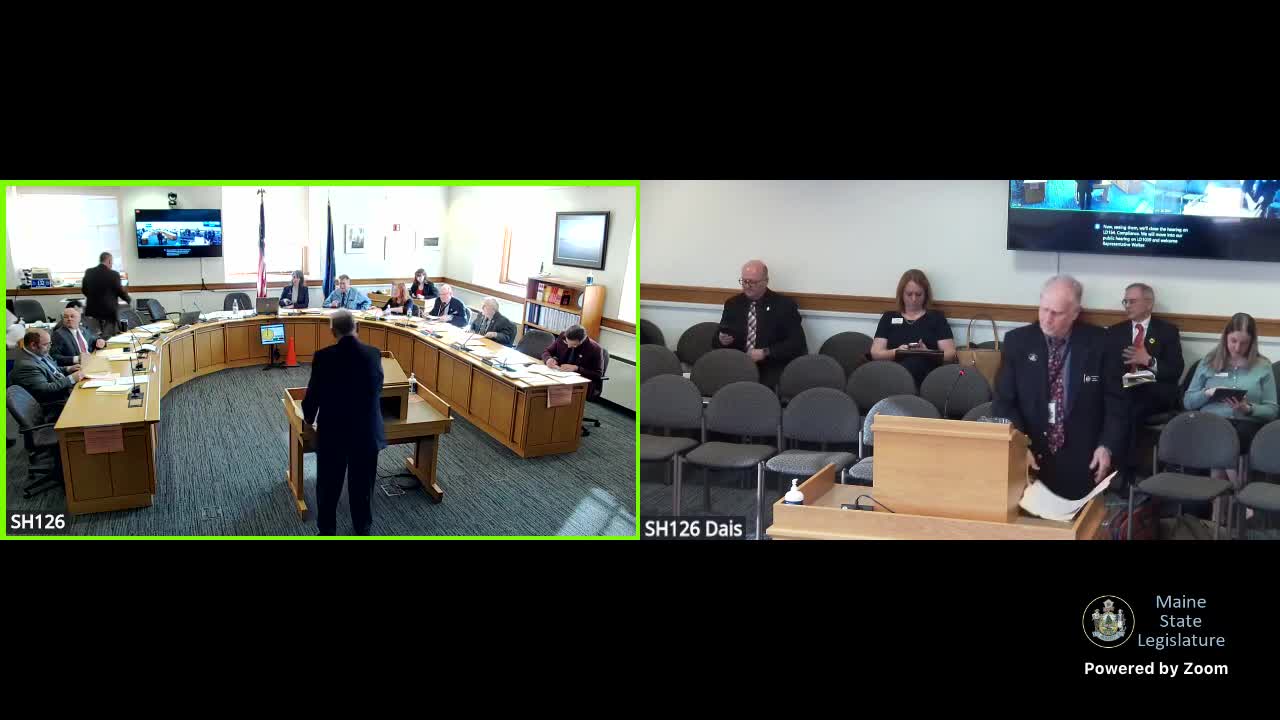
Representative Paul Walker presented L.D. 1039 on April 1, 2025, asking the Joint Standing Committee on Transportation to consider authorizing local governments to operate heavy equipment and commercial vehicles under a municipal license class for limited, local duties such as snow removal.
Sponsor rationale: Walker told the committee that smaller municipalities struggle to recruit and retain CDL‑licensed operators and that heavy-equipment work is essential to public safety during major weather events. He described training costs and labor competition with private employers as barriers that make it difficult for small towns to obtain and keep CDL drivers.
Administrative and enforcement opposition: Deputy Secretary of State Kathy Curtis and Lieutenant Bruce Scott of the Maine State Police testified in opposition. They cited state law and the Federal Commercial Vehicle Safety Act, saying Maine must remain compliant with federal CDL standards. Curtis noted an existing statutory emergency exemption that allows municipalities under 3,000 population to use non‑CDL operators for snow removal when a qualified operator is not available; Scott urged the committee to consider whether expanding that exemption or increasing the population threshold would address concerns without creating a new state license that could conflict with federal rules.
Municipal perspective and possible remedies: Testimony from municipal representatives and Maine Municipal Association staff described a shrinking pool of trained drivers and high costs for certified training. MMA suggested the association could work with the Bureau of Motor Vehicles and enforcement agencies to expand regional training opportunities, to provide clearer pathways and to pursue modest statutory changes rather than create an entirely new municipal license class.
Next steps: Committee members asked agencies to provide additional information about the federal exemption language and about how states and municipalities handle instructor certification and regional training programs. Witnesses agreed to provide further documentation at a work session.
—Reported from a public hearing of the Joint Standing Committee on Transportation.