Get Full Government Meeting Transcripts, Videos, & Alerts Forever!
Get email alerts on the Cdl Training And Emergency Exemptions topic
No spam. Unsubscribe anytime.
Committee hears municipal concerns about CDL training and local snow‑removal staffing; state police cite federal compliance limits
Summary
Legislators and municipal officials told the Joint Standing Committee on Transportation that small towns face difficulty recruiting and retaining CDL‑trained drivers for snow removal and heavy equipment operation; state police advised that federal commercial licensing rules constrain options and suggested targeted solutions and better access to instructor certification.
Note: The transcript for this hearing contained extended discussion of L.D. 1039. Below is a concise article summarizing the substantive points and next steps.
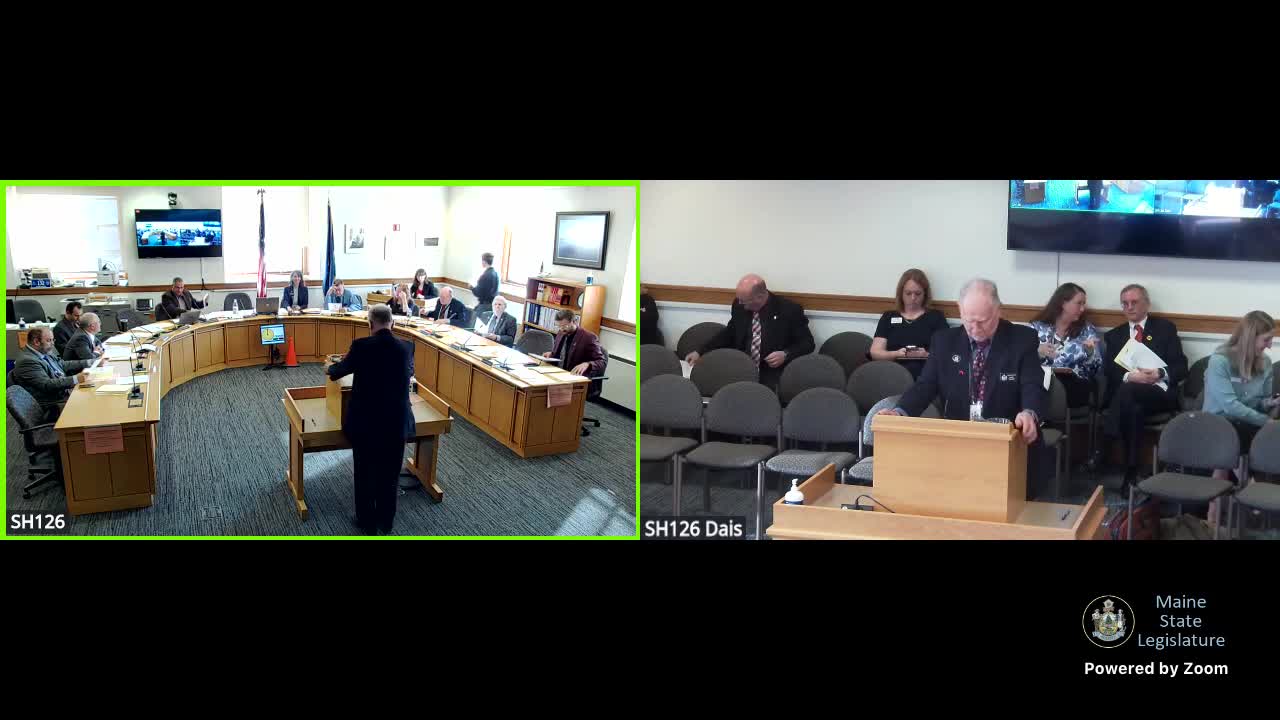
Representative Dick Walker told the committee April 1 that small municipal public works departments sometimes lack access to Class A/B commercial drivers and that training costs and recruitment pressure from private employers make staffing difficult for smaller towns. Walker said towns sometimes need temporary or constrained access to heavier equipment during storms and asked the committee to explore options that preserve safety while helping small jurisdictions meet public‑safety obligations.
Nut graf: Municipal testimony and the Maine Municipal Association described a workforce squeeze: training a municipal driver for commercial vehicle operation is time‑consuming and costly, and towns struggle to retain trained operators. Municipal advocates urged regionally shared training resources and clearer pathways for local crews to meet operational needs during storms and emergencies.
State police and Secretary of State testimony: Lieutenant Bruce Scott of the Maine State Police and Deputy Secretary of State Kathy Curtis urged caution. They said federal regulations under the Commercial Motor Vehicle Safety Act and corresponding Code of Federal Regulations establish the licensing pathways and that states must remain in compliance to avoid federal penalties. Curtis noted a statutory exemption already allows limited use of non‑CDL drivers for snow removal in towns with populations under 3,000 in declared emergency circumstances; Lieutenant Scott suggested studying whether expanding that exemption or improving access to federally accepted training would be preferable to creating nonstandard licensing classes.
Committee action: The committee did not take a vote on L.D. 1039 at the hearing. Members asked staff and agencies for additional information about training pathways, instructor certification options, and whether the existing exemption (Title 29‑A §12‑52 as described in testimony) is broadly accessible or should be amended. Municipal and state agency representatives offered to work on a follow‑up session or pilot arrangements to address regional training or shared operator pools.
Ending: Committee chairs and members indicated willingness to pursue targeted solutions — including training sessions, outreach and possible adjustments to exemption thresholds — rather than a wholesale departure from federal licensing norms. A work session was suggested to gather technical options and to test whether the issue could be addressed administratively and regionally before any statutory changes.