Get Full Government Meeting Transcripts, Videos, & Alerts Forever!
Get email alerts on the Labor Standards Scheduling topic
No spam. Unsubscribe anytime.
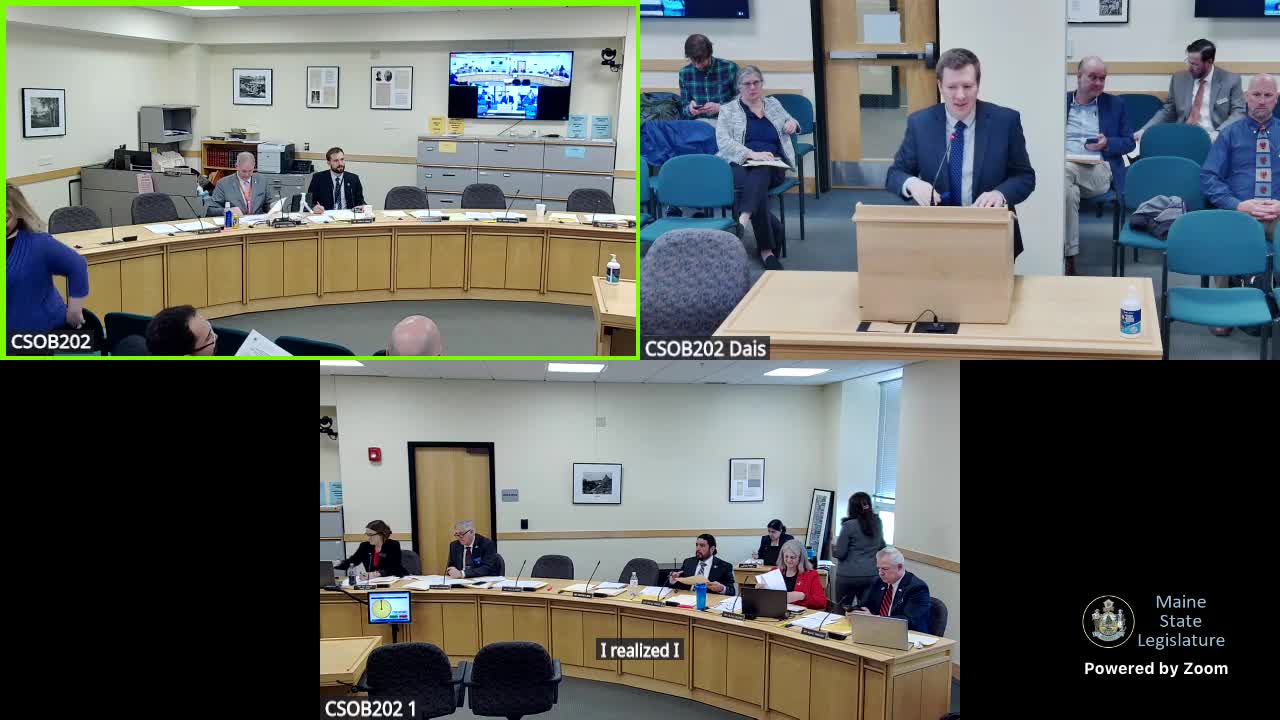
Labor committee hears LD 598 to guarantee minimum pay when workers called in are sent home
Summary
LD 598 would require employers meeting size and calendar-day thresholds to pay at least two hours when an employee reports to work and is sent home early; sponsors and worker advocates urged passage and the Department of Labor said enforcement would likely require at least one additional staff position.
Senator Mike Tipping introduced LD 598, an act to require minimum pay for reporting to work, explaining the measure would guarantee that an employee who reports to work and is sent home early or has hours reduced receives at least two hours of pay or the amount the employee would have earned for the scheduled shift, whichever is lesser. The sponsor said the bill addresses ‘‘just-in-time’’ scheduling practices used by some employers that rely on last-minute changes to staffing.
Dylan Murray, legislative liaison for the Maine Department of Labor, testified the department neither supports nor opposes the bill but described the bill’s scope and enforcement implications. Murray said the bill would apply to employers with 10 or more employees who operate more than 120 days per year and would exclude public employers and seasonal industries. The department noted exceptions for adverse weather, natural disaster, illness, or workplace injury and described a ‘‘good faith notification’’ safe harbor if an employer documents a timely attempt to notify the employee not to report. Murray said many other jurisdictions have reporting-pay laws but cautioned that Maine DOL’s implementation would likely require the addition of at least one full‑time position to support enforcement and rulemaking.
Worker and policy groups supported the legislation. Adam Good, legislative director of the Maine AFL-CIO, said unpredictable schedules harm lower-wage workers and recommended amendments to require a higher minimum payout (either 50% of the planned shift or four hours) to better reflect lost wages and costs for employees, particularly health-care workers who sometimes incur child-care costs and transportation expenses. James Mile of the Maine Center for Economic Policy urged passage and provided research indicating irregular scheduling and last-minute cancellations are common nationwide.
Business groups and trade associations testified in opposition or raised concerns about unintended consequences and administrative burdens. Jake Lechants of the Maine State Chamber of Commerce said the bill’s coverage (employers of 10 or more) and the proposed two-hour minimum could create substantial costs for small businesses and urged revisions to preserve flexible training and hiring models. Industry witnesses — including representatives of the Retail Association of Maine, Maine Grocers and Food Producers Association, Hospitality Maine, and the Maine Automobile Dealers Association — noted scheduling complexity, the need for flexibility in retail and hospitality, unclear definitions (for example, ‘‘adverse weather’’), and the difficulty of compliance for small employers.
Several committee members asked the Department of Labor for data on complaints and the fiscal impact and requested the department provide the previous fiscal‑note analysis for a similar bill. Murray said he would supply complaint data and a cost estimate for adding enforcement capacity at the work session.
The committee closed public testimony and signaled it would take the bill up in work session; no committee final action was taken in the hearing.