Get Full Government Meeting Transcripts, Videos, & Alerts Forever!
Get email alerts on the Military Surplus Vehicles topic
No spam. Unsubscribe anytime.
Committee hears split views on authorizing limited registration of military surplus vehicles; public safety concerns cited
Summary
Representative Dale Perkins urged the committee to allow limited registration of demilitarized military vehicles for parades, exhibitions and maintenance trips, but the Maine State Police, Department of Public Safety and Secretary of State opposed broad authorization, citing federal standards, crash data and enforcement concerns.
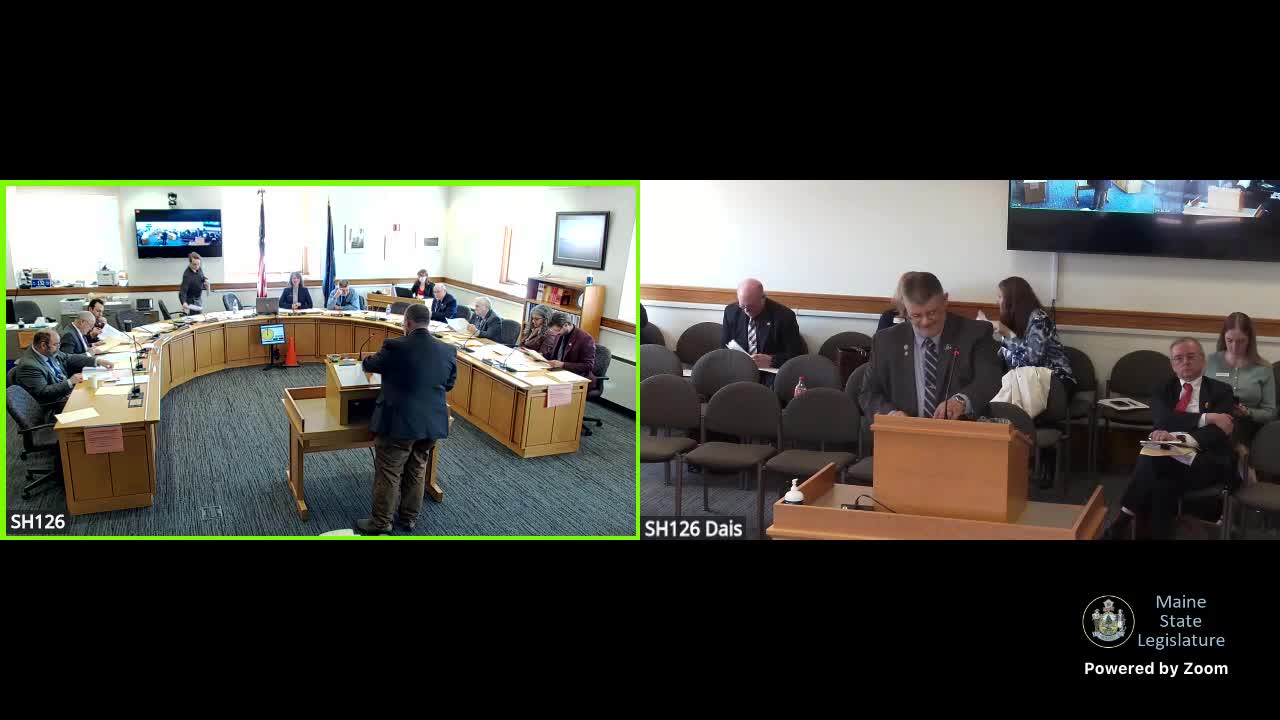
The Joint Standing Committee on Transportation heard testimony April 1 on L.D. 1156, a bill to allow registration of demilitarized military vehicles for limited on‑road uses such as parades, exhibitions, educational displays and occasional maintenance movements.
Nut graf: The sponsor, Representative Dale Perkins, urged allowance of limited registration that parallels existing antique‑vehicle rules for hobbyists and veterans’ groups, arguing that many of the vehicles proposed for this exception are used infrequently and present minimal public‑safety risk. Department of Public Safety witnesses and the Secretary of State opposed the bill, saying it would conflict with federal motor vehicle safety standards and carry elevated crash and rollover risks for occupants and others.
Sponsor’s case: Perkins, who has a military vehicles background and experience training military drivers, told the committee many collectors and veterans need a lawful pathway to move and display historic military vehicles. He cited national legislative activity in other states to exempt historical military vehicles for patriotic events and argued actual crash data for surplus vehicles is very small as a share of overall fatal crashes.
Opposition testimony: Lieutenant Bruce Scott of the Maine State Police and Deputy Secretary of State Kathy Curtis testified in opposition, saying most military vehicles were built for combat/off‑road use and do not meet NHTSA crash safety or EPA emissions standards. Scott cited a past Government Accountability Office analysis that found higher fatality rates for military vehicles involved in crashes nationally, and he warned the bill’s terms ("occasional pleasure driving," "transportation to and from events") could be interpreted to allow broader on‑road use.
Secretary of State concerns: Kathy Curtis said Maine’s longstanding practice has been that vehicles designed for on‑road use must meet federal vehicle safety and emissions standards at manufacture; she also noted practical issues including a moratorium on new specialty plates and the fiscal and IT costs of creating a new registration category.
Public/municipal input: Maine Municipal Association and other municipal speakers urged caution or additional municipal representation in any process because municipal governments maintain most public roads and would bear enforcement burdens.
Ending: Committee members asked whether the subject could be folded into broader study work if the committee directs such a group; law enforcement said combining studies of nonconforming or surplus vehicles would be preferable to piecemeal statutory changes. The committee did not vote on the bill at the hearing but indicated it would consider testimony and possible amendment at a future work session.