Get Full Government Meeting Transcripts, Videos, & Alerts Forever!
Get email alerts on the Workforce Apprenticeship topic
No spam. Unsubscribe anytime.
Lawmakers hear broad support for expanding certified pre-apprenticeship programs, fiscal concerns raised
Summary
Sponsors, unions and workforce groups urged lawmakers to back LD 1117 to expand certified pre-apprenticeship programs across Maine; the Department of Labor described existing rules and warned an $8 million general‑fund appropriation in the sponsor amendment is not in the governor's budget.
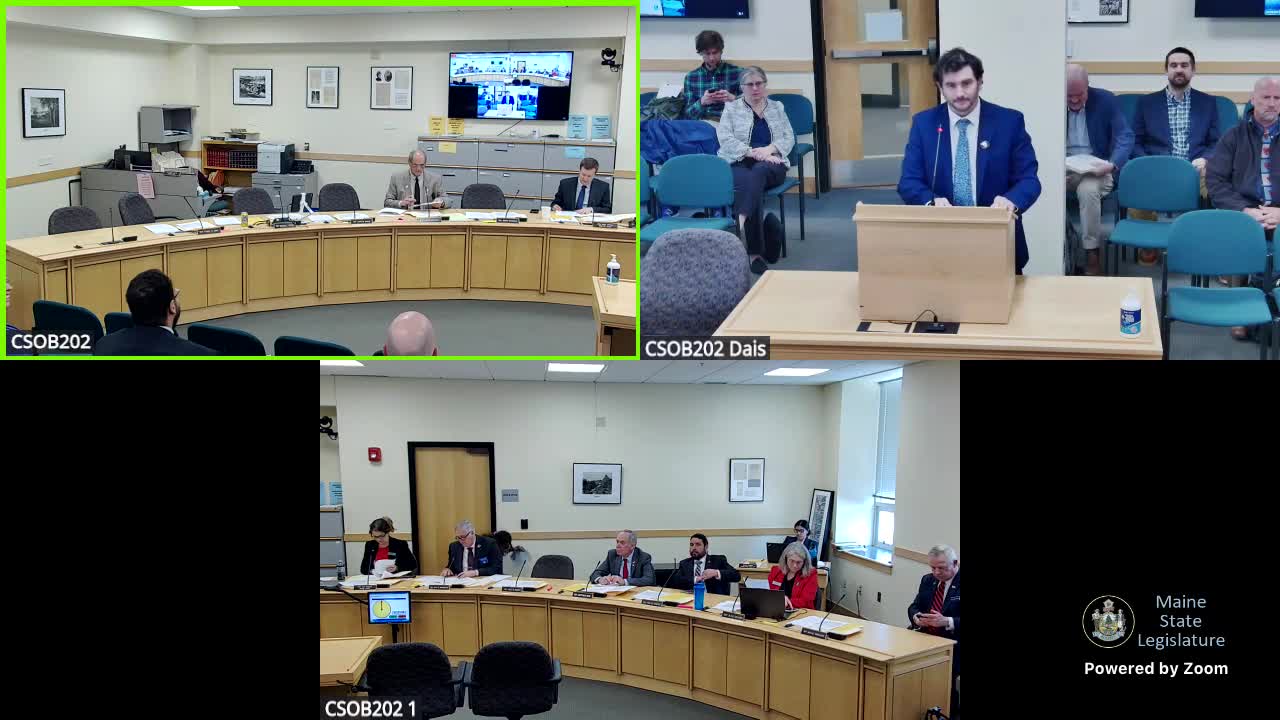
Representative Kilton Webb, sponsor of LD 1117, told the Labor Committee that certified pre-apprenticeship programs provide hands-on training and a pathway into registered apprenticeships, and urged lawmakers to approve the bill to address persistent shortages in the trades. Webb described the pre-apprenticeship-to-apprenticeship pathway as a mix of on-the-job training and classroom instruction that ‘‘creates a beautiful feedback loop.’’
The Maine Department of Labor outlined the current framework for certified pre-apprenticeship programs and said the department neither supports nor opposes LD 1117 while offering technical recommendations. Kim Moore, director of the Bureau of Employment Services, told the committee that Maine codified certified pre-apprenticeship programming in 2023 and adopted new rules requiring programs to partner with registered apprenticeship sponsors, provide industry-aligned training and safety education, recruit underrepresented groups, and follow U.S. Department of Labor standards. Moore said 56 programs are operating statewide across healthcare, construction, manufacturing and other sectors and that more than 1,000 individuals have completed pre-apprenticeships since 2023, of which 379 have entered registered apprenticeship programs directly.
Several workforce and labor advocates testified in favor of the bill. Sam Boss, Apprenticeship and Workforce Director at the Maine AFL-CIO, described the Union Construction Academy pre-apprenticeship as an intensive five-week program that awards industry-recognized credentials and helps graduates apply for registered apprenticeships. Jason Shedlock, president of the Maine Building Trades Unions and chair of the Maine Apprenticeship Council, urged the committee to view funding for pre-apprenticeship as a multiplier investment—employers provide substantial on-the-job training, he said—and said an appropriation would expand a proven pipeline into good jobs.
Apprentices and program graduates gave personal testimony. Haley (last name provided in transcript as Haley Lawrence), a recent apprentice with Laborers Local 327, described enrolling while experiencing housing instability and said she began a union job immediately after graduation and signed a lease within weeks. Speakers stressed that pre-apprenticeship programs reach people with nontraditional backgrounds and can improve outcomes for individuals and employers.
Some employers and trade associations offered conditional or critical testimony. Garrett Mason, representing Associated Builders and Contractors of Maine, said he supports pre-apprenticeship in principle but objected to several provisions in the bill as drafted: a requirement that post-program placements meet a $35 total-package threshold, vague definitions such as "historically marginalized communities," and tying grant funding to future apprenticeship entry rather than program completion and learned skills. Mason said the wage threshold could exclude small and mid-size contractors and other industries where journey-worker wages are lower.
Department testimony included technical suggestions: remove mandatory grant-making consultation that could create conflicts of interest with the Maine Apprenticeship Council; explicitly recognize partnerships with WIOA providers and the Competitive Skills Scholarship Program for supportive services; and note that the sponsor's $8,000,000 appropriation in the amendment is not included in the governor's budget. Moore said the department is willing to work with the sponsor and stakeholders in the work session to refine implementation language.
Committee members asked about program application and certification, age requirements, completion and conversion rates to registered apprenticeships, and the department's role in grant administration. Moore and advocates said pre-apprenticeship programs vary in scope—from career exploration to intensive skills training—and that registered apprenticeship is the point where paid, on-the-job training and journeyman progression begin. Moore said the department certifies programs and can report program-level enrollment and outcomes at the work session. Several lawmakers requested graduation and conversion percentages for the work session.
LD 1117 moved into the committee's process for further technical review; no final vote on the bill was recorded in today's hearing.