Get Full Government Meeting Transcripts, Videos, & Alerts Forever!
Get email alerts on the Historic Sites topic
No spam. Unsubscribe anytime.
Committee backs funding mechanism to address $32 million backlog at state historic sites
Summary
The Joint Standing Committee on Agriculture, Conservation and Forestry on April 1 recommended passage of LD 761, a measure aimed at funding maintenance, preservation and promotion of state‑owned historic sites after witnesses and the sponsor described a roughly $32 million backlog.
The Joint Standing Committee on Agriculture, Conservation and Forestry on April 1 heard testimony and voted to recommend passage of LD 761, an act to support the maintenance, preservation and promotion of state historic sites. Senator Nicole Grochowski, the bill sponsor, said the Bureau of Parks and Lands estimated a maintenance backlog across nearly 20 state-owned historic sites at roughly $32,000,000, and the bill proposes a transfer mechanism that would make up to $18,000,000 available to a non‑lapsing account if the State ends the fiscal year with a surplus.
Why it matters: Friends groups and local officials told the committee the lack of dedicated funding has left some sites—most notably Fort George in Castine—unsafe and effectively closed to visitors. Supporters argued modest, one-time capital investments would both preserve local history and create tourism-related economic activity for small towns.
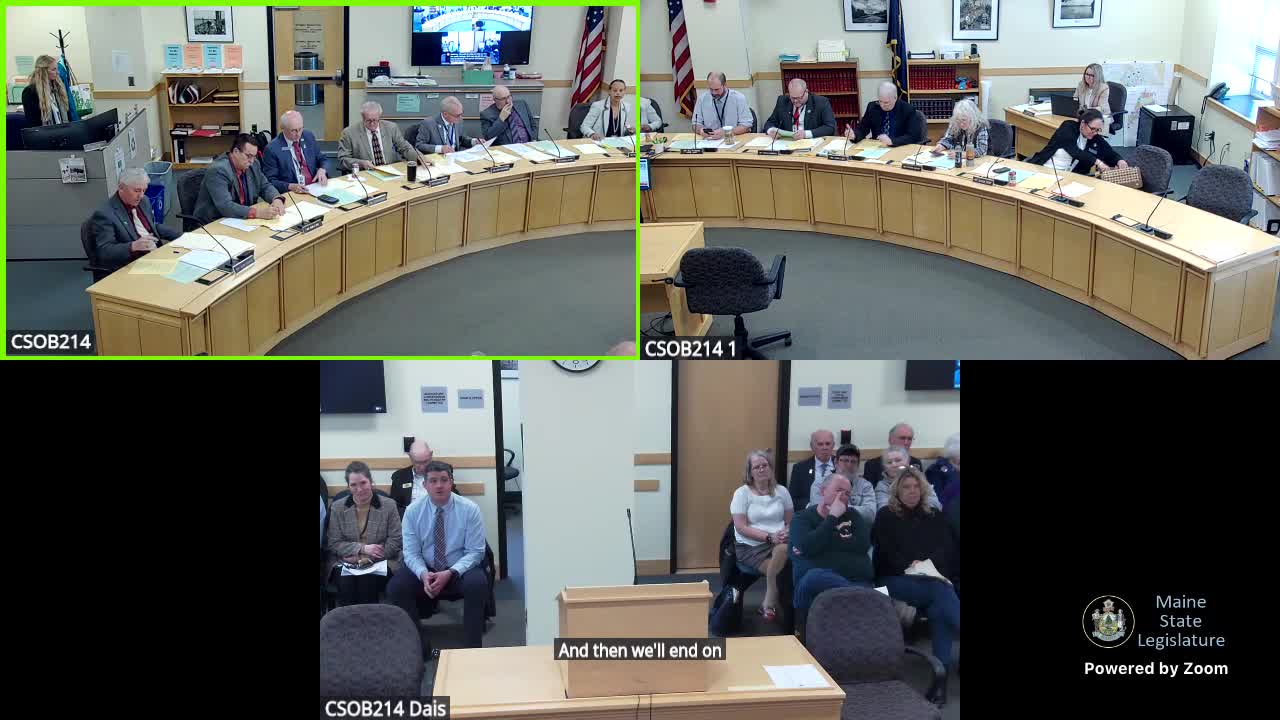
Committee action and fiscal approach: The committee took testimony from municipal officials and nonprofits and then moved to work session. Representative Bill Plucker moved “ought to pass” on LD 761; the motion was amended to add the fiscal note and was approved by roll call (11 yes, 1 absent). The bill’s amended funding mechanism would rely on a surplus “cascade” transfer: if the State ends a year with available surplus the statute would permit transferring up to $18,000,000 to a non‑lapsing account dedicated to state historic site maintenance.
What advocates said: Senator Grochowski told members she previously sought a $1,000,000 appropriation for Fort George and later learned of the broader $32,000,000 backlog. Roberta Boskowitz, chair of the Castine Select Board, told the committee Fort George is “the best preserved example of a revolutionary era earthwork fortification in North America” but that parts of the fort are “dangerously unsafe” and that town resources are insufficient for major repairs. Nina Milliken and representatives of the Appalachian Mountain Club and other groups said historic sites also provide low‑cost recreation and help local economies.
Questions and oversight: Committee members pressed staff and the sponsor on two practical points: (1) whether matching funds or outside grants (for example, from the Maine Historic Preservation Commission or federal Land and Water Conservation Fund) could stretch state dollars, and (2) whether a bond or direct appropriation would be more appropriate than a surplus transfer. Senator Grochowski said some sites can pursue matching grants and that she had also explored bonding as an option but favored the cascade transfer as a non‑recurring, surplus‑driven source.
Next steps: The committee’s roll‑call vote recorded the recommendation “ought to pass as amended” with fiscal language. The committee clerk noted the motion passed 11–0 with one member absent. The bill will proceed through budgeting and the Appropriations process where the funding approach — surplus transfer versus bonding versus direct appropriation — will be further debated.