Get Full Government Meeting Transcripts, Videos, & Alerts Forever!
Get email alerts on the Homestead Property Tax Exemption topic
No spam. Unsubscribe anytime.
Taxation Committee advances amended incremental increase to homestead exemption, rejects four alternative bills
Summary
The Maine House Taxation Committee voted unanimously to move LD 140 forward as amended to incrementally raise the homestead property tax exemption and voted 'ought not to pass' on four alternative bills after staff reviews flagged fiscal and administrative concerns.
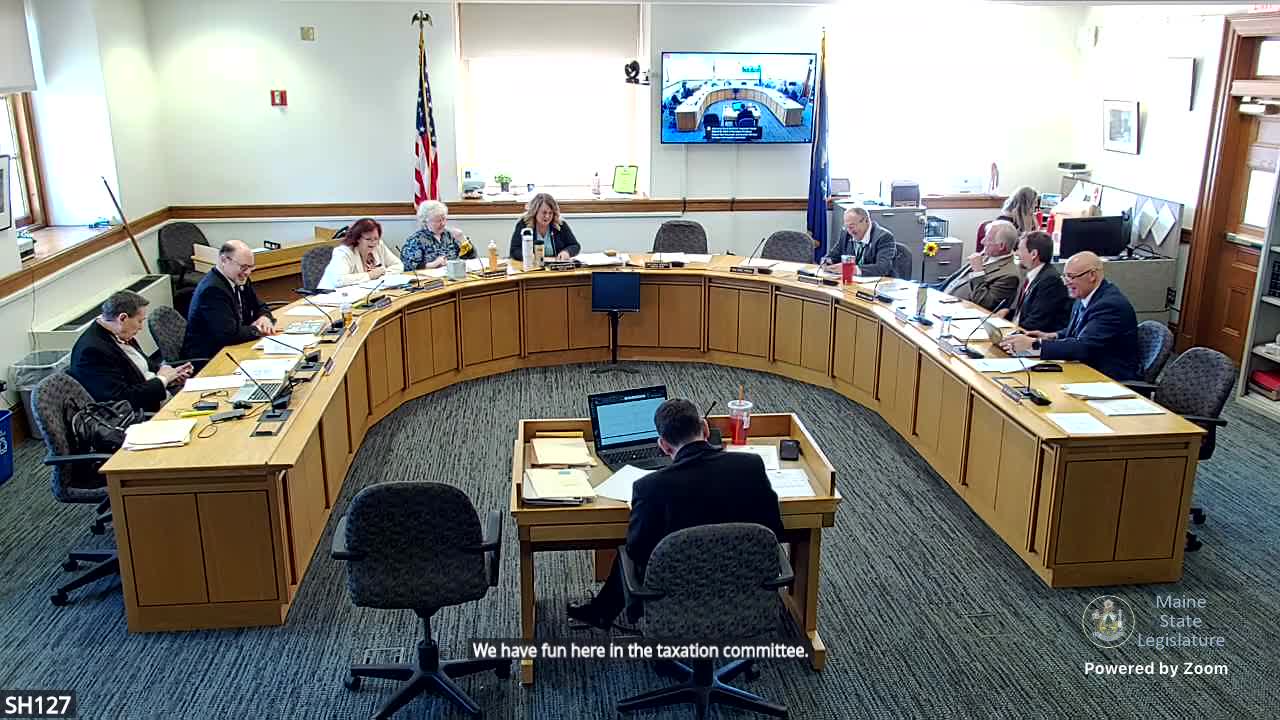
At a work session of the Maine Legislature's Taxation Committee, lawmakers reviewed five bills that would change Maine's homestead property tax exemption and voted unanimously to advance one amended bill while rejecting four others.
The committee voted to report LD 140 "ought to pass as amended, with a fiscal note," adopting an amendment to increase homestead exemption amounts incrementally (an amendment that would stage increases of $5,000 per year toward a $50,000 total, as discussed on the floor). Committee members also voted "ought not to pass" on LD 7, LD 570, LD 658 and LD 934; those motions passed unanimously among members present.
Committee analyst Jeff Lewis walked members through the five bills and the fiscal detail for each, noting differences in indexing, eligibility criteria and municipal impacts. Lewis said the existing exemption is $25,000 (subject to a 12-month residency waiting period) and summarized the proposals: LD 7 would raise the exemption up to $75,000 for people 65 and older with a 10-year municipal residency requirement and an estimated preliminary fiscal impact of roughly $50 million per year; LD 140 proposes staged increases (originally $10,000 per year toward a $100,000 maximum, with later indexing for inflation) but members discussed and drafted amendments to limit the immediate jump and the indexing; LD 570 would base the full exemption on federal adjusted gross income and requires annual income verification; LD 658 would raise the exemption to $50,000 effective April 1, 2025; and LD 934 would guarantee a percentage reimbursement to municipalities for benefits to veterans and seniors and, as drafted, inadvertently removed the 12-month waiting period for eligible homeowners.
Members repeatedly raised municipal administrative burdens and constitutional considerations. Lewis and committee members flagged LD 570 in particular as creating a substantial municipal burden because it would require municipalities to verify and annually recertify applicants' federal adjusted gross incomes and to retain sensitive tax data with attendant data-protection responsibilities. Lewis also said some drafting issues could be resolved by allowing applicants to attest by affidavit or present state identification in lieu of more burdensome verification in bills that target age or veteran status.
Senator Bruce Bickford (Senate District 20) and several representatives advocated for using LD 140 (the incremental approach) or for pursuing changes instead through the property's tax fairness credit to avoid creating special classifications that could raise state-mandate or constitutional concerns under Article IX, Section 21 of the Maine Constitution, which the analyst identified as potentially implicated by bills that substantially shift municipal costs.
Representative Shelley Rudnicki, who asserted objections to the session's scheduling at one point, moved the majority of the "ought not to pass" motions. The committee recorded unanimous votes among those present on each motion. For the LD 140 motion, Senator Bickford moved, and Representative Thomas Levine seconded, the committee-recommended amendment that changes the staging to smaller annual increases (discussion centered on $5,000-per-year steps to reach $50,000) and to include a fiscal note. Committee members said the amended approach was intended to reduce immediate fiscal shock while still raising relief for property owners.
Where members discussed technical drafting issues, Lewis noted possible ambiguities (for example, whether indexing should begin a year after a staged increase or immediately) that the committee said could be fixed by amendment. Members also asked Maine Revenue Services (MRS) staff to confirm the fiscal modeling assumptions used in the department's estimates; the analyst said the MRS estimate for the incremental bill was based on $10,000-per-year increases beginning in April 2026 and that lowering that pace to $5,000-per-year would roughly halve the near-term fiscal impact.
Votes at a glance: - LD 7 (increase homestead exemption for residents 65 and older, up to $75,000; 10-year municipal residency requirement): Motion: "Ought not to pass"; Mover: Representative Shelley Rudnicki; Second: Senator Bruce Bickford; Outcome: unanimous of those present (yes votes recorded in the transcript: Representative Swallow, Representative Sayre, Representative Quint, Representative Rudnicki, Representative Matlak, Representative Cloutier, Senator Bickford, Representative Levine, Representative Friedman, Representative White). Fiscal impact (preliminary): cited ~ $50,000,000 per year (MRS estimate referenced as preliminary). - LD 570 (additional homestead exemption tied to federal adjusted gross income; requires income verification and annual recertification): Motion: "Ought not to pass"; Mover: Representative Shelley Rudnicki; Second: Representative Russ White; Outcome: unanimous of those present. Committee discussion: MRS/analyst warned of substantial municipal burden (verification/retention of sensitive income data). - LD 934 (100% of the homestead exemption amount to seniors and veterans; altered municipal reimbursement language and removed 12-month waiting period as drafted): Motion: "Ought not to pass"; Mover: Representative Rudnicki; Second: Representative Gregory Swallow; Outcome: unanimous of those present. Committee discussion noted drafting errors that, as written, would remove the 12-month residency waiting period for veterans and seniors (an issue the committee said could be fixed). - LD 658 (raise homestead exemption to $50,000 effective April 1, 2025): Motion: "Ought not to pass"; Mover: Representative Rudnicki; Second: Representative Russ White; Outcome: unanimous of those present. Fiscal impact cited in discussion: approximately $90,000,000 per year (analyst's figure mentioned in briefing). - LD 140 (incrementally increase homestead exemption; originally a $10,000/year path to $100,000 with later CPI indexing): Motion: "Ought to pass as amended, with a fiscal note"; Mover: Senator Bruce Bickford; Second: Representative Thomas Levine; Outcome: unanimous of those present. Committee amendment discussed: alter annual increases to $5,000/year toward $50,000 total (and remove or delay full CPI indexing); members asked for a fiscal note on the amended staging.
Committee members emphasized the desire to simplify administration for municipalities (favoring either a small staged increase or use of the property tax fairness credit to target groups) and to avoid singling out classes of taxpayers in ways that could trigger state-mandate or constitutional objections. Several members said they preferred a universal incremental approach (LD 140 as amended) over narrowly targeted bills because it avoids special classifications and reduces legal risk.
The committee closed the work session after finishing the votes and invited members and the public to the next day's public hearings; staff said the amended LD 140 would carry a fiscal note and that committee staff and sponsors would continue to refine bill language to address drafting and verification issues.
Ending: The committee's unanimous votes mean LD 140 (as amended) will advance from committee with a fiscal note and the other four bills will be reported "ought not to pass." Sponsors and staff will prepare further amendments and fiscal analysis before the next formal steps in the bill process.