Get Full Government Meeting Transcripts, Videos, & Alerts Forever!
Get email alerts on the Public Records Video Fees topic
No spam. Unsubscribe anytime.
Committee backs recommending Ohio House Bill 315 implementation for police video fees
Summary
The Law and Ordinance Committee voted unanimously to recommend council amend the public records policy and fee schedule to allow charging up to $75 per hour to produce/redact police video under Ohio House Bill 315, with exemptions for victims and court subpoenas.
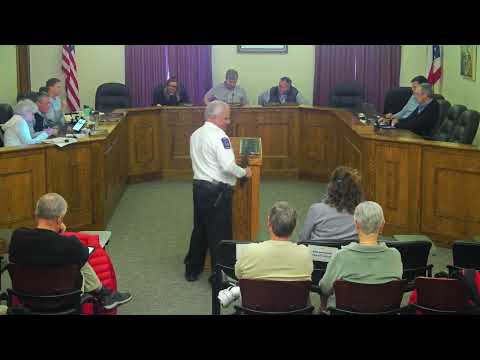
The Troy Law and Ordinance Committee voted unanimously March 31 to recommend that city council amend the public records policy and fee schedule to implement Ohio House Bill 315 provisions allowing fees for producing and redacting video records.
Chief McKenna, the city's police chief, told the committee HB 315 becomes effective April 9 and would permit the city to charge up to $75 per hour for labor to produce video requested under public-records law. He said the department has found it typically takes about three hours of staff time to produce and redact one hour of video because requests commonly include multiple camera views — body-worn cameras plus three in-car views — and because redaction requires specialized software and IT support.
The chief said the department has received 41 camera-related public-records requests so far in 2025 and that many appear to be from online content creators. Under the bill, a single video request could be capped at $750, and the city may require payment up front. Chief McKenna said victims and parties who obtain an unredacted video by subpoena would be exempt from the fee; he identified the victim exemption as the Marsy's Law exemption and said subpoenaed copies must be produced without charge.
Committee chair Jeffrey Wood asked how many requesters are local; the chief said Ohio records law permits online requests without identifying the requester's residence, so the department could not always verify that detail. Committee members discussed that requests come from insurance companies, local citizens and attorneys as well as online creators.
The committee’s action was procedural: members directed that the recommendation be moved forward to the full city council for ordinance-level action. No council vote on a final ordinance was taken at the committee meeting.
Votes at the committee were recorded as unanimous to move the recommendation to council.