Get Full Government Meeting Transcripts, Videos, & Alerts Forever!
Get email alerts on the Consumer Protection topic
No spam. Unsubscribe anytime.
Bill would stop fees and incentives that penalize customers who keep paper billing, testimony says
Summary
Rep. Lydia Crafts presented LD 11 80 to ban fees for paper billing and to bar incentives that effectively raise the cost of paper statements; utilities and regulators raised implementation and enforcement concerns tied to licensing boards and administrative costs.
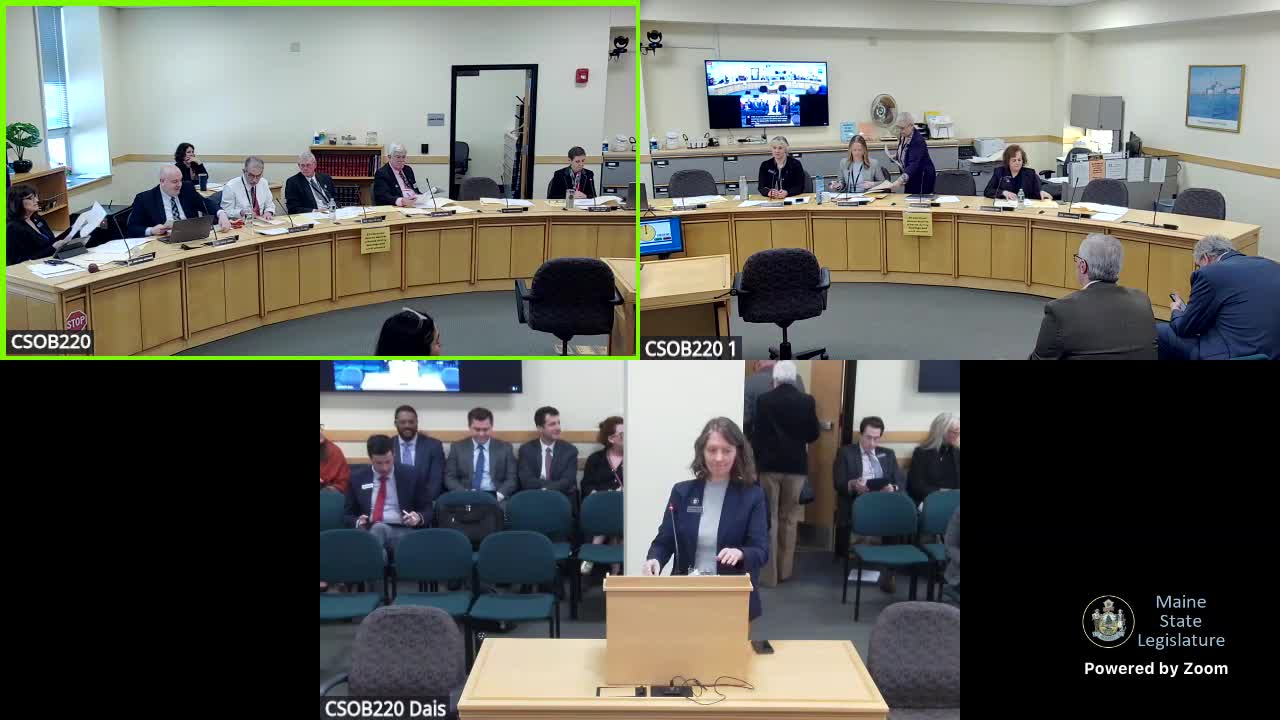
Representative Lydia Crafts told the committee LD 11 80 would prohibit companies from charging customers for receiving paper billing and would bar offering financial incentives that effectively penalize customers who choose paper statements. Crafts said the bill responds to complaints from older and rural Mainers who have limited internet access or privacy concerns and who face monthly paper‑billing charges of up to $5 in some cases.
The bill, as amended, proposes two constraints: it would prohibit assessing a fee for paper billing and would prohibit giving a financial incentive for going electronic that has the practical effect of raising paper users’ costs. Crafts cited federal survey data and Maine’s low internet rankings to argue older and rural residents are disproportionately affected.
Deputy Commissioner Penny Valancourt of the Department of Professional and Financial Regulation said her office’s preliminary concern is the amendment’s proposed delegation of enforcement to licensing boards that currently do not regulate billing practices; the change could require new staff, investigative functions and create civil‑enforcement procedures the boards do not now have. Century Maine Power Company’s vice president of government affairs said the company supports promoting e‑billing and detailed an outreach program that donated $2 to Food Bank partners for each customer who signed up for e‑billing (capped at $5,000). Century Maine Power asked the committee to confirm that charitable incentives aimed at encouraging e‑billing would remain allowed under the amendment.
Committee members asked whether the amendment removes incentives; some confusion remained about the text. Representative Olson asked whether the amendment targeted the amended language or the original bill; the department said it was reviewing the amendment and wanted time to consult with assigned assistant attorneys general. No formal action was taken.
Ending: The committee closed the hearing and scheduled the bill for a work session; regulators asked for more time to review the amendment’s enforcement language and potential fiscal impacts on licensing boards.