Get Full Government Meeting Transcripts, Videos, & Alerts Forever!
Get email alerts on the Remittances topic
No spam. Unsubscribe anytime.
Maine hearing on LD 11 10 proposes remittance fee on international money transfers
Summary
A public hearing on LD 11 10 heard sponsor testimony for a $5 plus percentage remittance fee on international money transmissions aimed at generating revenue and aiding law enforcement; regulators and the bureau raised concerns about scope, regressivity and administrative burden.
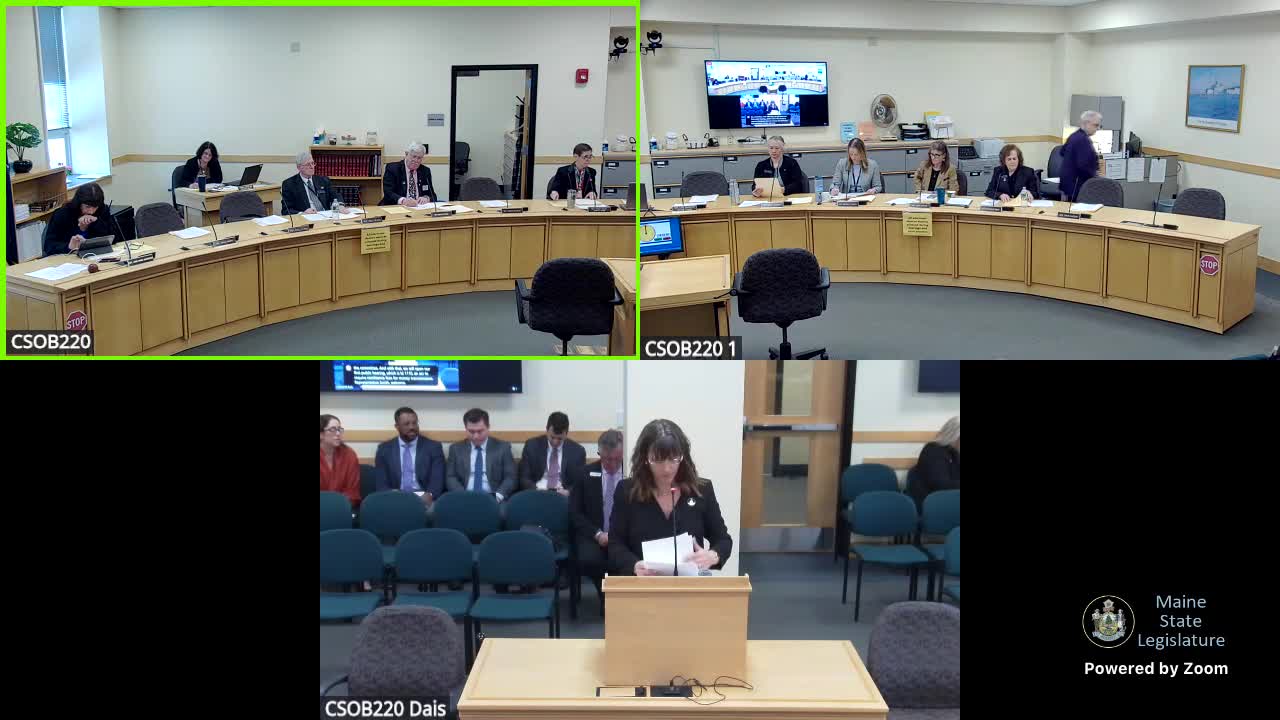
Representative Smith introduced LD 11 10 to the Health Coverage, Insurance and Financial Services Committee as “an act to require remittance fees for international money transmission,” proposing a layered fee meant to target large transfers used in alleged illicit activity and to raise funds for state enforcement.
The bill would require money transmission licensees to collect a fee of $5 for each transfer up to $500 and an additional 3% on any amount above $500, remitted quarterly to the state administrator for deposit into the general fund. Representative Smith said the bill includes a state income tax credit equal to the fee paid for anyone filing a return with a valid Social Security number or tax ID, and cited examples such as a $50,000 transfer producing a $1,505 fee. The sponsor framed the measure as both revenue and a tool to create transactional data for law enforcement.
In a follow-up presentation the Bureau of Consumer Credit Protection’s superintendent, Linda Conti, said her office regulates money transmission and urged clarity: the bill’s sponsor repeatedly spoke about “wire transfers,” but Conti said the statute governs money transmission and that wire transfers (federal reserve-style bank wires) differ from the money-transmission products the bureau supervises. Conti also warned the committee that the service is typically used by underbanked or unbanked users, including immigrants, and that a fee could be regressive for legitimate users. She said she did not want the bureau to be the state’s tax collector and asked for more information on expected revenue and operational impacts.
Committee members pressed for data and a fiscal estimate. Representative Boyer asked whether the proposal should be characterized as a new tax; the sponsor said it targets money “never been taxed” and represents a new tax on such flows but emphasized the offset credit. Representative Mastracchio and others asked whether the state could distinguish resident from nonresident senders for the offset; the sponsor said recipients who file state returns could claim the credit, and Conti agreed the bureau could help assemble transmission volume data for a fiscal note.
No vote or formal action occurred; the hearing closed with a notice that the bill’s work session would follow and that additional testimony (including a remote witness) would be included in the committee record.
Ending: The hearing left key implementation questions unanswered: how much revenue the fee would raise, how the state would administer and enforce the fee, and whether the bureau should collect remittances. Committee members asked staff to assemble transaction-volume data for the work session and for the bureau to provide a fiscal note.