Get Full Government Meeting Transcripts, Videos, & Alerts Forever!
Get email alerts on the Local Food Procurement topic
No spam. Unsubscribe anytime.
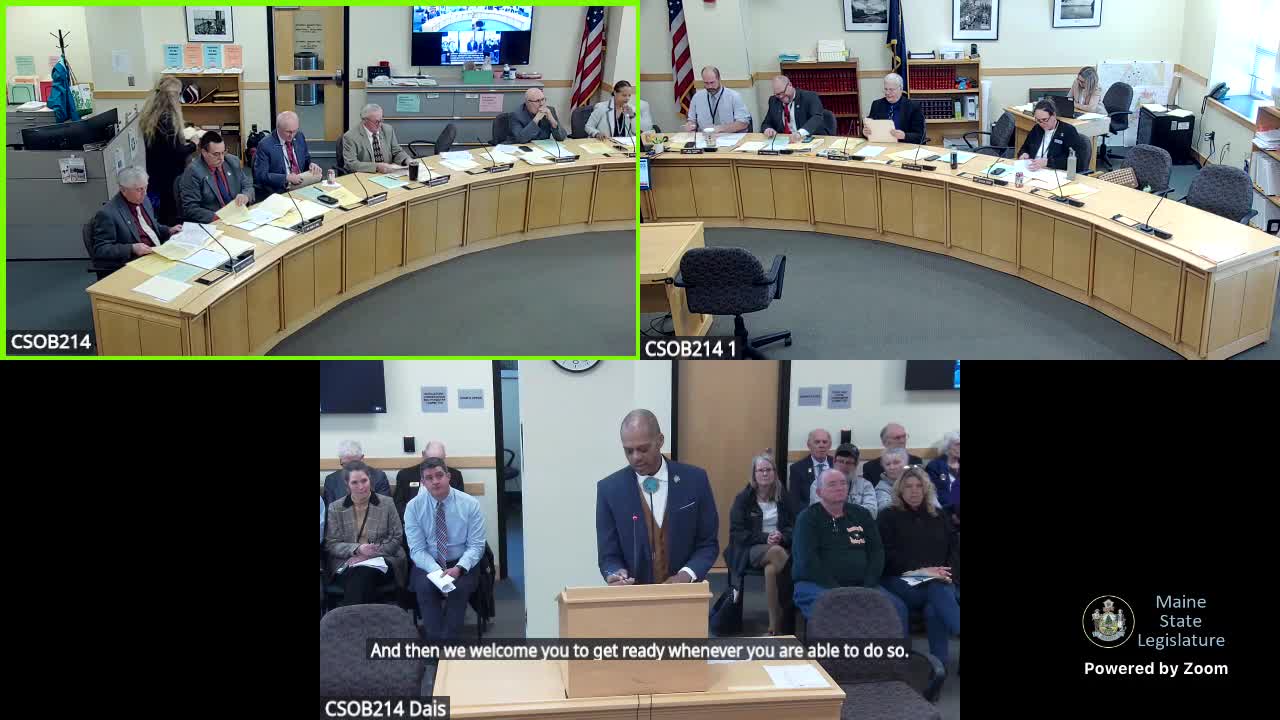
Senator Hickman and agencies discuss plan to raise state institutions' Maine food procurement to 30% by 2030
Summary
Sen. Craig Hickman presented amended legislation to expand and clarify the state's Maine Foods procurement program, defining covered state institutions, encouraging "opportunity buying" for local producers and setting an updated goal of at least 30% Maine food and products by 2030.
Sen. Craig Hickman, sponsor: Sen. Craig Hickman (Senate District 14) asked the Joint Standing Committee on Agriculture, Conservation and Forestry to consider LD 1141, a revised version of existing state procurement law that would raise the state's goal for buying Maine-grown or -processed foods from 20% (the 2025 target in current statute) to 30% by Feb. 1, 2030, and clarify roles and tools for reaching that aggregate target.
Key points: Hickman circulated a strike-and-replace amendment that (1) defines which "state institutions" are covered (Department of Corrections facilities, the two state psychiatric centers named, and Maine Veterans' Homes), (2) clarifies the duties of an institutional food procurement coordinator to strengthen links among producers, distributors and state buyers, (3) preserves the concept of "opportunity buying" (off-contract purchases of discounted or surplus local product) and (4) asks the commissioner to set commodity-level targets by rule so the aggregate 30% goal can be achieved in practice.
Witnesses and agency positions: Maine Farm Bureau (Garrett Mason), Maine Farmland Trust (Shelley McGuire), Maine Organic Farmers and Gardeners Association (Heather Spalding), Coastal and institutional purchasers and the University of Maine System (Sam Warren) testified in support or offered suggestions; the Department of Agriculture, Conservation and Forestry (Director Michelle Webb) and the Department of Administrative and Financial Services (Anya Trundy) testified neither for nor against but described procurement constraints and the federal/state contracting context. Department of Corrections Culinary Director Krista Okerholm described how MDOC has used "opportunity buys" and local garden production to improve inmate food and reduce costs; DAFS staff explained master agreements (currently Sysco for general food) allow off-contract purchases only under specific conditions (e.g., item unavailable on contract or offered at a substantial discount) and described templates now used to document justified off-contract buys.
Discussion highlights: Committee members pressed on practical issues: which institutions are covered (Hickman clarified the bill intentionally lists them), whether the statutory language "must allow" is binding enough to change contract language (sponsor and agencies said the intent is to remove prohibitions and enable off-contract buying), and how to balance price competitiveness with local preference. Witnesses suggested other states' models that allow a modest price preference for local producers (typically 5—1%); DAFS said it historically opposes explicit price preference statutes because of procurement competitiveness and potential interstate retaliation triggers.
Next steps: Agencies said they will continue to work with the sponsor on the amendment language and with procurement staff as master agreements come up for renewal; committee requested supplemental materials for work session including volumes purchased off contract, detail on DOC local production/donations, and clarification on commodity-level targets and rules drafting. The bill remains in committee pending work session.
Ending: Sponsor emphasized the bill is aimed at ensuring continuity of local sourcing and preventing small producers from being cut off by large master agreements; committee members asked for more operational data before final action.