Get Full Government Meeting Transcripts, Videos, & Alerts Forever!
Get email alerts on the Election Law Early Ballots topic
No spam. Unsubscribe anytime.
Caucus debates SB 1001 early‑ballot rules; Democrats call measures punitive and risky for rural voters
Summary
Senate Bill 1001 would tighten early‑ballot drop‑off deadlines, require ID and on‑site tabulation in some counties, and remove some voter flexibility; members said provisions could penalize early voters and strain rural polling where long lines already exist.
Rhonda presented Senate Bill 1,001 to the caucus as a measure that would change several early‑voting procedures, limit the use of emergency voting centers, require certain school sites to host voting, tighten deadlines for ballot drop‑off and receipt, and require identification for ballot drop‑off in some circumstances.
Under the bill as described, a ballot dropped off after 7 p.m. on the Friday before election day could remove a voter from the active early‑voting list; early ballots must be received by the county recorder or officer in charge no later than 7 p.m. on election day or deposited at an authorized voting location beginning at 7 a.m. on the Friday before election day. The bill also would repeal the ability of an early voter to use an official ballot drop box if they do not present sufficient identification, and would require on‑site tabulation in counties that provide it.
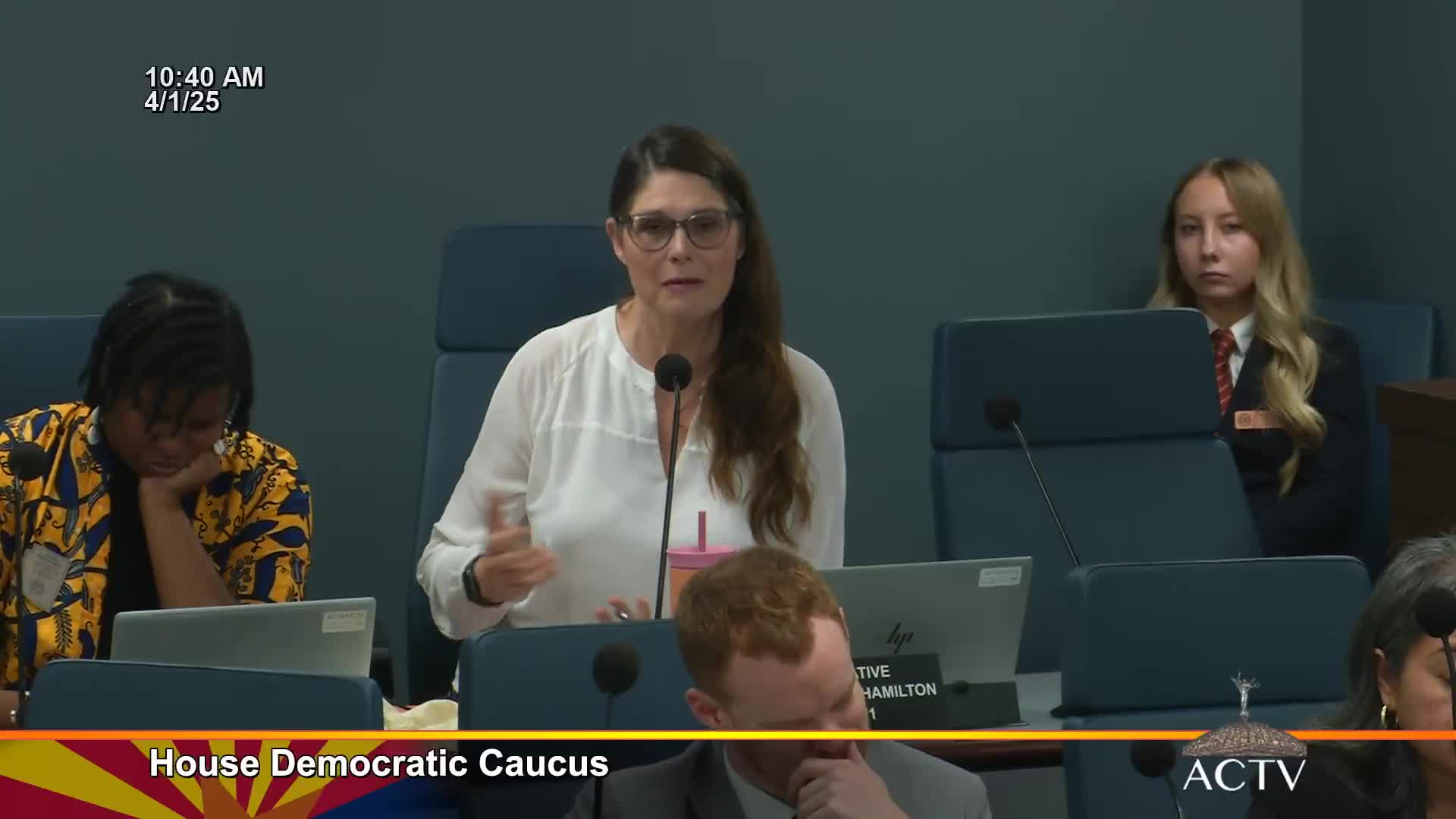
"This bill ... is very punitive in the way of not allowing voters flexibility to vote, right, and taking them off of the [early voting] list," Representative Garcia said, arguing the measure could disproportionately affect counties that already face long lines and capacity constraints. Garcia noted that more than 80% of voters cast early ballots and said lawmakers should aim to preserve flexibility.
Members expressed specific concerns about requiring public schools that serve grades 7–12 to provide space for voting and about stripping local officials' discretion to decline school sites for safety or welfare reasons. One member warned that "It can be absolutely dangerous for schools ... to open up to strangers," and said the decision should remain with school authorities.
Several members asked to pull the bill from the consent calendar for further discussion. The caucus did not record a formal vote on the bill during the meeting; members asked for additional review and expressed interest in analyzing how previously adopted election timeline changes have operated before enacting additional constraints.
No formal motions or final votes were recorded in caucus on SB 1001. The discussion reflected partisan disagreement about whether the bill addresses legitimate election‑integrity concerns or instead creates barriers to voting in counties with limited resources.