Get Full Government Meeting Transcripts, Videos, & Alerts Forever!
Get email alerts on the Education Dei topic
No spam. Unsubscribe anytime.
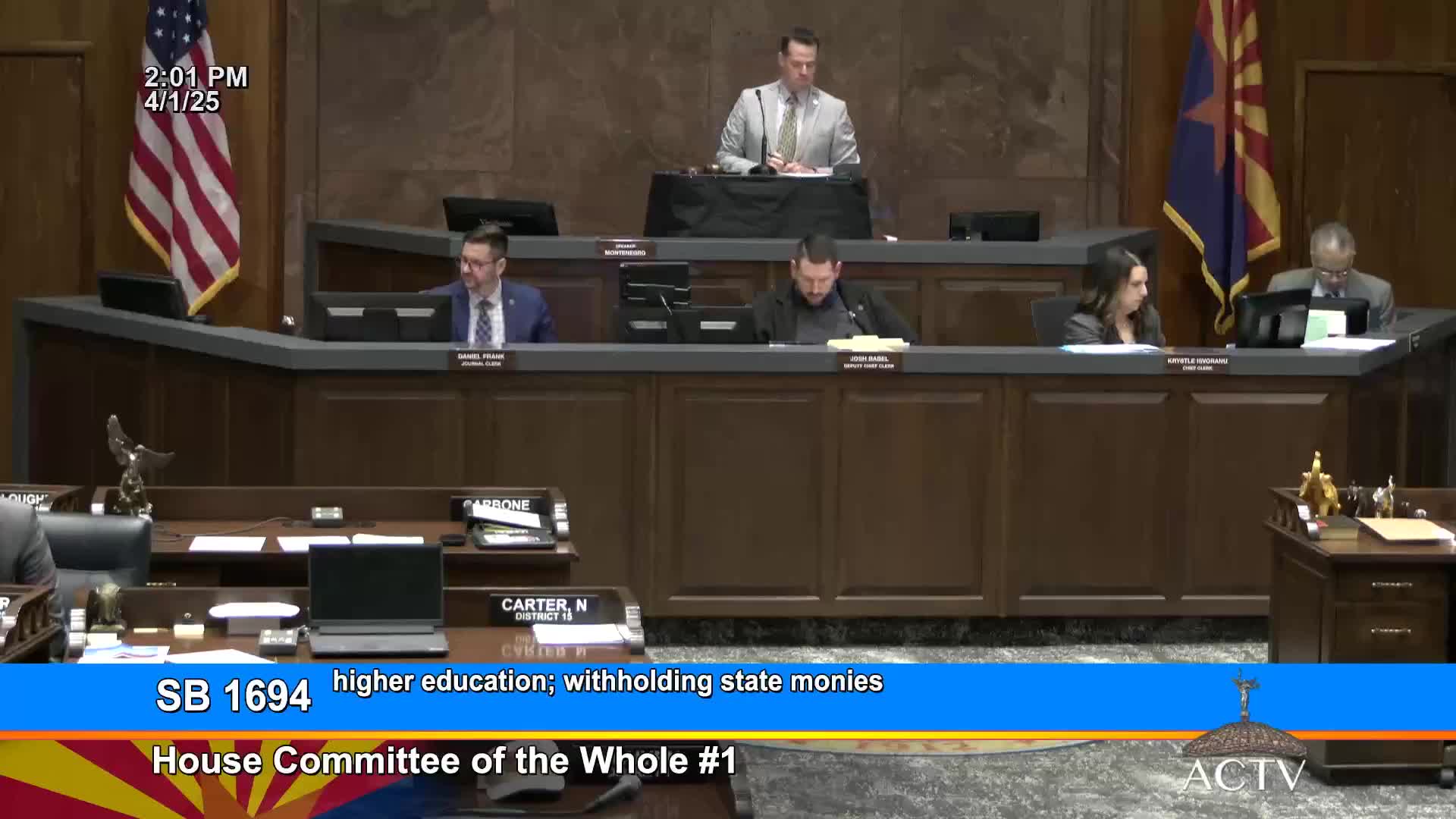
House committee advances bill restricting DEI programs after extended debate
Summary
The Committee of the Whole gave Senate Bill 16-94 a do-pass recommendation after an extended floor debate where speakers across the aisle sharply disagreed about whether the measure protects neutrality or erases important history and training.
The Arizona House Committee of the Whole voted to recommend Senate Bill 16-94 receive a do-pass recommendation after extended debate on April 1.
Supporters described the bill as a move toward colorblind policies and a protection against what they described as divisive or coercive practices. Opponents said the bill would erase essential parts of Arizona history and impede teaching about systemic racism, tribal history and other topics, and urged a no vote.
Representative Gruss moved that the committee recommend SB 16-94 receive a due-pass recommendation. Representative Garcia and several other speakers argued against the bill. Garcia said the bill "will effectively supersede the work that many of our school districts" have done with local communities to craft bullying and discipline policies. Representative Simicak and Representative Aguilar warned the bill would reduce opportunities for students to learn to work with people from different backgrounds — "99% of our jobs these days require that we work with others," Simicak said. Representative Villegas and other speakers urged protection of diverse historical content and called the measure an attack on fair housing and inclusion principles.
Supporters including Representative Collin read language from the measure and said it does not prohibit teaching history, while arguing the bill prevents institutions that receive state funds from promoting differential treatment by race or ethnicity. Representative Gruss said the intent is to support a colorblind approach that "empower[s] all students regardless of race or ethnicity."
After lengthy debate involving members on both sides of the aisle, the committee reported SB 16-94 as a do-pass recommendation and the motion was adopted; the bill was placed on the third-reading calendar for the House.
Speakers raised numerous concerns about the bill's exemptions, including how tribal membership is characterized. Representative Garcia highlighted that tribal membership is a political classification and said portions of the bill could effectively prohibit teaching about tribal law and history. Opposition speakers stressed the potential effect on curriculum, higher-education programming and community relations. Supporters asserted the measure simply prevents discriminatory or coercive practices and preserves equal treatment in publicly funded institutions.
SB 16-94 will next appear on the House third-reading calendar for further action by the full chamber.