Get Full Government Meeting Transcripts, Videos, & Alerts Forever!
Get email alerts on the Economic Development 380 Agreements topic
No spam. Unsubscribe anytime.
Alpine holds workshop on 380-style tax-incentive program; council agrees to pause for new economic development hire to review
Summary
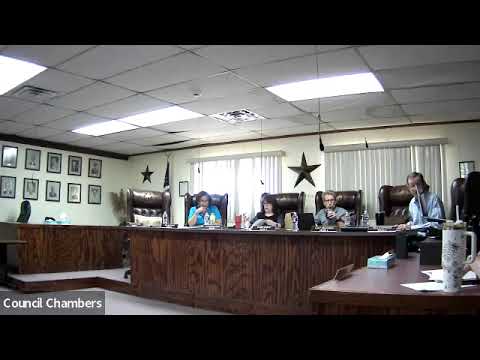
At a March workshop, members of the Alpine City Council and city staff reviewed draft policy and application materials for tax-incentive agreements commonly called “380” agreements and agreed to pause formal adoption while the city’s new economic development administrator starts and reviews the materials.
ALPINE — At a March workshop, members of the Alpine City Council and city staff reviewed draft policy language and application forms for tax-incentive agreements commonly called “380” agreements and agreed to pause formal adoption while the city’s new economic development administrator starts and reviews the materials.
Council and staff said the packet included a draft policy, the city attorney’s notes and sample applications borrowed from other cities. The council focused on several substantive points: whether projects should be eligible if a building permit has already been issued; how to set a minimum taxable-value or revenue threshold for eligibility; how to verify job-creation and wage promises; and whether the city should begin the program with tax rebates rather than cash grants.
The discussion centered on eligibility timing. Rick (meeting participant) said he opposed a rule that would disqualify projects that had a building permit issued before applying. “If I’m a contractor, which I am, and I’m gonna come in for a 380 agreement, I want to get all my homework done — my plans, cost estimates — so when I go to the city I know my total cost,” he said, arguing the policy should clarify whether plan review or an issued construction permit is the cutoff. City staff confirmed the language can be clarified to say “construction permit” if the council prefers.
Council members also pressed for clearer, consistent criteria for how much tax benefit the city would allow. One speaker asked whether the council should set a uniform minimum — for example, a minimum revenue or job threshold — rather than negotiate terms on a case-by-case basis. City staff said those numeric thresholds would be up to the council to set and that the draft intentionally left several blanks for council direction.
Several participants urged starting conservatively. A council member suggested the city begin with tax rebates or abatements because they carry lower upfront cash exposure than direct grants. Staff noted the packet already separated program types into categories such as façade/signage programs, permit-fee waivers or tax rebate programs, and that any cash-funded facade or signage grant would need a defined annual budget so the city would not exhaust funds on a single applicant.
Reagan (meeting participant) urged focusing incentives on local small businesses rather than using public funds to attract large national franchises. “If a Starbucks wants to come to Alpine … they’re gonna do just fine,” Reagan said. “Let’s support local people. Let’s support small businesses.”
Council members flagged enforcement and verification issues. The draft requires that new jobs be maintained for a minimum number of years; speakers recommended explicit reporting and verification mechanisms (quarterly filings or annual reports) and discussed clawbacks if contractual conditions are not met. One participant advised setting wage and benefit expectations more concretely; a speaker suggested a $15 hourly floor for hourly staff and a higher annualized salary threshold for salaried employees, and recommended requiring health insurance for full-time hires.
Participants also discussed state-level risks and examples from other jurisdictions. Several speakers warned against copying Pecos’ approach without scrutiny, noting ongoing legislative attention and alleged misuse of some agreements in other communities. City staff offered to gather local examples from comparable municipalities such as Presidio and Odessa for council review.
Staff reported the city has hired an economic development administrator who is expected to start in May; members agreed that person should review and refine the draft policy and application materials, coordinate outreach to local businesses, and help design monitoring and reporting processes. Staff also said the city currently has no dedicated incentive fund in the general fund and that any program that provides cash support would require explicit budget allocation in the next budget cycle.
Direction and next steps: council members generally favored beginning with lower-risk tax rebates/abatements, improving the draft’s clarity on permit/plan timing, setting consistent minimum thresholds and adding monitoring and clawback language. The council agreed to pause further action — effectively tabling the ordinance/proposed policy — for roughly eight to ten weeks to allow the incoming economic development administrator to review the draft and to allow staff to collect comparable program examples and draft budget options. No formal vote or ordinance adoption occurred at the workshop.
The workshop also included several operational suggestions from staff and council: consult local business owners about priorities for façade/repair grants, assemble an inventory of available commercial space and rent/costs to support business recruitment, and consider whether existing local economic development structures (EDCs or MDDs) could be used to fund incentives in the future.
The city will return the item for further council consideration after the new economic development administrator’s review and during the next budget process.