Get Full Government Meeting Transcripts, Videos, & Alerts Forever!
Get email alerts on the Opioid Settlement Funds topic
No spam. Unsubscribe anytime.
Commission approves $1.03 million in opioid-law-suit proceeds to offset jail and treatment costs
Summary
The board voted to approve budget supplements using restricted opioid-settlement funds to support jail counseling staff and an injectable medication program, reducing county general fund expenditures for opioid-related services.
Pennington County commissioners on April 1 approved a budget supplement allocating $1,030,130 from a restricted opioid settlement fund to support jail treatment and transport-bus expenses, a move county officials said will offset existing general-fund spending on treatment programs.
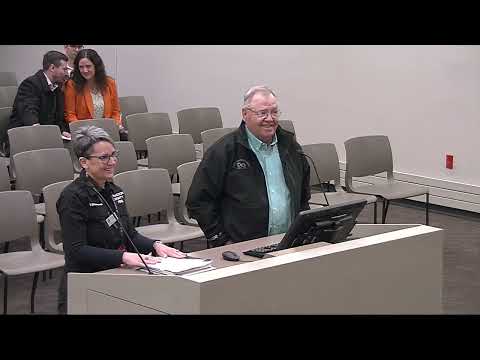
County Auditor Cindy Mueller presented Resolution SP 25-004, which included two supplemental items: $275,510 to an opioid-restricted budget under the Sheriff’s Office and $754,620 to the jail budget for a transport bus. Sheriff Brian Mueller told the board the county’s settlement share has built to roughly $600,000 at year-end and the award has funded several initiatives already.
Sheriff Mueller said the supplement will pay for treatment staff time tied to opioid services — specifically 50% of one clinical supervisor and 25% of four counselors — and about $60,000 for a community-administered injectable medication used to maintain continuity for people moving between jail and community care. “This will offset about a quarter-million dollars of current budgeted costs this year, and we expect this process can continue into 2026,” the sheriff said.
Auditor Mueller and Sheriff Mueller told commissioners the county sits on ongoing settlement payments from national litigation; some payments arrive in installment schedules and the county’s advisory process will decide future allocations. Sheriff Mueller also said the county participates in state-administered opioid grant programs and he sits on the statewide advisory committee reviewing awards.
Commissioners asked for clearer documentation in future budget memos about the specific line-item accounts and follow-on reporting. Commissioner Ron Rosknecht asked whether the settlement funds were ongoing; Sheriff Mueller said some settlements are structured as multi-year payments and the county expects additional distributions in future years.
The board approved the supplement by voice vote. Sheriff Mueller added that he and county staff also write letters of support for local nonprofit grant requests to the statewide opioid advisory process; he said those awards have funded “hubs” for Western South Dakota and other local programs that serve clients in the county.