Get Full Government Meeting Transcripts, Videos, & Alerts Forever!
Get email alerts on the Elections Presidential Primary topic
No spam. Unsubscribe anytime.
Senate committee holds first hearing on bill to move presidential primary from March to May
Summary
Senator DeMora presented Senate Bill 37 for a first hearing, proposing that Ohio’s presidential primary be held in May (aligning with the state’s other primaries) instead of the current March date; committee members questioned impacts on delegate allocation, election administration and turnout. No vote was taken.
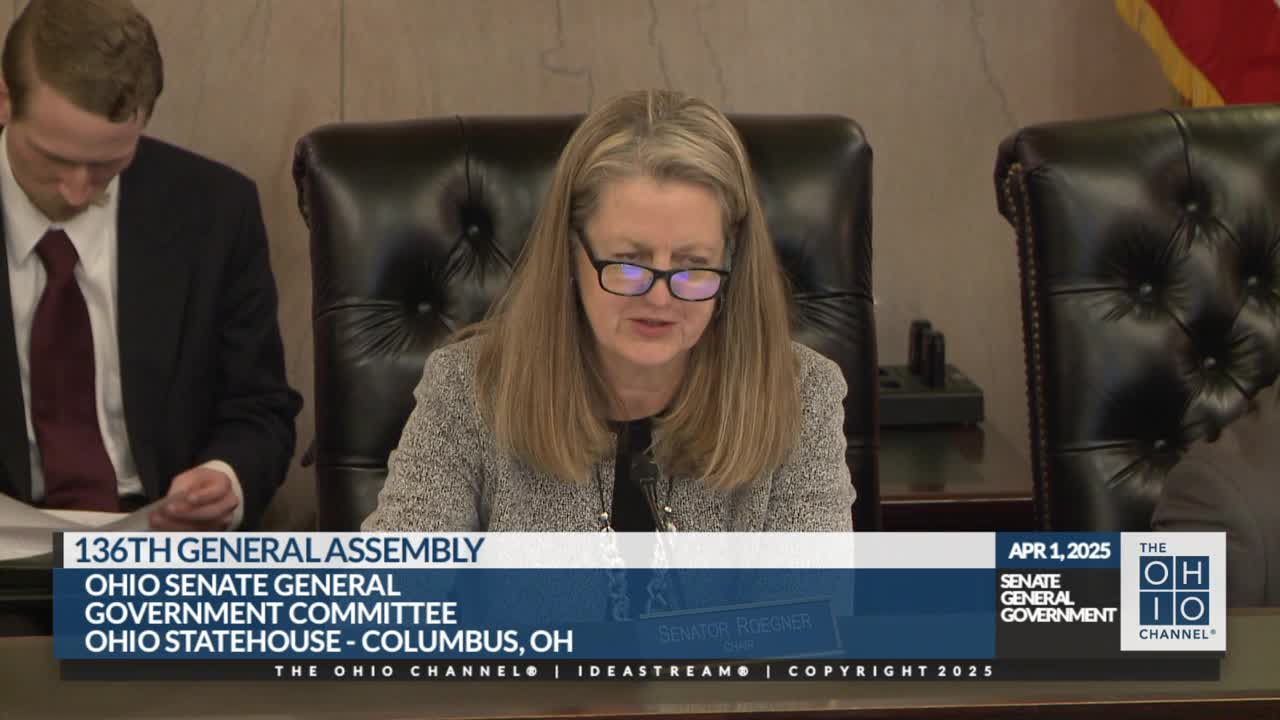
Senator John DeMora introduced Senate Bill 37 in a first hearing before the Senate General Government Committee, proposing to move Ohio’s presidential primary from a March date to May so it would fall on the same schedule as other statewide primaries.
DeMora said the change would reduce scheduling conflicts for candidates and election officials, and ease burdens created when petition filing deadlines fall in December. “Having a March primary means you have to file in December,” DeMora said, adding that the current March date forces elections staff to certify November results and immediately begin petition work during the holiday season. He also said a May date would likely provide better weather for voters and candidates and could attract more candidate visits to Ohio because fewer states hold primaries then.
The bill drew questions from committee members about party delegate rules, administrative impacts and turnout. Senator Timken asked whether moving the primary would change delegate allocation rules at the national level; DeMora and committee testimony noted that Democratic Party rules require proportional allocation (a 15% threshold) regardless of date, while Republican party rules can treat earlier contests differently. DeMora said Democratic rules do not allow winner-take-all allocations. Senator Huffman and others raised practical concerns about campaigning and ground operations in cold March weather and supported the change on that basis.
Senator Blackshear asked whether local boards of elections support the change; DeMora said he had consulted elections officials when he introduced the bill previously and that they were supportive because it would align petition and certification schedules with other election cycles. Blackshear asked whether the change would affect turnout; DeMora said he believed May would be easier for voters but acknowledged turnout depends heavily on whether contests are competitive.
This was a first hearing; the committee took no formal action on SB 37. The discussion combined sponsor testimony about candidate and elections logistics, clarifying questions about party delegate rules and informal statements of local election officials’ prior support. No fiscal estimates, statutory citations, or amendment texts were presented during the hearing.
The committee recessed the SB 37 hearing after members’ questions and moved on to other agenda items.