Get Full Government Meeting Transcripts, Videos, & Alerts Forever!
Get email alerts on the Micro Tif topic
No spam. Unsubscribe anytime.
Council gives staff go-ahead to draft micro‑TIF resolution focused on residential repairs and small projects
Summary
City development staff presented an expedited micro tax‑increment financing option to support small residential rehab and infill projects and asked the council for direction on scope, caps and timing.
City development staff presented a proposal to the council work session on March 17 for a micro tax‑increment financing (micro‑TIF) program that would use the state’s expedited TIF statute to support smaller residential rehabilitation, renovation or infill projects.
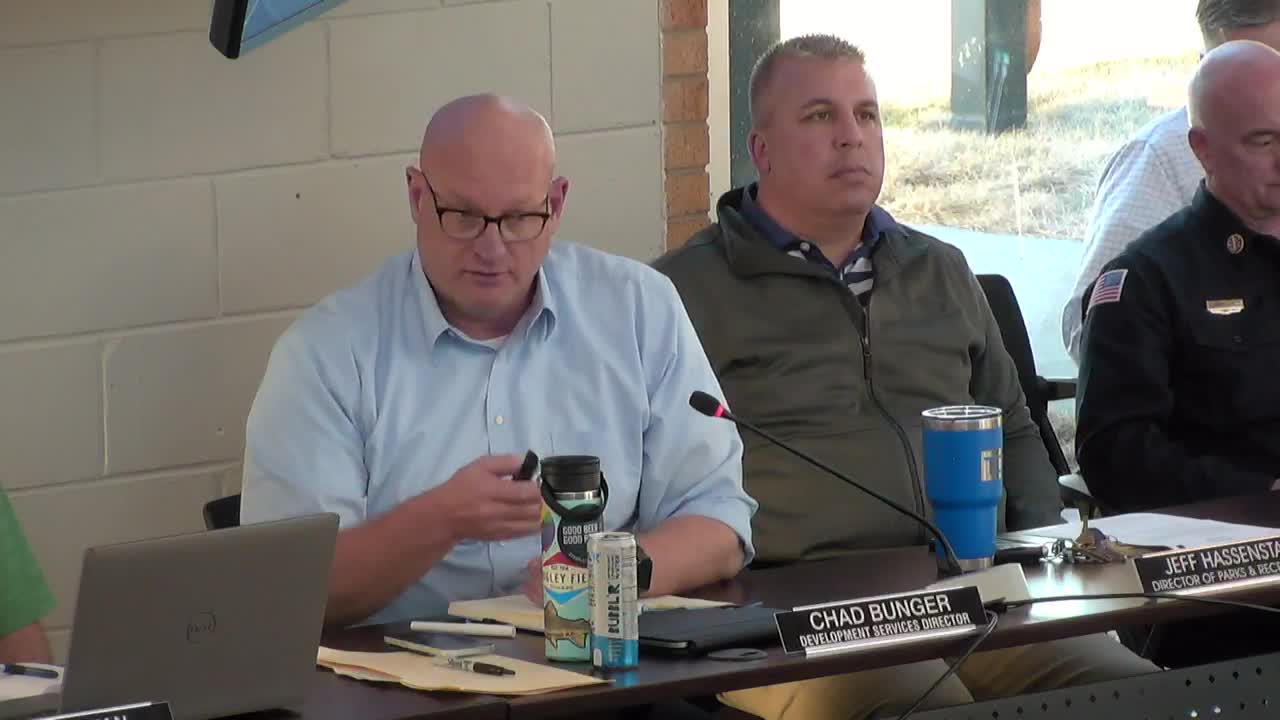
Chad Bundger, director of development services, said the staff proposal would permit qualifying residential projects that meet statutory requirements (property in the city at least 60 years, location in an area designated as blighted or substandard) and asked for council direction on program parameters. Bundger proposed capping the program at 15 properties per calendar year to limit staff workload, starting the program on June 6 pending final action, and returning a resolution for council consideration at the first meeting in April. He said staff planned a six‑month review after program launch to evaluate demand and staff capacity.
Council members and members of the public asked detailed procedural questions about eligibility, valuation and the role of the county assessor. City staff emphasized that county appraisers would determine whether a proposed project generated the increase in assessed value that produces a TIF increment; staff would assist applicants with site plans and building permit valuation estimates before applicants met the assessor.
Statutory caps cited by staff were taken from the state statute that authorizes micro‑TIF: Bundger said the statute sets maximum eligible final project values at $350,000 for single‑family residential projects, $1,500,000 for commercial or multifamily projects, and up to $10,000,000 for properties listed in the National Register of Historic Places. Bundger and council members discussed whether the program should be limited to owner‑occupied properties; staff recommended beginning with residential projects (the staff’s proposed scope) and reviewing program rules at the six‑month check‑in. Several council members said they favored starting with residential projects and monitoring the program, with the option to broaden eligibility later.
No formal council vote was taken at the work session. Council members expressed support and asked staff to draft a resolution incorporating the proposed elements: residential focus, a 15‑project cap per calendar year, a June start, and a six‑month review. Bundger said staff would return a formal resolution for the council’s first April meeting and could accelerate or delay implementation if additional preparation is requested.
Ending: The micro‑TIF discussion ended with direction to staff to prepare a resolution reflecting the discussed parameters. Staff and councilors noted additional implementation details (owner‑occupancy preference, single‑property limits, outreach to contractors and banks) would be worked out during the resolution drafting and early program administration.